
Homeland Logo

Dubai Hills Estate

undefined
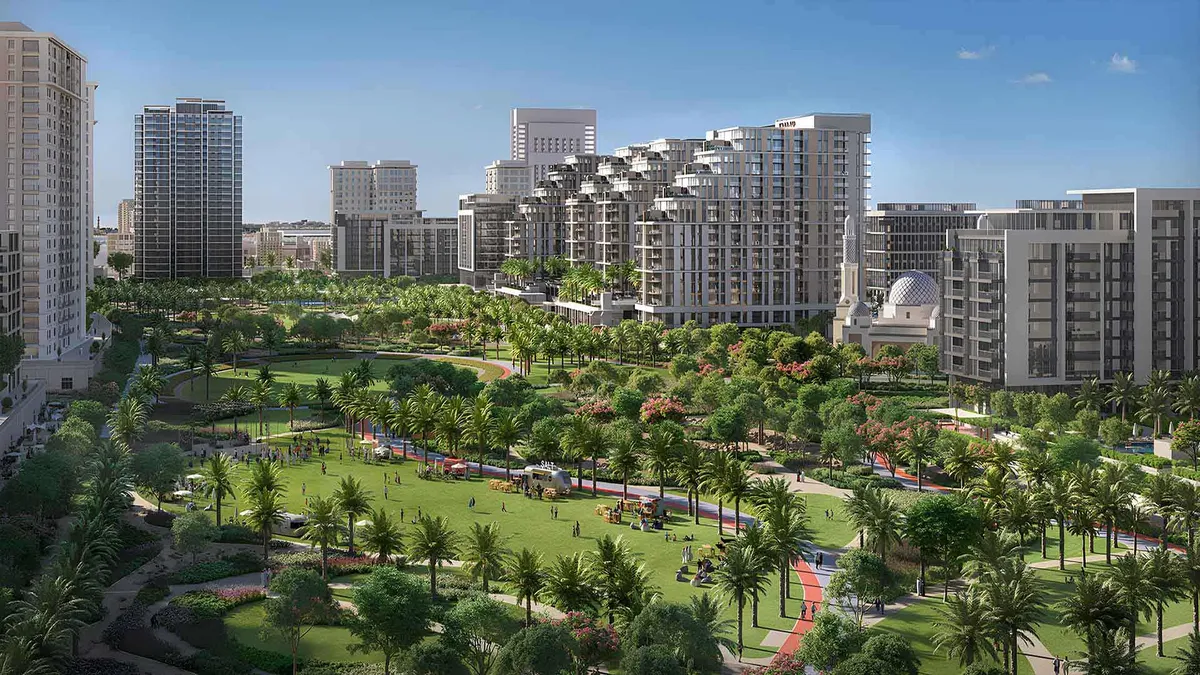
Dubai Hills Estate is a truly remarkable development by Emaar Properties, situated in the heart of Dubai. This expansive community covers 11 million square meters and is known for its lush green landscapes, luxurious homes, and panoramic views of the iconic Dubai skyline. Located between Downtown Dubai and Dubai Marina, the estate offers a serene escape from the hustle and bustle, while still keeping you connected to the city's key attractions.

Dubai Hills Estate is a master-planned luxury community in the heart of Dubai, forming part of the first phase of Mohammed Bin Rashid City (MBR City). Developed as a joint venture by Emaar Properties (with Meraas Holding), the expansive estate spans over 11 million square meters of land, thoughtfully laid out with residential neighborhoods and vast green spaces. The centerpiece is an 18-hole championship golf course surrounded by upscale villas, townhouses, and apartments, all set against panoramic views of Dubai’s iconic skyline. Often dubbed the “Green Heart of Dubai,” Dubai Hills Estate balances a tranquil, park-like ambience with proximity to the city’s key attractions, offering residents a serene escape without losing connectivity.

Strategically located along Al Khail Road (E44) near the Umm Suqeim Street junction, Dubai Hills Estate enjoys excellent accessibility. Downtown Dubai and the Burj Khalifa are about a 15–20 minute drive, while Dubai Marina and the Palm Jumeirah can be reached in roughly 20–25 minutes. Dubai International Airport (DXB) is only about 20 minutes away, and the emerging Al Maktoum International Airport (DWC) is roughly 30 minutes by car. Major highways like Sheikh Mohammed bin Zayed Road (E311) and Al Khail Road border the area, making commutes across Dubai straightforward. While no metro station lies inside Dubai Hills Estate yet, several stations (such as Mall of the Emirates and Al Barsha’s Equiti station) are a short drive away, and future plans for metro connectivity are expected to further boost accessibility. Public bus routes also serve the vicinity, ensuring the community is well-linked despite its suburban calm.


Nearby Areas & Accessibility

Dubai Hills Estate is surrounded by established districts and attractions, all within a 30-minute radius. To the north and west, it borders Al Barsha and Emirates Hills, while to the south lies Arabian Ranches and Dubai Motor City. Within 10–15 minutes of driving, residents can reach Mall of the Emirates in Al Barsha, the Dubai Miracle Garden and Butterfly Garden in Al Barsha South, and Global Village, Dubai’s seasonal cultural theme park. The vibrant Downtown Dubai district (home to the Burj Khalifa and Dubai Mall) is only a short 15-minute drive northeast, and the business hubs of Business Bay and DIFC are similarly accessible in under 20 minutes. Even the beaches and leisure spots of Dubai Marina and Jumeirah Beach Residence are about 20–25 minutes away by car.This central positioning means residents of Dubai Hills Estate enjoy the peace of the suburbs while remaining close to key shopping, entertainment, and employment centers.


Accessibility is one of the area’s strongest advantages. Residents have quick entry to major highways E44 and E311, which significantly cuts travel time around the city. The community’s internal road network connects seamlessly to these arteries, avoiding the congestion that some city-center neighborhoods face. Ample parking is available in residential clusters, and roads are wide and well-designed, reflecting the modern planning of the development. While currently reliant on road transport, the estate’s future connectivity is promising – city planners have proposed extended metro links and new road infrastructure to serve growing areas like Dubai Hills Estate, which will further integrate the community into Dubai’s public transit network. In summary, whether driving or using taxis/rideshare, Dubai Hills residents find it easy to commute, with most of Dubai’s landmarks accessible within half an hour or less.


Lifestyle Appeal


Dubai Hills Estate offers an upscale yet family-friendly lifestyle, making it one of Dubai’s most sought-after residential areas. The community masterplan emphasizes a harmonious blend of urban convenience and suburban tranquility. Lush palm-lined streets, expansive lawns, and the rolling fairways of the golf course create a green, park-like environment that promotes wellbeing and outdoor activity. Unlike the high-rise bustle of downtown, Dubai Hills has a more relaxed atmosphere – gated villa enclaves and low- to mid-rise apartment complexes give a sense of space and privacy, appealing to families and professionals who value both luxury and peace of mind. Wide sidewalks, cycling trails, and playgrounds encourage an active, pedestrian-friendly culture, and 24/7 security plus well-maintained common areas add to the community’s comfort and exclusivity.

At the same time, Dubai Hills Estate is fully self-contained with modern amenities, so residents don’t sacrifice convenience. A bustling town center, the Dubai Hills Mall, and various retail and dining outlets are located within the development, meaning daily needs and leisure options are right at one’s doorstep. The presence of high-quality schools and medical facilities (detailed below) further enhances the area’s appeal for long-term living. The lifestyle here is often described as resort-like, given the availability of a championship golf course, parks, and even a soon-to-open business park – all contributing to a live-work-play environment. For those seeking luxury, the community offers some of Dubai’s most impressive homes, including custom mansions and waterfront-like golf course villas that rival estates in Emirates Hills or Palm Jumeirah. It’s no surprise that Dubai Hills Estate has rapidly climbed into the top tier of Dubai’s property market, attracting high-net-worth buyers and investors. By the first half of 2024, it was already the third most popular area in Dubai for ultra-luxury home sales over $10 million (surpassed only by Palm Jumeirah and Jumeirah Bay Island). Even in the broader market, Property Finder data shows Dubai Hills Estate among the top five communities for villa buyers in early 2025, reflecting its widespread demand and strong reputation.


Key lifestyle highlights of Dubai Hills Estate include:


  • High Quality of Life & Green Spaces: Abundant parks, a 180,000 m² central park, and 54 km of trails promote a healthy, outdoor lifestyle. The community’s greenery and low density provide fresh air and scenic views rare in urban Dubai.

  • Prime Location & Connectivity: A central position in the city with easy access to downtown and airports, yet tucked away from congestion. Commuting is convenient via adjacent highways, and future transit links are planned

  • Modern Residential Options: Diverse housing from stylish apartments to sprawling villas, catering to young professionals, families, and luxury estate seekers alike.

  • Strong Investment Potential: High capital appreciation and rental demand have yielded strong returns. (In 2024, Dubai Hills Estate was one of the top three villa markets by sales volume in Dubai, with over 7,000 transactions). Investors are drawn by solid rental yields and the area’s continued growth trajectory.

  • Leisure and Amenities: Unique attractions like the Dubai Hills Golf Club, the mega retail Dubai Hills Mall, and proximity to tourist draws (Miracle Garden, Global Village) make it appealing for both living and recreation.

Overall, Dubai Hills Estate offers a balanced, high-end lifestyle that combines the best of city living (convenience, connectivity, and entertainment) with the space, serenity, and community spirit of a suburban neighborhood. This balance, along with the promise of long-term value, makes it a standout choice for discerning residents and investors in Dubai’s real estate landscape.


Facilities & Amenities


Dubai Hills Estate was designed to be self-sufficient, providing residents with a comprehensive range of facilities and amenities within or adjacent to the community. From retail and entertainment to healthcare and education, virtually everything one needs is available locally.


Parks and Outdoor Recreation: At the heart of the estate lies Dubai Hills Park, a vast urban park covering about 180,000 square meters. This central park features lush lawns, tree-lined paths, playgrounds, skate parks, dog-walking areas, and picnic spots, serving as a communal backyard for residents. Numerous smaller pocket parks and green belts are spread throughout the neighborhoods, contributing to a total of roughly 1.45 million m² of parks and open spaces in Dubai Hills Estate. For fitness and leisure, there are 54 km of dedicated jogging and cycling tracks weaving through the community, making it easy to stay active. The crown jewel for outdoor enthusiasts is the Dubai Hills Golf Club, an 18-hole championship golf course acclaimed as one of the most scenic in the region, with fairways that offer stunning views of the Downtown skyline. The golf club includes a modern clubhouse, academy, driving range, and dining options, catering not only to golfers but also to social members who enjoy the ambiance and facilities.


Retail and Entertainment: The centerpiece of retail in the area is the Dubai Hills Mall, a massive regional shopping and entertainment complex. Located at the community’s western edge, Dubai Hills Mall boasts around 2,000,000 sq ft of gross leasable area (~190,000 m²) and approximately 750 outlets. It offers everything from luxury fashion brands to everyday convenience stores. Anchor tenants include a large Geant hypermarket and various department stores, ensuring that grocery shopping and retail therapy are fully covered on-site. The mall’s entertainment options are a major draw: it houses a state-of-the-art Roxy cinema multiplex, the adrenaline-pumping “Storm Coaster” (the world’s fastest indoor rollercoaster), and family attractions like an indoor adventure park. Dozens of restaurants and cafés, ranging from food-court casual to upscale dining, provide abundant choices for residents and visitors alike. In addition to the mall, the community features neighborhood retail centers and dining strips (for example, small shopping pavilions near the Maple and Acacia sub-communities), ensuring that cafés, salons, pharmacies, and ATMs are conveniently scattered throughout the estate for everyday needs.

Education: Families with children find Dubai Hills Estate especially appealing due to the presence of several top-tier schools and nurseries nearby. Within the community, GEMS Wellington Academy – Al Khail is a prominent school following the British curriculum, serving students from primary up to A-Levels. Just outside the estate, in the Al Barsha area, is Kings’ School Al Barsha, another of Dubai’s highly ranked British-curriculum schools. For those seeking an Indian curriculum option, GEMS New Millennium School (offering a blend of CBSE and international programs) sits right next to Dubai Hills Estate. Additionally, a variety of preschools and nurseries are available, such as Blossom Nursery and Raffles Nursery, to cater to younger children. These institutions’ proximity means that school runs are short and convenient, and children’s educational needs are well looked after within the community or a few minutes’ drive away.


Healthcare: Dubai Hills Estate offers excellent access to medical facilities, anchored by the world-class King’s College Hospital London – Dubai, which is located adjacent to the estate on Al Marabea Street. This 160-bed multi-specialty hospital operates 24/7 and provides advanced healthcare across disciplines, ensuring residents have top-notch medical care moments away. Inside Dubai Hills Mall, there is also a branch clinic of American Hospital and the KIDEO Clinic focused on diabetes and endocrinology, adding to the healthcare options on-site. Moreover, the large Mediclinic Parkview Hospital in nearby Al Barsha South is only a few minutes’ drive, expanding the choices for emergency or specialized care. Pharmacies are plentiful in the mall and community centers, and many clinics, dentists, and other healthcare providers have opened in the vicinity as the population grows. Residents can be confident that medical help is close by whenever needed.


Community & Religious Facilities: Dubai Hills Estate is designed to foster community interaction. It has a number of mosques for worship distributed around the neighborhoods for Muslim residents. The community often holds events in its parks (detailed in the next section), which are supported by communal facilities like barbecue areas, open-air amphitheaters, and kiosks. There are also plans for a community center and possibly a members’ club as the area matures. For pet owners, there are pet-friendly zones and even a dog park area, reflecting the estate’s family-oriented ethos.

Overall, the facilities in Dubai Hills Estate ensure that residents lead a comfortable, engaging lifestyle without needing to venture far. Whether one wants to shop, dine, relax outdoors, pursue hobbies, or ensure their children get a good education, the community’s infrastructure has it covered. This high level of internal amenity is a key reason why Dubai Hills Estate stands out among Dubai’s new developments.


Key Projects & Developers


Dubai Hills Estate is primarily developed by Emaar Properties, one of the UAE’s leading developers, in what was originally a joint venture with Meraas. Emaar’s vision for the area was to create a “city within a city” – and that is evident in the multitude of distinct residential projects and zones within Dubai Hills. The entire master plan encompasses over two dozen sub-communities, each with its own character and property types.

Major Residential Projects: On the villa and townhouse side, Emaar has delivered several high-profile enclaves. Notable among these are the Maple townhouses (phases I, II, III), which offer contemporary 3–5 bedroom townhouses in close-knit, family-friendly clusters with shared parks and pools. The Sidra Villas are another signature Emaar project – these are standalone modern villas (3–5 bedrooms) with private gardens, known for their floor-to-ceiling windows and high-quality finishes. For those seeking ultra-luxury, Fairway Vistas and Parkway Vistas are two villa enclaves featuring larger plots and mansions along the golf course, many with private pools and premium golf course views. The Golf Place and Golf Place Terraces developments also offer spacious villas (often 4–6 bedrooms) in proximity to the golf club, catering to affluent buyers who want a mix of modern design and green surroundings. Another marquee neighborhood is Emerald Hills, essentially a collection of premium villa plots where buyers have built custom mansions adjacent to the golf fairways These areas collectively position Dubai Hills Estate among the best villa communities in Dubai, highly coveted by end-users and investors alike.


For apartments, Emaar has developed a series of mid-rise complexes mostly concentrated around the central park and Dubai Hills Mall area. Early projects included Mulberry and Acacia – twin mid-rise buildings bordering the park, offering 1 to 3-bedroom apartments with views of greenery. Following those, Park Point and Park Ridge added more apartment inventory, also around the park, known for their sleek designs and podium amenities. Emaar also introduced innovative concepts like Collective, a two-tower project with smaller 1 and 2-bedroom units and co-living facilities aimed at young professionals. Newer apartment developments continue to come online: Executive Residences (which integrated residential units with office space for home-business licensing), Golf Suites overlooking the course, Hills Park, Park Field, Park Horizon, and Hillside apartments (some under the Vida brand) are among the latest additions. These offer a range of unit sizes but consistently emphasize modern layouts, communal facilities (gyms, pools, etc.), and often great views of either parks or the skyline. In total, apartments make up roughly 60% of the planned units in Dubai Hills Estate, ensuring a vibrant mixed community of both vertical and horizontal living options


Active Developers: While Emaar is the master developer and behind most projects, several other reputable developers have also launched projects in Dubai Hills Estate in recent years, adding variety. For instance, Ellington Properties, known for boutique luxury buildings, has a project here (e.g. “Belgravia Heights” style development, bringing their signature design-driven apartments to the community). Iman Developers and H&H Development are other private firms contributing smaller-scale residential buildings or villa compounds within the estate. These third-party projects complement Emaar’s offerings and often bring unique architectural styles or niche features (such as ultra-modern interiors or boutique hotel-style amenities). All development within Dubai Hills is overseen by the master plan guidelines, so even these non-Emaar projects maintain the high standards and aesthetics of the community.


Apart from residential projects, Dubai Hills Estate includes a growing commercial and hospitality component. The Dubai Hills Business Park features low-rise office buildings attracting businesses that prefer a location outside the crowded downtown but still central. A hotel (likely a Vida Dubai Hills hotel) is expected to open to serve visitors and business travelers in the area. Moreover, community facilities like gyms, sports courts, and possibly a residents’ club are either already present or planned to enhance the lifestyle factor.


Finally, it’s worth noting that the entire development of Dubai Hills Estate is still ongoing, with many projects recently delivered and others in the pipeline. The vision is expansive, and as of early 2025, only about 35–40% of the total 70,000+ planned homes have been completed. This means new projects and launches continue to appear, giving buyers and investors fresh opportunities (often off-plan) to purchase property in this prestigious community. Major future landmarks to watch for include any signature hotels or resorts, further expansions of the mall or entertainment offerings, and completion of all landscaping and district infrastructure, which will collectively cement Dubai Hills Estate as a fully mature part of Dubai.


Events & Highlights


One aspect that truly enriches life in Dubai Hills Estate is the array of community events and activities that take place year-round. Far from being a sterile new development, Dubai Hills has quickly fostered a strong community spirit through regular festivals, markets, and gatherings that bring residents together. For example, the estate celebrates seasonal festivals enthusiastically: during winter holidays, there are often festive markets, Christmas or year-end tree-lighting ceremonies, and outdoor winter-themed events in Dubai Hills Park. National holidays like UAE National Day are marked by community celebrations featuring cultural performances, family activities, and sometimes fireworks, creating a sense of unity and local pride. In spring, residents have enjoyed carnival-style events with live music, food trucks, and games in the green spaces. These seasonal events make the community feel alive and welcoming for families of all backgrounds.


Outdoor entertainment is another highlight. Dubai Hills Park has played host to open-air movie nights, where families and friends spread out on the lawns to watch films under the stars. The park and community centers also organize wellness events such as group yoga sessions at sunrise and fun runs or cycling events along the estate’s extensive trails. Such fitness-oriented gatherings not only promote a healthy lifestyle but also help neighbors meet and socialize around shared interests. The estate is pet-friendly as well – there have been “dog day” meet-ups and even pet costume contests in the park, reflecting the inclusive atmosphere for pet owners.


Dubai Hills Mall, beyond shopping, has quickly become an entertainment venue in its own right. It frequently hosts in-mall events and promotions, from fashion shows to children’s entertainment. In fact, Emaar launched an annual Dubai Street Festival at Dubai Hills Mall, which runs for several weeks with live street performers, magicians, and artists creating a vibrant, family-friendly carnival inside the mall. Such events draw visitors from all over the city, not just residents, putting Dubai Hills on the map as a leisure destination.


In terms of attractions, the community benefits from proximity to some of Dubai’s popular leisure sites. The Dubai Miracle Garden, a record-breaking floral garden known for its giant flower sculptures, is just a 10-15 minute drive away and is a big draw in the cooler months (typically November to April). Similarly, Global Village – a seasonal outdoor theme park and market that showcases cultures from around the world – is about 15 minutes west of Dubai Hills Estate. Residents can easily attend the many concerts, festivals, and international pavilions at Global Village on evenings and weekends during its annual run. For sports enthusiasts, the proximity to the Dubai Autodrome (for motorsports in Motor City) and the Dubai Polo & Equestrian Club (10 minutes away) offers additional recreational outings just beyond the community’s borders.


Demographics


As of 2025, Dubai Hills Estate has an estimated population of over 25,000 residents living in its completed communities. This number has grown rapidly in the past few years as new projects have been handed over and families have moved in. The full population will continue to rise as more housing is delivered – ultimately, the estate is planned to accommodate well over 100,000 people upon full completion, according to development plans. The current resident profile is predominantly made up of expatriates and professional families, reflecting Dubai’s wider demographics in the upscale segment. Mid- to senior-level executives and entrepreneurs from around the world have chosen Dubai Hills for its high-quality homes and strategic location (many work in Downtown, Business Bay, or Tecom areas, which are a short commute away). Residents hail from a variety of countries – you’ll find a mix of Western expatriates (Europe, North America, Australia), Arab nationals and expats, South Asians, and East Asians among others, truly making it a cosmopolitan community.


The community is particularly popular with families, thanks to its space and amenities. A large portion of households are couples with children, who appreciate the availability of gardens, parks, and kid-friendly facilities. The presence of top schools means many school-age children reside here, and one can see that in the afternoons when school buses and carpools become active. That said, Dubai Hills Estate also attracts young professionals and couples (especially in the apartment complexes) who are drawn to the modern flats and the lifestyle factor of the area. The environment is quieter and more relaxed than the city center, which appeals to those who prefer a suburban vibe while still being relatively close to workplaces.


Income levels in Dubai Hills Estate skew toward the higher end of the middle to upper class. Villas and larger townhouses house many high-net-worth individuals, including business owners and executives, some of whom have multiple properties across Dubai and chose a home in Dubai Hills for its prestige and environment. The ultra-luxury enclaves (like the mansions on Golf Place or Hills Grove) have even attracted a few billionaire buyers and celebrities, according to market reports, although the community is less showy than Palm Jumeirah in that regard. On the other end, the apartments (e.g. in Collective or Park Point) have made Dubai Hills accessible to upper-middle-class buyers as well, meaning not everyone is extraordinarily wealthy – there is a healthy mix of affluent professionals, making the social makeup diverse but uniformly educated and with a comfortable standard of living.

One demographic aspect worth noting is that Dubai Hills Estate is oriented towards long-term residents rather than short-term tourists. Unlike neighborhoods that have many holiday rentals or hotel apartments, Dubai Hills has relatively few hotels (none at the moment, apart from upcoming ones) and is not a typical tourist zone. This means the community atmosphere is more residential and stable. Many people living here intend to make it their home for years to come, and this is evident in the care put into gardens and the active participation in community events. The high occupancy rate (often above 90%) indicates that there is little in the way of vacant property – homes that are completed tend to be quickly occupied by either owners or tenants, given the strong demand for the area.


In summary, the demographics of Dubai Hills Estate can be characterized as family-oriented, educated, and diverse, with an international mix of residents who share the common goal of enjoying a premium lifestyle in Dubai. The community feels vibrant yet private, and it stands out as a preferred address for those seeking a safe, green, and high-quality living environment in the city.


Real Estate Inventory


Dubai Hills Estate stands as one of Dubai’s most ambitious and masterfully executed residential communities, combining large-scale development with balanced phasing and sustained investor demand. As of early 2025, the community features a total of 24,138 residential units, distributed between ready, off-plan, and ongoing phases.

  • Completed (Ready) Units : 11,748 units
  • Off-Plan (Under Construction): 12,390 units

The estate maintains a strategic delivery rhythm under Emaar’s phased approach, ensuring controlled supply, high absorption, and consistent capital growth across its residential sectors.


Ready (Completed) Inventory Breakdown


The completed stock demonstrates Dubai Hills Estate’s maturity as a vibrant, livable community, offering a strong mix of apartment and villa types:


  • Studio: 117 units
  • 1 Bedroom: 3,217 units
  • 2 Bedroom: 3,005 units
  • 3 Bedroom: 1,962 units
  • 4 Bedroom: 1,713 units
  • 5 Bedroom: 823 units
  • 5+ Bedroom: 422 units

This segment caters primarily to end-users and long-term residents, with occupancy rates exceeding 90%, reflecting strong domestic and expatriate demand.


Off-Plan (Under Construction) Inventory Breakdown


The ongoing development pipeline remains active, catering to mid- to upper-tier residential demand, with several upcoming projects launching within the year to further expand the community’s range of premium apartments, townhouses, and villas.


  • Studio: 57 units
  • 1 Bedroom: 5,341 units
  • 2 Bedroom: 4,370 units
  • 3 Bedroom: 1,577 units
  • 4 Bedroom: 83 units
  • 5 Bedroom: 26 unit

Dubai Hills Estate commands strong investor confidence and near-full occupancy in its ready stock. The estate recorded over 7,000 property transactions in 2024, underlining high liquidity and sustained end-user demand. Roughly half of all planned units are already completed, while ongoing projects—many exceeding 60% progress—ensure continuous handovers through 2026.


Emaar’s phased construction strategy, combined with strong market absorption, keeps Dubai Hills Estate’s supply and demand in equilibrium. The area continues to rank among Dubai’s most stable and high-performing residential markets, blending upscale family living with long-term investment potential.

Construction Progress by Project (2025)


Construction across Dubai Hills Estate continues to advance at an exceptional pace, with nearly half of the total planned developments now fully completed and the remainder progressing steadily toward handover. Iconic neighborhoods such as Sidra, Maple, Golf Place, Fairway Vistas, Palm Hills, Park Heights, Park Ridge, and Mulberry have achieved 100% completion, forming the foundation of the community’s ready inventory and setting a benchmark for quality and livability.


New residential phases, including Elvira (68%), Parkside Views (58%), Greenside Residence (61%), Golf Grand (77%), and Club Drive (44%), are advancing on schedule and are expected to significantly enhance the apartment and townhouse offerings within the estate. Meanwhile, early-stage developments such as Golf Hillside and Parkside Hills, currently below 30% completion, represent the next wave of expansion for Dubai Hills.

This well-phased rollout underscores Emaar’s demand-driven strategy, balancing consistent delivery with high market absorption. The approach ensures long-term investor confidence, sustainable growth, and reinforces Dubai Hills Estate’s position as one of Dubai’s most active and resilient residential communities.


Property Prices (Sales)


Dubai Hills Estate has firmly established itself as a premium community in Dubai’s property market. Sale prices have experienced a robust uptrend over the past few years, making Dubai Hills one of the most expensive non-coastal areas in the city in terms of price per square foot. As of early 2025, the average residential price is around AED 2,500 per sq ft (approximately USD 7,300 per square meter). This average is on the higher side citywide, comparable to values in Dubai’s established luxury neighborhoods, which underscores the strong demand and the value attached to Dubai Hills real estate. Analysts note that strong buyer interest combined with limited new supply has fueled continuous price appreciation in the community.

Prices naturally vary by property type and size. Below is a breakdown of typical sale price ranges by unit type in Dubai Hills Estate, based on recent transactions and listings:


Apartment Sale Prices by Unit Type


  • Studio Apartments (≈ 40 sqm / 430 sq ft): Average sale price around AED 1,000,000. Studios are limited in supply and tend to be sought after by investors. It’s possible to find an older or smaller studio for just under AED 1M, but newer studio units in prime buildings generally hover at or above the seven-figure mark.

  • 1-Bedroom Apartments (≈ 70–75 sqm / 750–800 sq ft): Typically sell for around AED 1.6–1.8 million (average ~AED 1.7M). Dubai Hills 1-bedroom units are relatively large by city standards and feature high-end finishes; those with premium views (over the golf course or park) command the upper end of this range.

  • 2-Bedroom Apartments (≈ 100–115 sqm / 1,080–1,240 sq ft): Generally AED 2.5–3.0 million (average ~AED 2.8M). Two-bed apartments are popular among small families and downsizers. Units located adjacent to Dubai Hills Park or those offering skyline views often reach ~AED 3M or slightly more on the resale market.

  • 3-Bedroom Apartments (≈ 150–160 sqm / 1,600–1,750 sq ft): Approximately AED 4.0–4.5 million (average ~AED 4.1M). There are fewer 3BR flats in Dubai Hills, mostly in the park-facing developments. These larger apartments often feel like penthouses and sometimes include large terraces. Top-floor or especially well-located 3BR units can exceed AED 4.5M in resale due to their rarity and expansive views.

Villa and Townhouse Sale Prices


  • 3-Bedroom Townhouses/Villas (≈ 200–280 sqm built-up): Generally trade in the AED 5.5 -- 7.0 million range as of 2025. For example, a 3BR Maple townhouse (~2,200 sq ft built-up) might sell around AED 5.5M, whereas a larger 3BR Sidra standalone villa (~3,000 sq ft built on a bigger plot) could be closer to AED 7M. The midpoint of this range (roughly AED 6.3M) illustrates the strong appreciation these family homes have seen since their initial off-plan launch prices a few years ago.

  • 4-Bedroom Villas (≈ 230–350 sqm built-up): Typically range from about AED 5.5 million up to ~AED 8 million, depending on the sub-community and property specifics. Notably, some 4BR townhouses in Dubai Hills (e.g. Maple units) can be priced slightly lower than 3BR standalone villas if they are smaller or mid-row configurations. On average, 4-bedroom properties hover around the AED 6.0M mark in recent sales – this average spans a broad spectrum, from Maple townhouses at the lower end (~5–6M) to larger detached villas (Sidra, etc.) that can surpass AED 8M.

  • 5-Bedroom Villas (and larger): This category shows a wide price variance given differences in plot size, location, and level of luxury. A “standard” 5-bedroom Golf Place villa (~5,000 sq ft built-up area) might be valued in the AED 10–15 million range. In contrast, ultra-luxury 5BR or 6BR mansions in enclaves like Fairway Vistas or Emerald Hills easily command AED 20–30+ million. Based on recent transactions, the average 5-bedroom in Dubai Hills Estate is around AED 12–13 million, though this figure is skewed upward by a few super-premium sales. For context, some of the priciest homes in Dubai Hills (especially 7+ bedroom mega-mansions on huge plots) have sold in the AED 50–75 million range, rivaling prices in Emirates Hills – in fact, one custom-built Dubai Hills estate even sold for over AED 100 million in 2021. Those are exceptional trophy properties; more commonly, high-end 6-bedroom contemporary villas in Dubai Hills are listed around AED 25–35 million.

It’s also noteworthy that the price per square foot for villas in Dubai Hills Estate often matches or exceeds that of apartments. Smaller villas and townhouses in the community frequently average ~AED 2,000–2,300 per sq ft, reflecting their desirability and the efficient use of space, while the largest mansions (with very expansive built-up areas) might show a lower effective AED/sqft due to their sheer size – or conversely a very high AED/sqft if the finishes and location are ultra-premium. In any case, across both apartments and villas, values in Dubai Hills Estate have seen remarkable growth. Many early investors (for example, those who bought Maple townhouses or Sidra villas off-plan) have witnessed prices roughly double by 2025 compared to original launch prices, especially in these popular villa/townhouse sub-communities.


Rental Prices


The rental market in Dubai Hills Estate is very active, fueled by the area’s desirability among tenants seeking modern homes and its relative newness (many owners initially bought for investment, putting units on lease). On average, rental rates in Dubai Hills Estate have risen significantly in line with sales prices, especially from 2022 onward, but they still offer good value given the quality of property on offer. Here are the typical annual rental rates by property type (as of early 2025, based on recent listings and contracts):


Apartments (yearly rent) :


  • Studio: ~ AED 63,000 per year (for a 400-500 sq ft studio).

  • 1 Bedroom: ~ AED 94,000 per year.

  • 2 Bedroom: ~ AED 145,000 per year.

  • 3 Bedroom: ~ AED 270,000 per year.

These figures indicate that even a one-bedroom apartment in Dubai Hills commands close to AED 100k annually, reflecting the upscale positioning. Notably, larger 3-bedroom apartments (which are relatively rare and often in luxury projects like Park Point or Boulevard apartments) can achieve very high rents (over a quarter of a million Dirhams) since they compete with villa rents in size. Most 2-bed apartments in the area rent in the range of AED 130k to 160k depending on view and furnishing, while one-beds are generally between 80k and 110k in practice.


Villas/Townhouses (yearly rent):


  • 3 Bedroom Villa/Townhouse: ~ AED 265,000 per year.

  • 4 Bedroom Villa: ~ AED 300,000 per year.

  • 5 Bedroom Villa: ~ AED 370,000 per year.

Again, these are averages – there is a range. For example, a 3BR Maple townhouse might rent for around AED 230k, whereas a 3BR Sidra independent villa (with larger garden) could be 280k+. The ~AED 265k figure is a mid-point. Four-bedroom villas commonly list between 280k up to 350k depending on location (with golf-course facing 4-beds at the top end). Five-bedroom and larger villas have a broader range; the AED 370k average suggests something like a 5BR Golf Place villa. However, top-of-the-line mansions in Dubai Hills (6-7 bedrooms fully furnished, etc.) have been known to ask AED 700k to 1 million+ yearly from tenants looking for ultra-luxury rentals – though those are exceptional cases. The majority of family villas (4-5 BR) fall in the 300–500k range annually.


Renters in Dubai Hills Estate tend to be high-income professionals and families (often the same demographic as buyers, just not ready to purchase yet). The community’s rental sector is buoyant, with occupancy extremely high; it’s not uncommon to have waiting lists or multiple offers for well-priced rental listings, particularly for villas. Rental yields for landlords have thus been healthy. For apartments, gross rental yields average around 7–8% per annum in Dubai Hills Estate. This is an attractive return, higher than many prime areas in Dubai, partly because rents climbed quickly after these projects were delivered. For villas, yields are a bit lower (typically in the 4.5%–6% range, since purchase prices for villas rose sharply). Still, a 5% yield on a multi-million-dirham villa is considered solid in a luxury segment. The strong rental demand also means landlords face minimal vacancy periods.

It’s also worth noting that as more units are delivered, some new supply of rentals will come on the market – for instance, the new apartments completing in 2025 will initially add to rental listings. However, given the high interest from tenants in the area, these are expected to be absorbed without putting downward pressure on rents in the near term. In fact, Dubai’s overall rental market was surging through 2023–2024 (with some areas seeing 20-30% rent increases year-on-year), and Dubai Hills Estate was among the communities with strong rent growth due to its popularity and limited completed stock. Going forward, rent increases may moderate, but the estate’s rentals should remain in high demand, especially from families looking for quality homes near good schools.


Market Trends & Future Outlook (2025–2026)


Dubai Hills Estate’s real estate market has maintained a strong upward trajectory, driven by high demand, rising prices, and exceptional transaction activity. In 2024, the community recorded over 7,000 property sales worth approximately AED 22.3 billion, ranking among Dubai’s top three areas by transaction value. Most sales came from newly launched and handed-over apartments, while the villa segment, though smaller in volume, contributed significantly with an average villa sale price of around AED 19 million. As of 2025, the market remains robust, with analysts projecting steady, sustainable growth through 2026—supported by solid end-user demand, limited ready supply, and Emaar’s disciplined project rollout.


  • Demand Dynamics: Buyer demand remains very high, especially from affluent international buyers relocating to Dubai or seeking investment properties. Dubai Hills Estate’s reputation is now global, often mentioned alongside Palm Jumeirah and Downtown in international property circles. With Dubai’s economy diversified and population growing, there’s a steady inflow of potential buyers. The UAE’s attractive visa schemes (like the 10-year Golden Visa for property purchases over AED 2M) and zero property tax continue to draw investors

  • Supply Outlook: By 2025–2026, a wave of new completions in Dubai Hills Estate will occur as ongoing projects finish. This increased supply (potentially a few thousand new units) could introduce more options for buyers and tenants. If supply briefly overshoots demand, it might lead to a modest price correction or stabilization in certain segments (for example, a cluster of similar apartments completing at once might slow down price growth for that unit type). However, importantly, after 2026, the pipeline in Dubai Hills tapers off as the community nears full development.. Unlike some emerging areas, Dubai Hills has a finite scope – once built out, no further land remains to flood the market. Therefore, any temporary softening due to new supply might be followed by renewed price strength as the community enters a mature phase with scarcity of new homes. Additionally, city-wide, the bulk of new housing supply in coming years is spread across many areas; Dubai Hills is just one portion, so it’s not disproportionately at risk of oversupply relative to the whole market.

  • Price Trajectory: A moderate scenario envisioned by market experts is that property prices in Dubai Hills Estate will mostly plateau or grow in line with inflation (say 2-5% annually) over 2025–2026. This would represent a healthy stabilization after the large jumps seen previously. A more optimistic scenario holds that if Dubai’s economic momentum continues (e.g., more foreign investment, companies setting up regional HQs, etc.), prices could still rise by around 5%+ annually in Dubai Hills during 2025–26. This is plausible because prime communities worldwide with limited new land often see sustained appreciation. Rental rates are likely to follow a similar pattern – continuing to increase but at a gentler rate, as many leases catch up to current market levels. Rental yield compression might occur slightly if sale prices outpace rents, but given how high rents have already risen, we expect yields to remain attractive (maybe settling around 6-7% for apartments).

  • Investor Sentiment: The outlook among investors is broadly bullish on Dubai Hills Estate for the medium term. It’s seen as a “blue-chip” asset – meaning even if the wider market faces ups and downs, this area’s properties are considered relatively low-risk and high-quality holdings. Many investors who bought during construction are choosing to hold onto units for rental income rather than flipping, indicating confidence in long-term performance. The estate’s continued development of infrastructure (e.g., the completion of all parks, opening of any remaining community facilities) will only enhance its appeal. One trend to watch is the ultra-luxury segment: record-breaking deals (in excess of AED 100M) could continue to occur in 2025–26 as a few remaining marquee mansions are completed; this would further cement the area’s prestige and could lift the upper price ceiling even higher.

  • Macro Factors: Dubai’s real estate fortunes are tied to its economy, which in turn is influenced by global conditions (oil prices, tourism flows, etc.). So far, the city’s proactive policies (like allowing 100% foreign business ownership, new visa categories, etc.) have boosted real estate. If this trend continues, by 2026 Dubai’s population is projected to grow towards 4 million+ (the city envisions 5.4 million by 2040), which implies sustained housing demand. Being a key part of the Mohammed Bin Rashid City development zone, Dubai Hills Estate will benefit from any city-wide growth initiatives and infrastructure (for example, new metro lines or major public projects under the Dubai 2040 Urban Master Plan). On the other hand, if there were an external economic shock or oversupply in other parts of Dubai, that could have a cooling effect even on prime areas. But at present, no severe oversupply is evident – in fact, supply and demand in Dubai are seen as reasonably balanced, with perhaps slight shortages in certain popular segments (like quality villas).

Considering these factors, the future outlook for 2025–2026 for Dubai Hills Estate is cautiously optimistic. Most forecasts see price growth leveling off to a sustainable pace, and the community continuing to outperform the city average in terms of desirability and price resilience. The completion of ongoing projects will mark Dubai Hills Estate’s transition into a fully-fledged, established luxury district. By 2026, with the community nearly complete, Dubai Hills will join the ranks of Emirates Hills, Palm Jumeirah, and Downtown as a “core” prime area – except it will have the advantage of being newer and extremely well-planned. A reduced volume of new construction after 2026 (both within the estate and citywide in prime locales) could further bolster property values, as existing homes become more scarce in the face of growing demand.


Conclusion


Dubai Hills Estate has evolved into one of Dubai’s most prestigious and well-rounded residential destinations, blending refined lifestyle living with exceptional investment fundamentals. Masterfully planned by Emaar, the community offers a rare balance of urban convenience and serene greenery — anchored by Dubai Hills Park, Dubai Hills Mall, and the championship Dubai Hills Golf Club. Its tree-lined boulevards, landscaped parks, and family-friendly design create a peaceful environment just minutes from the city’s most dynamic hubs.

Perfectly positioned along Al Khail Road, Dubai Hills Estate provides seamless access to key landmarks — Downtown Dubai and Burj Khalifa are only 15 minutes away, while Dubai Marina, Dubai International Airport, and Business Bay can all be reached within 20–25 minutes. The area’s central location within Mohammed Bin Rashid City ensures enduring connectivity and future value appreciation.

From its diverse housing mix to its luxury amenities and stable price performance, Dubai Hills Estate offers residents a lifestyle that combines modern comfort with long-term financial security. Whether for families seeking an elegant home, investors targeting high rental yields, or global buyers pursuing capital growth in a prime Dubai address, Dubai Hills Estate stands as a model of integrated community living — where sophistication, sustainability, and opportunity come together to define one of the city’s most sought-after

The investment potential in Dubai Hills Estate remains strong. Even as the market matures, the estate benefits from Dubai’s enduring growth story – a city that continues to attract businesses, talent, and capital at an impressive rate. Backed by developer Emaar’s brand and the Dubai government’s forward-looking policies (such as long-term visas for investors and no property taxes), Dubai Hills Estate enjoys a secure and business-friendly context. Rental incomes are solid, and the community’s prestige adds a level of financial stability, suggesting properties here will hold value and appreciate steadily in the long run.