
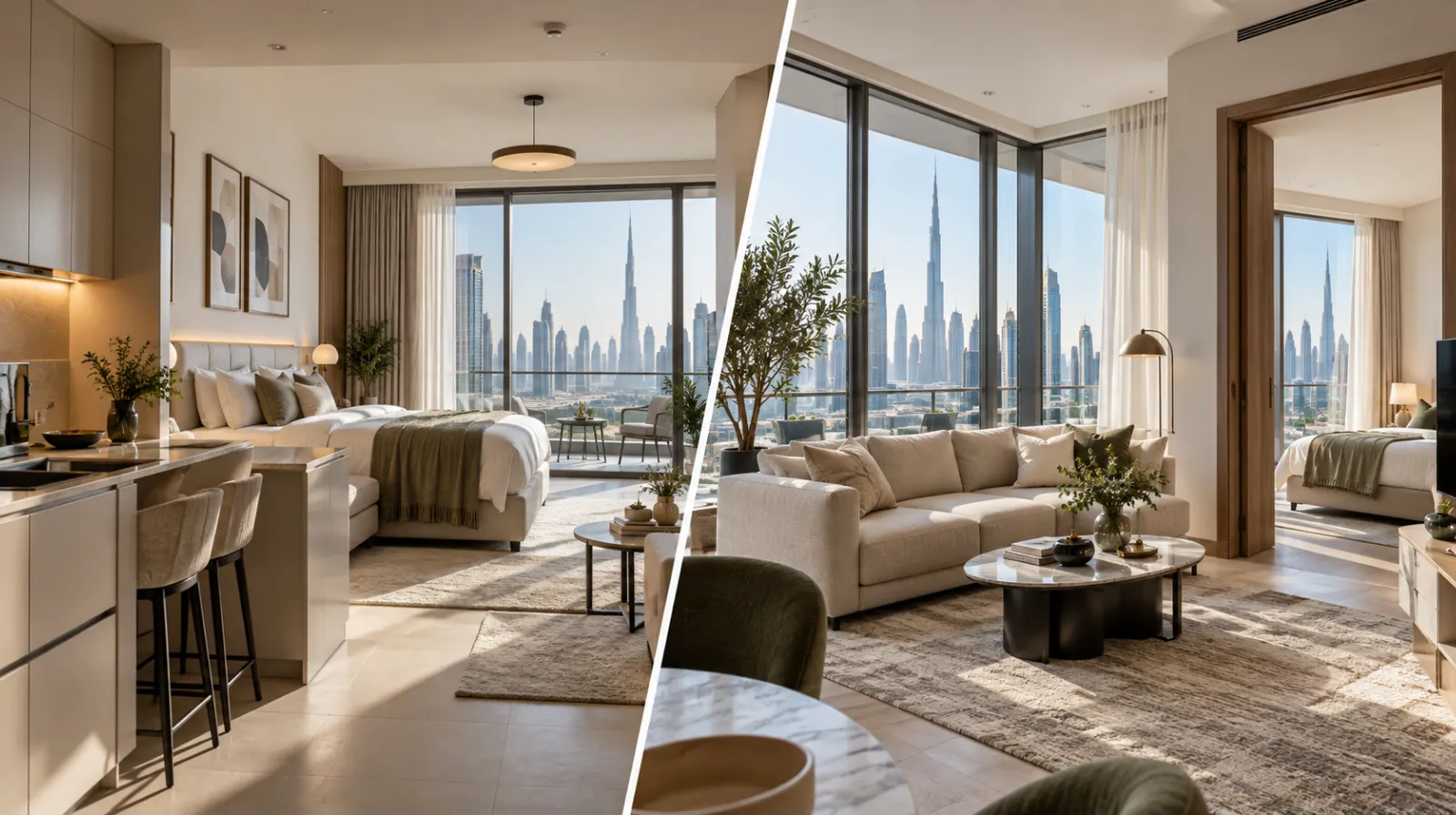
Studio vs 1-Bedroom Apartment Dubai Investment Guide
Oct 14, 2026

Blog Detail
The trends established over the past year point to a market increasingly shaped by end-user demand, population growth and value-driven housing choices
Article
As Dubai’s property market moves into 2026, the clearest signals are emerging not from headline-grabbing luxury transactions but from sustained rental pressure in the city’s most affordable neighborhoods.
The trends established over the past year point to a market increasingly shaped by end-user demand, population growth, and value-driven housing choices. According to Bayut’s 2025 Dubai Property Market Report, affordable apartment rents rose by more than 20 percent in several communities, while budget villa rents climbed by up to 24 percent, setting the tone for a new cycle where affordability, connectivity, and liveability are defining both tenant behavior and investor strategy.
This rental-led momentum is feeding directly into broader market dynamics. As higher lease renewals strain household budgets, more residents are reassessing long-term housing options, including ownership in lower- and mid-priced communities. This shift has helped support steady sales activity in value-oriented districts while reinforcing demand for rental stock in the same areas. Bayut’s findings show sustained interest in communities such as Dubai Silicon Oasis, Arjan, Damac Hills 2, and Dubai South, where relative affordability, improving infrastructure, and new handovers continue to attract both tenants and buyers.
On the sales side, apartment prices in affordable neighborhoods recorded increases of between nine percent and 29 percent during 2025, with Dubai Silicon Oasis leading growth following renewed optimism around the Dubai Metro Blue Line and future connectivity gains. Mid-market apartment prices rose by up to 11 percent in established locations such as Jumeirah Village Circle, Business Bay, and Al Furjan. Luxury apartment prices, by contrast, grew at a slower pace of around four percent to seven percent, reflecting greater supply choice and a more cautious approach from high-end buyers.
Similar patterns have been highlighted by other market trackers, including Property Monitor and ValuStrat, both of which have pointed to a cooling in prime price growth without signs of market stress. Villa prices followed a comparable trajectory.
Affordable villa prices increased by up to 24 percent, particularly in Dubai South and Dubailand, where recent handovers have been absorbed quickly by end users. Mid-tier villa prices climbed between 17 percent and 28 percent, supported by new deliveries in communities such as Murooj Al Furjan and Arabian Ranches 3. In the luxury segment, villa prices rose by up to 16 percent in areas including Arabian Ranches, Dubai Hills Estate, and DAMAC Hills, underlining the continued appeal of established, master-planned communities for long-term buyers.
Rentals, however, remain the strongest indicator of changing priorities. Bayut’s year-end data shows that affordable apartment rents rose by up to 21 percent, with Deira recording the steepest increases for larger family units. Other budget-friendly districts such as Arjan and Bur Dubai also saw heightened demand as residents sought to balance space, accessibility, and cost. These findings align with broader industry commentary from consultancies such as CBRE, which has attributed rising rents in affordable areas to population growth, job creation, and sustained inward migration.
Mid-market apartment rents recorded more moderate increases of up to seven percent, while luxury apartment rents were largely stable. In select high-supply areas, including parts of Dubai Marina and Dubai Creek Harbour, asking rents declined by up to five percent, reflecting increased competition among landlords and greater negotiating power for tenants at the upper end of the market.
Villa rentals present a more polarized picture. Affordable villa rents rose between five percent and 24 percent, with the sharpest increases seen in four-bedroom units in Dubai South following handovers in Emaar South and the Residential District. Mid-market villa rents generally climbed by up to 15 percent, though four-bedroom villas in Arabian Ranches 3 recorded exceptional growth of nearly 70 percent, driven largely by demand for newly delivered homes in the Caya and Bliss sub-communities. Luxury villa rents, meanwhile, declined by as much as 24 percent overall, although five- and six-bedroom villas in Dubai Hills Estate bucked the trend due to tight supply.
According to property experts, from an investment perspective, the strength of the affordable rental segment continues to translate into attractive yields. Bayut estimates that affordable apartments in International City, Dubai Investments Park, and Discovery Gardens delivered returns of around nine percent to ten percent. Mid-market communities such as Town Square and Al Furjan achieved yields of seven percent to nine percent, reinforcing Dubai’s position as one of the world’s most competitive residential rental markets.
Haider Ali Khan, CEO of Bayut and Head of Dubizzle Group MENA, said Dubai’s real estate sector is entering a more mature phase, with new supply increasingly aligned to genuine end-user demand rather than short-term speculation. Buyers and tenants, he noted, are placing greater emphasis on lifestyle, build quality, and long-term value.
As Dubai’s property market enters 2026, the signals point to continuity rather than correction. Property market analysts argue that affordable rentals are likely to remain under pressure as population inflows persist and demand continues to outpace supply in value-driven communities. “At the same time, steadier price growth across sales markets suggests a sector finding equilibrium after years of rapid expansion. Together, these trends indicate that rental resilience, affordability, and end-user demand will define the next phase of Dubai’s real estate story,” they added.
Latest Blogs
Oct 14, 2026
Oct 12, 2026
Oct 10, 2026
Sep 30, 2026
Sep 28, 2026