
Rising Construction Costs and Dubai Property Prices: What Buyers Need to Know
Sep 18, 2026
Blog Detail
Distinguish between foreign trade and foreign investment with clear differences, examples, and simple explanations for easy understanding.
Article
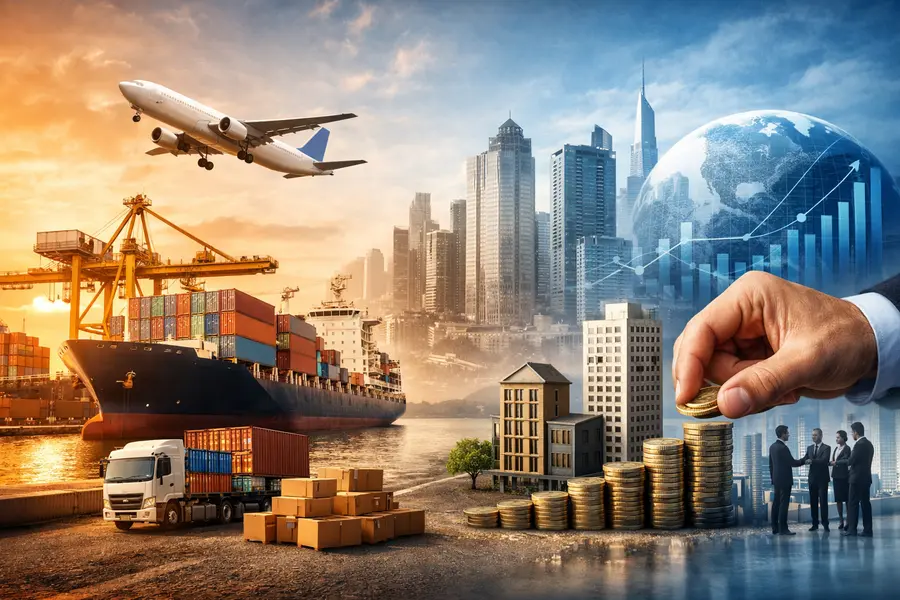
Foreign trade and foreign investment are two pillars of globalization, but they operate in very different ways. In simple terms, foreign trade refers to buying and selling goods or services across international borders, while foreign investment means moving capital across borders to acquire assets or ownership stakes in another country. For example, international trade involves exports and imports of products (like cars or oil) and services (like tourism or consulting), whereas foreign investment involves things like a company building a factory abroad or buying shares in a foreign firm. These activities impact economies differently: trade flows show up as imports and exports on a country’s balance of payments, while investment flows appear in the financial account as capital movements.
Foreign trade (also called international trade) is the exchange of goods, services, and capital between countries. It means one country’s businesses export products or services to others and import those they need. As the World Bank notes, trade is a key engine of economic growth, creating jobs and lowering poverty by letting countries specialize in what they do best. Formally, international trade is defined as “the exchange of capital, goods, and services across international borders or territories”.
Foreign investment means capital flows into a country from abroad to acquire assets or stakes in businesses. The most common form is foreign direct investment (FDI), where a foreign entity buys a lasting stake (typically 10% or more of voting stock) in a company or builds new operations in the host country. A concise definition is "FDI is 'investment made to acquire a lasting management interest (usually 10% of voting stock) in an enterprise operating in a country other than that of the investor.'" In other words, the investor gains some level of ownership and control in a foreign business.
Other forms of foreign investment include foreign portfolio investment (FPI), where foreign investors buy stocks or bonds without seeking control, and foreign institutional investment (FII), involving investment by large institutions like pension funds in foreign markets. But all foreign investment involves money moving across borders. As one summary notes, "Foreign investment is the inflow of capital into a country through individuals/institutions from a different country.
The table below and points highlight the main contrasts.
Each of these points can be seen in summaries by experts. For example, one comparison notes that foreign trade “involves the exchange of goods and services between two countries,” while foreign investment involves a foreign company “investing in another company based in a different country." The advantages also differ: trade gives domestic producers market access abroad, whereas investment brings long-term capital and technology to local firms.
To put scale into perspective, consider recent global data. According to the WTO, world trade in goods and services was $32.2 trillion in 2024. By contrast, UNCTAD reports global FDI flows of about $1.3 trillion in 2023. These figures show that world trade volumes are many times larger than annual investment flows. Moreover, trade grew about 4% in 2024 (rebounding from a decline in 2023), while FDI actually fell 2% in 2023, reflecting differing economic dynamics.
Examples by Sector: Some sectors highlight the difference. For instance, when smartphones are made partly in Vietnam and shipped globally, that’s trade in goods. But when a tech giant builds a manufacturing plant in Vietnam, bringing in machinery and capital, that’s foreign investment. Another example: a country’s export of crude oil is trade; a foreign-owned oil drilling company operating there is a form of investment.
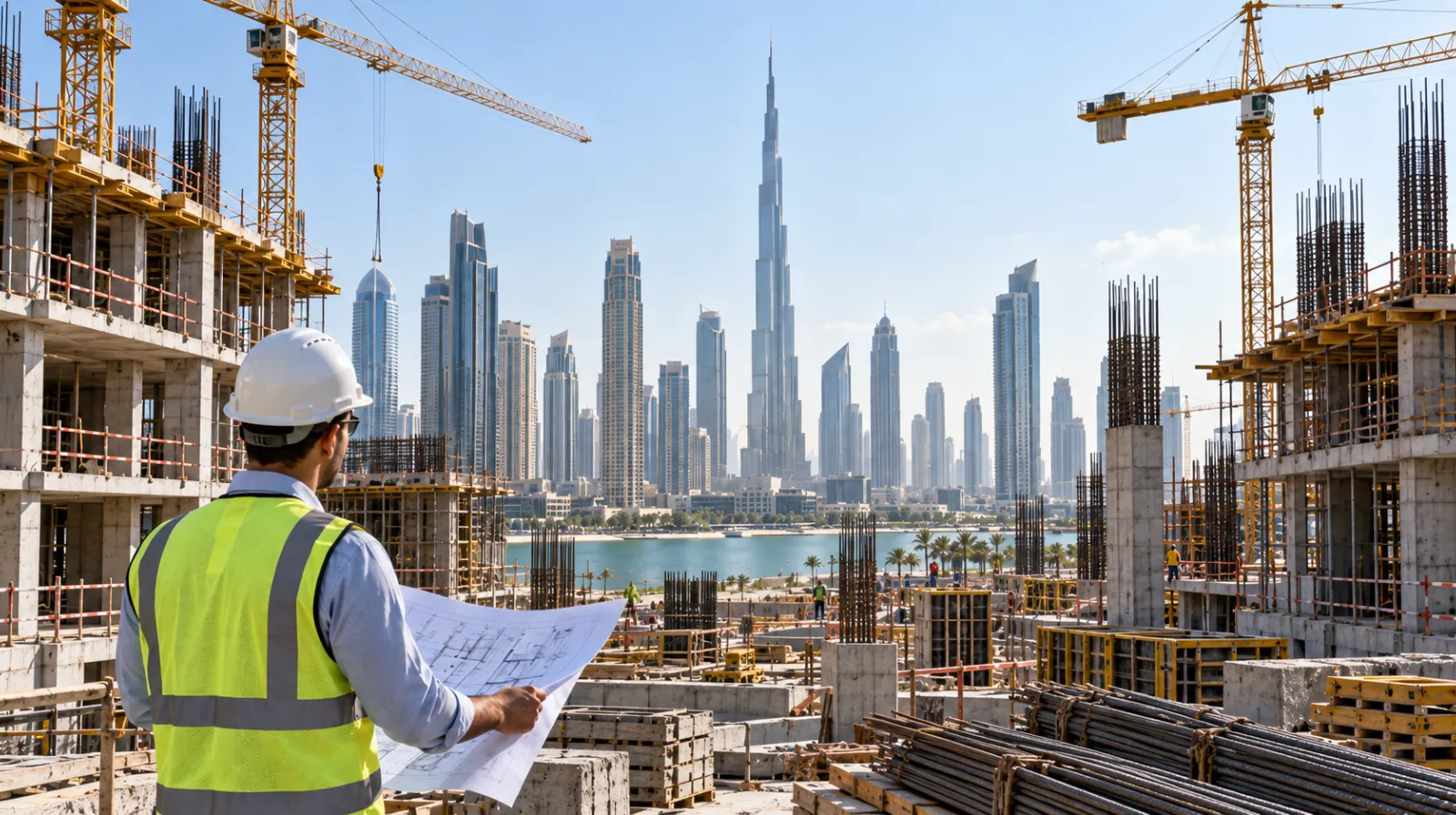
Regional Example – Dubai Real Estate: Foreign investment often targets real estate. For example, Dubai’s property market has become a major magnet for foreign capital. Reports note that foreign nationals now own roughly 43% of Dubai’s residential property value, and in just the first half of 2025 Dubai saw AED 431 billion (≈$117 billion) in real estate transactions with 59,000 new foreign investors entering the market. In fact, one real estate blog even titles its article “Foreign Investors Prefer Dubai Real Estate” to capture this trend. Incentives like zero property taxes and long-term visa programs make Dubai attractive for investors. This example illustrates a point: such investment creates inflows of capital (and sometimes experts to develop projects), rather than flows of goods or services.
Foreign trade and foreign investment both link economies internationally, but they do so in fundamentally different ways. Trade is about exchanging products and services – you send out exports and bring in imports – and it shows up immediately in trade accounts. Foreign investment is about moving money to own or build things abroad – giving an investor a stake in a foreign company or project – which appears in capital accounts and has longer-term effects. Both are vital for growth: trade helps countries specialize and gain revenue from their exports, while investment can bring technology, jobs, and sustained capital to domestic industries. In practice, an economy will use both tools: selling goods to foreign markets and attracting foreign capital. Understanding how they differ – and how they can complement each other – helps policymakers and businesses make informed decisions about global engagement.
The main difference is that foreign trade involves the exchange of goods and services between countries, while foreign investment involves the movement of capital from one country to another to own or control assets. Trade is about buying and selling products internationally, while investment is about putting money into businesses or projects abroad.
It is important to distinguish between foreign trade and foreign investment because both affect the economy in different ways. Trade impacts exports and imports, while investment affects capital growth, job creation, and long-term development. Understanding the difference helps governments create better economic policies.
Yes. Foreign Direct Investment (FDI) is one of the main types of foreign investment. It happens when an investor gains ownership or control in a foreign business. It usually involves long-term commitment and management participation.
No. Foreign trade does not involve ownership. It only involves buying and selling goods or services. Ownership or control in a foreign company happens only in foreign investment.
Foreign investment usually has a longer-term impact because it involves building businesses, infrastructure, and long-term projects. Foreign trade can happen regularly and quickly, but investment normally stays in the country for many years.
Yes. Most countries participate in both. They export and import goods (foreign trade) while also attracting foreign capital (foreign investment). Both activities are important for economic growth.
Latest Blogs
Sep 18, 2026

Sep 15, 2026

Sep 12, 2026

Sep 9, 2026

Sep 5, 2026