
Best Dubai Properties Under AED 2 Million With Payment Plans
Sep 30, 2026
Blog Detail
Etihad Rail Abu Dhabi connects the UAE by modern rail, boosting travel, trade, and sustainability with nationwide passenger and freight services.
Article
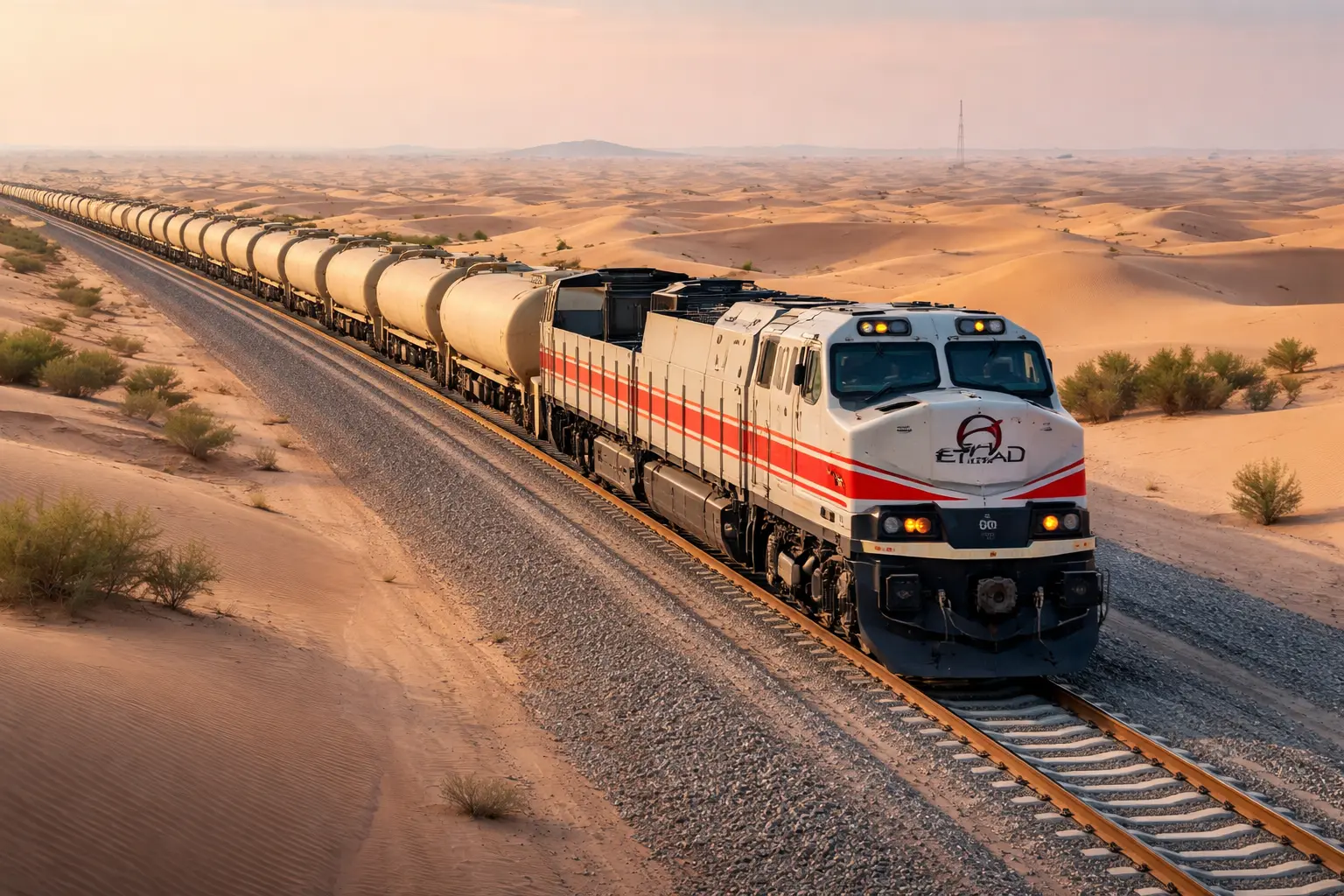
Etihad Rail Abu Dhabi refers to the ambitious national railway project in the United Arab Emirates (UAE) that is transforming connectivity across all seven emirates, with a particular focus on the capital, Abu Dhabi. Etihad Rail is the developer and operator of the UAE’s first national rail network, established in 2009 to build and manage a state-of-the-art freight and passenger railway system
This network is a key part of UAE’s strategic development plans – it aligns with Abu Dhabi Economic Vision 2030 and UAE Vision 2021 to drive economic diversification and growth. In this comprehensive overview, we’ll explore the evolution of Etihad Rail, its development phases, the role of Abu Dhabi in the network, latest updates as of 2025, and the expected benefits and future plans of this game-changing rail initiative.
Etihad Rail is the UAE’s first national railway network, designed to link key cities, ports, and industrial zones across the country on a unified rail system. The fully completed network will span approximately 1,200 km across the emirates, from the Saudi Arabian border in the west to the eastern coast by the Indian Ocean. Built to international standards, the railway will form an integral part of the planned Gulf Cooperation Council (GCC) rail network, eventually connecting the UAE to neighboring countries like Saudi Arabia and Oman. The project’s scope and scale make it the largest land transport initiative in the nation’s history, and a cornerstone of future mobility in the region.
Abu Dhabi’s Role: As the capital and largest emirate by area, Abu Dhabi plays a central role in the Etihad Rail network. The railway has been developed with Abu Dhabi’s economic and infrastructural vision in mind. Major industrial areas and logistics hubs in Abu Dhabi are integral to the network – for example, Etihad Rail’s freight lines already link Khalifa Port (a major deep-sea port in Abu Dhabi) and the Industrial City of Abu Dhabi (ICAD) with other emirates. Abu Dhabi’s leadership has championed Etihad Rail as a national unity project: it’s seen as “the largest project to consolidate the strength of the union for the next fifty years,” according to Sheikh Mohammed bin Rashid Al Maktoum. By knitting together far-flung regions from Al Sila (on Abu Dhabi’s western border) to Fujairah, Etihad Rail underscores Abu Dhabi’s commitment to a connected, diversified economy.
The Etihad Rail project has been executed in stages over more than a decade. Each phase expanded the network’s reach and capabilities, paving the way for nationwide coverage and future passenger service.
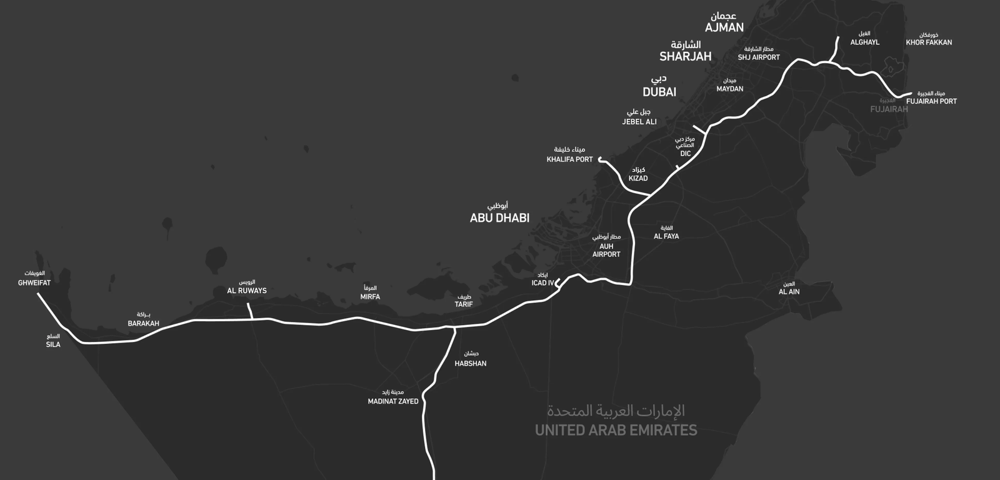
Abu Dhabi, being geographically large, contains a significant portion of the Etihad Rail route. The railway enters the UAE through Al Sila on Abu Dhabi’s western border with Saudi Arabia, traversing the emirate’s vast Al Dhafra region, and then reaches the urban capital area. There are seven passenger stations within Abu Dhabi emirate planned in the initial network, reflecting the emirate’s expanse and importance. These include stops in remote communities and key towns, ensuring even far-flung areas gain connectivity:
According to recent announcements, these Abu Dhabi stations were “carefully selected within key locations to serve population centres” across the emirate. From MBZ City station in Abu Dhabi, the line continues northeast to Dubai, where the main Dubai station is at Jumeirah Golf Estates, and further on to Sharjah (University City and Al Dhaid stations) and Fujairah (Al Hilal area). In total, 11 stations will span the country once passenger service begins, effectively connecting all major regions from Al Sila (west Abu Dhabi) to Fujairah (east coast).
Map of the Etihad Rail route across the UAE, highlighting key stops. The network stretches from the Saudi border at Al Sila (left/west) through Abu Dhabi and Dubai to Fujairah on the east coast, with plans to extend into Oman.
Notably, Abu Dhabi’s inclusion in the network not only means the capital city area will be served by fast trains, but also that smaller communities in Abu Dhabi’s hinterland gain access to rail connectivity for the first time. This is expected to spur development in those regions and improve mobility for residents in Al Dhafra (western Abu Dhabi). Additionally, Abu Dhabi’s existing freight facilities are fully integrated – for example, the railway already carries freight to and from Khalifa Port and Mussafah (industrial areas of Abu Dhabi) under the freight operations launched in 2023. When passenger trains commence, Abu Dhabi will effectively be a central hub: one could travel from the capital to Dubai in under an hour, or head west to Ruwais and the Saudi border areas by train instead of by road.
As of the end of 2025, Etihad Rail has made significant strides towards launching its passenger services. In early 2025, the company initially unveiled four main passenger station locations – in Abu Dhabi, Dubai, Sharjah, and Fujairah – and later in the year it confirmed the additional seven stations to complete the 11-stop network. By October 2025, officials announced that construction of the UAE’s core national railway network was 100% complete, and trial operations were underway. The fleet of modern passenger trains (built by CRRC in China and CAF in Spain) was largely delivered, with 10 out of 13 trains already in the UAE undergoing tests by late 2025. Each train can carry up to 400 passengers and is equipped with the latest systems for safety and comfort.
Importantly, Etihad Rail confirmed that passenger operations will commence in 2026, after all safety certifications and station construction are finalized. Although a precise public launch date was not given as of January 2026, officials indicated that stations will open in phases during 2026. Phase one of service will connect the 11 cities and areas mentioned, enabling inter-city journeys such as Abu Dhabi to Dubai in about 57 minutes and Abu Dhabi to Fujairah in around 1 hour 45 minutes. By comparison, these trips by car can take 1.5 to 2.5 hours, so the train offers substantial time savings. The top speed of the passenger trains is 200 km/h, and travel times are expected to be 30–40% shorter than driving.
Behind the scenes, 2023–2025 also saw key partnerships and agreements to ensure the smooth operation of the new rail service. In 2024, Etihad Rail signed a Memorandum of Understanding with Dubai’s Roads and Transport Authority to integrate fare systems – meaning passengers will be able to use their Nol cards (the payment card used for Dubai Metro and buses) on Etihad Rail for seamless travel. This integration of ticketing underscores how the national rail will complement local transit. For instance, a traveler could hop off an Etihad Rail train in Dubai or Abu Dhabi and transfer to a metro or bus easily – similar to using a unified system as seen on a Dubai Metro Map for urban rail. Additionally, a joint venture with Keolis (a global transit operator) was established to manage Etihad Rail’s passenger service, covering everything from running the trains to coordinating connections like feeder buses and parking at stations.
The Etihad Rail network – including its Abu Dhabi segments – is poised to deliver wide-ranging benefits for the UAE’s economy, environment, and society. Some of the key impacts include:
Even as the core UAE network becomes operational, Etihad Rail’s vision extends beyond 2026. One major expansion on the horizon is the UAE-Oman rail link. In 2024, the UAE and Oman launched the Hafeet Al Ain Railway Project, a joint venture to construct a 303 km cross-border line from Abu Dhabi (Al Ain area) to the Omani port of Sohar. This international connection will allow passengers and freight to travel seamlessly between the two countries, and is part of the broader GCC Railway plan to eventually link all Gulf states by rail. For example, once completed, a journey from Abu Dhabi to Oman’s Sohar port could take only about 1 hour 40 minutes by train, greatly facilitating trade and tourism between the nations.
Within the UAE, there are also plans to further integrate Etihad Rail with local urban transport networks. Abu Dhabi has long-term plans for its own metro or light rail system, which could connect to the Etihad Rail station at MBZ City, allowing easy transfer for passengers heading into the city center. In Dubai, the Etihad Rail station at Jumeirah Golf Estates will link with existing public transport; the integration of the Nol payment card means a traveler might use the Dubai Metro (whose routes are famously shown on every Dubai Metro Map) and then hop on an Etihad Rail train using the same card. Future smart mobility initiatives aim to provide door-to-door connectivity – from high-speed trains down to city trams, buses, and even autonomous shuttles – ensuring that the national rail becomes part of a truly integrated transportation ecosystem.
Finally, Etihad Rail is exploring premium services to enhance rail travel experiences. A high-end luxury train service, in partnership with Italy’s Arsenale, is in the works for tourists, promising an Orient Express-style journey across the UAE by 2028 if all goes to plan. The combination of standard passenger services and specialty trains could make the UAE a unique destination for train travel in a region historically dominated by air and road transport.
In summary, Etihad Rail Abu Dhabi and the UAE national railway network represent a historic leap forward in the country’s infrastructure. By 2026, residents and visitors will be able to ride modern trains across the emirates, reaping the benefits of faster travel, safer freight movement, and stronger economic integration. Abu Dhabi stands at the heart of this network – from its deserts and ports to its bustling capital – underscoring the emirate’s leading role in connecting the nation. With continued development, including international links and urban integrations, Etihad Rail is set to drive the UAE’s transport future, fostering growth and unity through rail for decades to come.
Latest Blogs
Sep 30, 2026
Sep 28, 2026
Sep 26, 2026

Sep 21, 2026
Sep 21, 2026