
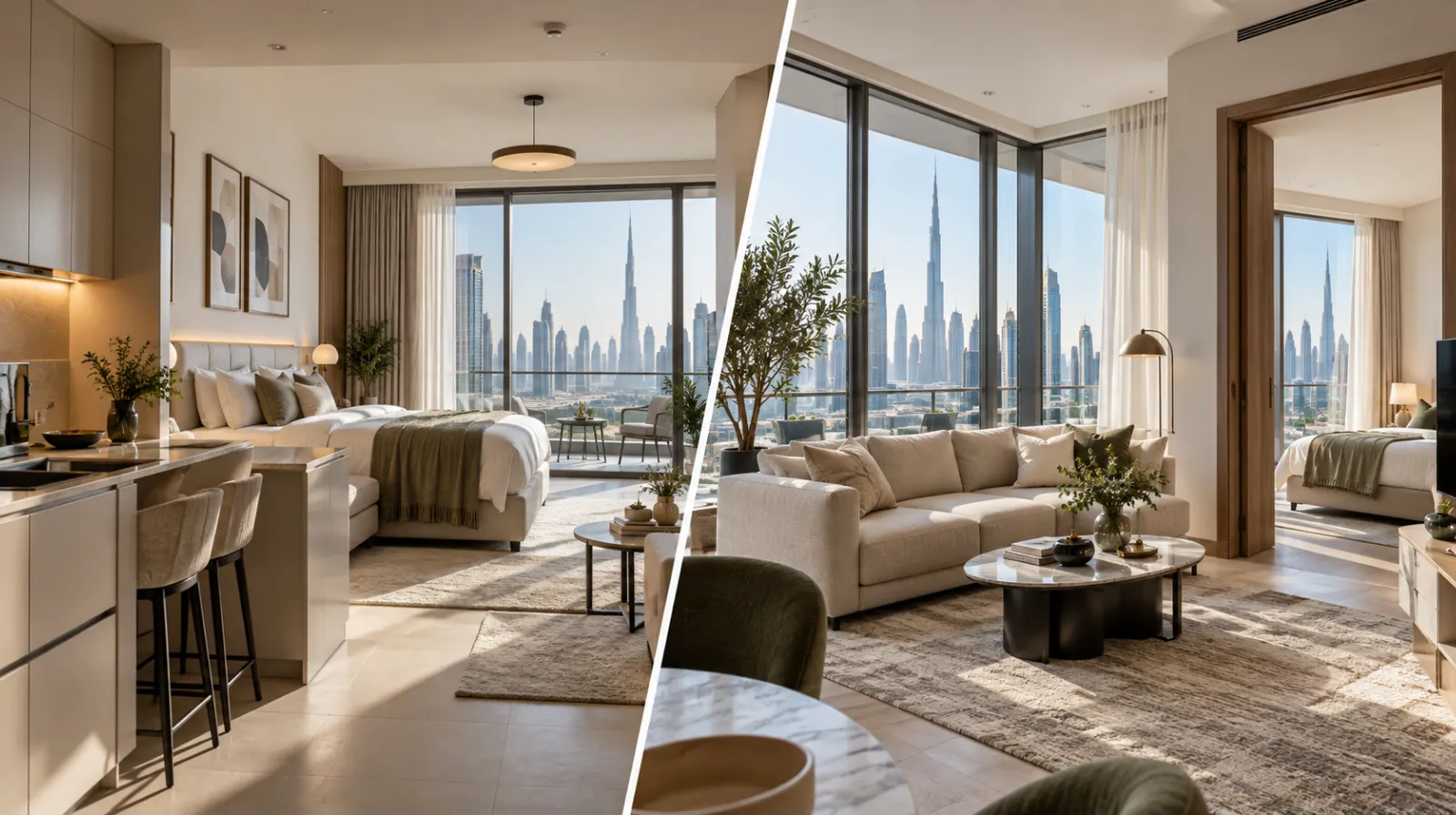
Studio vs 1-Bedroom Apartment Dubai Investment Guide
Oct 14, 2026
Blog Detail
Is now the right time to invest in Dubai real estate? Explore market trends, ROI, and the impact of Middle East conflict on opportunities.
Article
Dubai has long been recognized as one of the most dynamic and fast-growing real estate markets in the world. From luxury beachfront villas to high-rise apartments in iconic skyline locations, the city offers a wide range of investment opportunities for both local and international buyers. However, in today’s global environment—especially with ongoing geopolitical tensions—many investors are carefully evaluating their decisions. The key question remains:
Dubai’s real estate market is not just driven by short-term speculation; it is supported by strong fundamentals that have proven their stability over time. The city has successfully navigated multiple global challenges, including the 2008 financial crisis and the COVID-19 pandemic, and has consistently bounced back stronger
This resilience comes from a combination of strategic planning and economic diversification. Unlike many economies in the region, Dubai does not rely heavily on oil. Instead, it has built a strong foundation across tourism, trade, finance, and technology. Real estate plays a central role in this ecosystem, acting as both an investment asset and a key driver of economic growth.
Government initiatives, investor-friendly policies, and continuous infrastructure development have made Dubai a global hub for business and lifestyle. This strong foundation is one of the main reasons investors continue to show confidence in the market even during uncertain times.
Over the past few years, Dubai’s real estate market has shown impressive growth in both transaction volume and property prices. Prime areas such as Downtown Dubai, Dubai Marina, Palm Jumeirah, and Business Bay have witnessed significant demand, especially from international buyers.
This growth is not random—it is driven by real demand. There has been a steady increase in population, a rise in expatriate professionals, and a growing number of global investors relocating to Dubai. In addition, flexible payment plans and attractive off-plan projects have made it easier for new investors to enter the market.
One of the most appealing aspects of Dubai real estate is its high rental yield. Investors can earn returns ranging between 6% to 9%, which is significantly higher compared to many global cities. This makes Dubai not just a place to park capital, but a strong income-generating investment destination.
The impact of Middle East conflict on Dubai real estate is one of the most discussed topics among investors today. While geopolitical tensions often create uncertainty, the situation in Dubai is quite unique.
In reality, Dubai benefits from being a stable and neutral economic hub within the region. While neighboring areas may experience instability, Dubai continues to maintain strong governance, security, and economic consistency. This positions the city as a safe haven for both individuals and investors.
When conflicts arise, investors typically move their capital away from high-risk zones and look for secure markets. Dubai often becomes a preferred destination because of its transparency, infrastructure, and global connectivity. As a result, instead of negatively impacting the market, regional tensions can actually increase demand for property in Dubai.
This pattern has been observed multiple times in the past. During periods of uncertainty, there is often a noticeable increase in high-net-worth individuals purchasing property in Dubai, particularly in luxury and waterfront developments. This creates upward pressure on property values and strengthens the overall market.
While many investors see geopolitical tension as a risk, experienced investors often view it as an opportunity. Dubai’s real estate market tends to perform well during uncertain times because it acts as a safe investment destination.
Capital inflow is one of the biggest advantages. Investors from regions facing instability often move their funds into Dubai, increasing demand for both residential and commercial properties. This demand is particularly strong in premium segments, where buyers are looking for secure, long-term assets.
In addition, uncertainty in global markets often shifts investment focus toward tangible assets like real estate. Dubai, with its strong legal framework and investor protection, becomes an attractive option for those looking to preserve and grow their wealth.
Dubai’s government has played a major role in making the real estate market attractive for investors. Several policies have been introduced to encourage foreign investment and long-term residency.
The Golden Visa program allows property investors to secure long-term residency, making Dubai not just an investment destination but also a place to live and build a future. Full foreign ownership in designated areas has removed previous barriers, allowing international buyers to invest freely.
Another major advantage is the absence of annual property tax. Unlike many global cities where property taxes significantly reduce returns, Dubai allows investors to maximize their profits. Combined with a business-friendly environment and strong legal protections, these policies create a stable and attractive investment ecosystem.
Dubai’s rental market is currently experiencing strong demand, driven by population growth and increasing expatriate inflow. Many professionals prefer renting before buying, which ensures a steady supply of tenants.
The tourism sector also plays a significant role. Short-term rentals, such as holiday homes and Airbnb properties, have become increasingly popular. This provides investors with the flexibility to generate higher returns compared to traditional long-term rentals.
With consistent demand and competitive yields, Dubai offers a unique combination of capital appreciation and rental income, making it one of the most balanced real estate markets globally.
Off-plan properties continue to be a popular choice among investors. Developers offer flexible payment plans, allowing buyers to invest with lower upfront costs. These projects often come with modern designs, advanced amenities, and strong appreciation potential.
Investing early in a project can lead to significant gains by the time it is completed. However, it is important to choose reputable developers and focus on projects in high-demand locations to minimize risk.
Choosing the right location is critical for maximizing returns. Established areas like Downtown Dubai and Dubai Marina offer stability and consistent demand, while emerging areas like Dubai Creek Harbour and Dubai South provide opportunities for higher growth at lower entry prices.
Investors should focus on factors such as connectivity, infrastructure, and future development plans. Properties near metro lines, business hubs, and tourist attractions tend to perform better in both rental income and capital appreciation.
Like any investment, Dubai real estate comes with risks. Market fluctuations, oversupply in certain areas, and global economic factors can impact performance. However, these risks can be managed with the right strategy.
A long-term investment approach is essential. Instead of focusing on short-term price changes, investors should look at long-term growth potential. Diversifying investments and choosing high-demand locations can also help reduce risk.
Timing plays a crucial role in real estate investment. The current market presents a unique opportunity because it is still in a growth phase. Prices are rising, but they have not yet reached their peak.
Strong international demand, ongoing infrastructure projects, and increasing population all indicate continued growth. Waiting too long could mean entering the market at higher prices with lower potential returns.
Dubai’s future is driven by long-term planning and innovation. Initiatives like the Dubai 2040 Urban Master Plan aim to create sustainable communities, improve infrastructure, and enhance quality of life.
The city continues to invest in smart technology, tourism, and business development, ensuring that demand for real estate remains strong. This long-term vision provides confidence for investors looking to build wealth over time.
The answer is clearly yes—but more importantly, it is a strategic time. The market is supported by strong fundamentals, high demand, and investor-friendly policies. Even with global uncertainties and regional tensions, Dubai continues to position itself as a safe and profitable investment hub.
The Impact of Middle East Conflict on Dubai Real Estate highlights an important reality: while uncertainty exists, it often strengthens Dubai’s position as a secure destination for capital. Investors who understand this dynamic can take advantage of opportunities that others may overlook.
With the right approach, careful planning, and a long-term mindset, investing in Dubai real estate today can be one of the most rewarding financial decisions for building sustainable wealth.
Latest Blogs
Oct 14, 2026
Oct 12, 2026
Oct 10, 2026
Sep 30, 2026
Sep 28, 2026