UAE’s New Advertiser Permit Law (Effective February 2026)
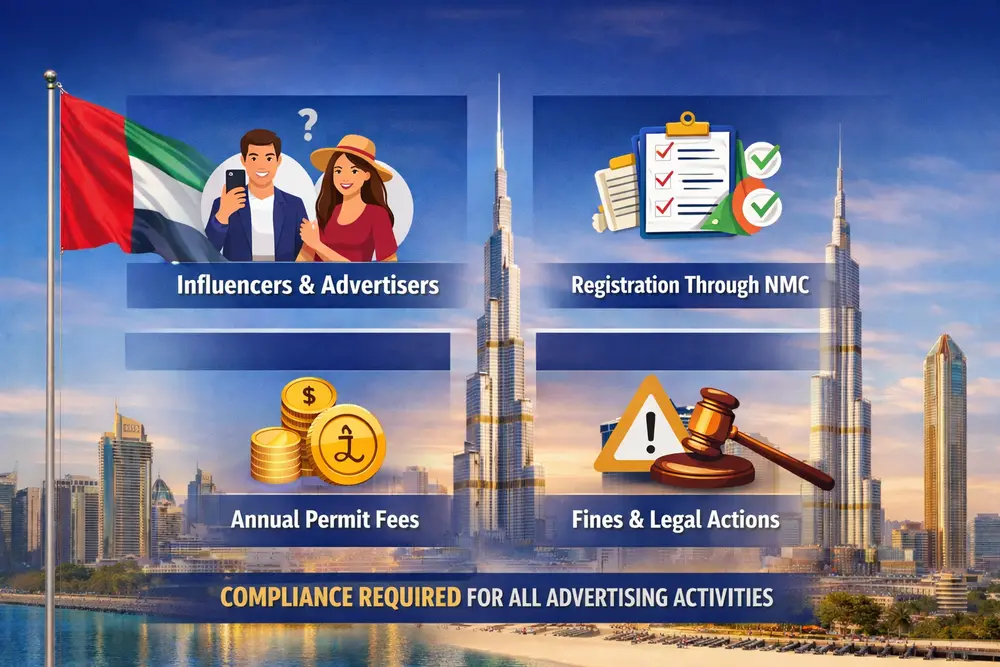
The United Arab Emirates has introduced a mandatory Advertiser Permit requirement for anyone engaged in promotional or advertising content, with enforcement beginning on February 1, 2026. This new rule, established under Federal Decree-Law No. 55 of 2023 (the UAE’s updated Media Regulation Law), compels all advertisers and content creators to obtain an official permit before posting any paid or unpaid promotional content on social media, websites, blogs, or other platforms. The law applies across all seven Emirates as a federal mandate, covering digital promotions as well as traditional media advertising, with the aim of fostering a transparent, professional, and trustworthy advertising environment in the country.
Background of the New Law
The Advertiser Permit initiative is part of a broader overhaul of the UAE’s media regulations between 2023 and 2025. The UAE Media Council (the federal authority overseeing media) launched this permit system to modernize the regulatory framework in line with the fast-paced growth of digital media. By issuing the permit requirement under Media Law No. 55 of 2023 and subsequent regulations, the government seeks to raise content standards, increase transparency, and protect the public from misleading or harmful material. It also supports the UAE’s vision of becoming a global hub for digital content creation and advertising by attracting investment and talent, while safeguarding the rights of creators and consumers. The rule was first announced in mid-2025, with a grace period allowing content creators to comply. It became compulsory from February 1, 2026, after an initial deadline extension to ensure broad awareness and registration.
Who Needs an Advertiser Permit?
Under the new law, any individual or entity who publishes promotional content in the UAE must hold a valid Advertiser Permit. This requirement is deliberately wide in scope to cover the many forms modern advertising takes.
The following must obtain the permit:
- Social Media Influencers and Content Creators: Anyone on platforms like Instagram, YouTube, TikTok, Facebook, etc., who promotes products, services, or brands (even micro-influencers or casual promoters). This includes promotions done for payment, free products, or even unpaid collaborations. If you are an influencer based in the UAE, you need the permit to continue posting sponsored content.
- Advertisers and Marketers in the UAE: Professionals such as marketing managers, brand ambassadors, and digital marketers who create or post ads targeting UAE audiences must have the permit. Even if you work for a company (e.g. a multinational’s marketing team) and run online ad campaigns directed at UAE consumers, you individually need to be permitted as an advertiser.
- Companies and Agencies (Verification Role): While the permit itself is issued to individuals (or individual trade licenses), organizations are responsible for ensuring compliance. UAE businesses, advertising agencies, and brands must verify that any content creator or promoter they hire or collaborate with holds a valid permit. In practice, this means companies should only contract influencers or freelance marketers who can show an active Advertiser Permit, or risk penalties for aiding unlicensed advertising. Agencies bringing in foreign influencers must facilitate their permitting (see “Visitor Permit” below).
- Visiting or Foreign Content Creators: Non-resident influencers or media creators who visit the UAE to create content or run campaigns must obtain a Visitor Advertiser Permit if they post or shoot promotional material while in the country. This applies to, for example, a tourist influencer doing a paid brand collaboration during a trip to Dubai, or an overseas marketing agency running social ads targeting UAE users. In essence, targeting the UAE audience triggers the permit requirement, regardless of the person’s usual residence.
Geographical scope: Because this is a federal law, it applies in all Emirates (Dubai, Abu Dhabi, Sharjah, etc.) equally. There are no Emirate-specific exceptions – the UAE Media Council’s rules cover the entire country. Furthermore, the regulation isn’t limited to social media; it covers all media channels. Traditional outlets (print, TV, radio) and online publications are included, ensuring that advertising content across print, broadcast, and digital platforms is uniformly regulated. (In practice, however, most traditional media advertisers were already licensed; the new permit mostly impacts digital creators and non-traditional advertisers.)
Why Was the Law Introduced?
The UAE government implemented the Advertiser Permit system to address multiple objectives and challenges in the evolving media landscape:
- Increase Transparency and Trust: By requiring advertisers to be registered, the law makes it clear who is behind promotional content. This helps the public distinguish genuine advertising from organic content, and holds permit-holders accountable to truth-in-advertising standards. Each permit holder must display their permit number, signaling to audiences that they are authorized and regulated. This transparency is meant to build trust between consumers and content creators/advertisers.
- Raise Content Standards and Professionalism: Permit holders are obliged to follow 20 mandatory content standards set by the Media Council (covering respect for cultural values, truthfulness, avoiding hate speech or misinformation, etc.). The goal is to improve the quality of advertising content and ensure it aligns with the UAE’s cultural norms and laws. Unqualified or unethical advertising practices (for instance, making false claims about a product) are curtailed by tying the permit to adherence to these standards.
- Protect the Public (and Minors): The law is designed to shield the public from misleading, harmful, or inappropriate advertisements. For example, it introduces specific regulations for sensitive sectors like health, finance, and education, requiring that those who advertise in these fields have relevant expertise or approvals. It also sets special rules for young content creators to ensure minors are not exploited or exposed to unsafe commercial activities (details in Exemptions section). Overall, the permit system acts as a quality control to prevent scams, false advertising, and content that could negatively impact consumers.
- Support the Digital Economy & Creators: Recognizing that digital content creation is a growing industry, the UAE wants to foster it in a sustainable way. Officials have noted that the UAE has become a magnet for influencers and creatives due to its supportive infrastructure and forward-looking policies. The Advertiser Permit is part of establishing a “flexible and modern regulatory ecosystem” that legitimizes content creators as professionals, protects their rights, and integrates them into the economy. By regulating this sector, the government aims to attract advertisers and platforms to operate in the UAE, boosting investment and creating a level playing field for local talent.
- Strengthen Regulatory Oversight: The initiative also closes gaps in oversight. Previously, many social media influencers operated in a gray area or under a separate voluntary licensing scheme. The new law brings all promotional activities under the Media Council’s supervision, allowing authorities to enforce standards uniformly. It complements other media laws and gives authorities tools (fines, suspensions) to act against those who flout the rules, thereby strengthening governance in the media sector.
In summary, the Advertiser Permit law was introduced as a proactive measure to keep up with the rapid changes in advertising, especially the rise of influencer marketing. It balances the UAE’s encouragement of a thriving media and content industry with the need to ensure responsibility, authenticity, and legal compliance in all advertising content.
Permit Requirements and Eligibility
To qualify for an Advertiser Permit, applicants must meet certain criteria set by the UAE Media Council. Not everyone can immediately get a permit – the law ensures that only eligible and responsible individuals are licensed:
- Age Requirement: Generally, applicants must be 18 years or older. The Media Council may make exceptions for younger creators in special cases (with parental consent and additional conditions), but the default is adulthood. In fact, separate guidelines exist for ages 15–17: they must be at least 15, medically fit, have guardian approval, and their promotional content must be age-appropriate and not for harmful products. Content created by minors is mostly exempt (see Exemptions), so the permit path is mainly intended for adults.
- Trade License (for Residents): UAE citizens and residents applying for the permit need to hold a valid trade licence for electronic media activities (or be employed under a company that has one). This means you should either have a registered business (such as a sole proprietorship or an LLC) with media/advertising as part of its licensed activities, or be partnered with an influencer agency or media company. The permit is considered separate from the older “e-media license” that some influencers obtained in the past, but in practice you still need to have a legal entity or sponsorship in the media sector to qualify. This requirement ensures that content creators operate as legitimate businesses or professionals, and it filters out anonymous or fly-by-night advertisers.
- Good Conduct: Applicants must have a record of good conduct with no prior media law violations. The Media Council will likely check that the person hasn’t been penalized before for publishing illegal or offensive content. This criterion encourages applicants to clean up any past compliance issues before applying.
- Residency and Identification: Since the permit is primarily for UAE-based activities, residents will need to provide their Emirates ID and passport copies during application. Expats on work or family visas are eligible to apply. You’ll also need a local UAE bank account (IBAN) for fee payments or any transactions, as per application guidelines. All information provided must be accurate, and permit holders are expected to update their details if circumstances change.
- Visitors and Non-Residents: If you are not a UAE resident but plan to do promotional work in the UAE (for example, an overseas influencer collaborating with a UAE brand or filming content locally), you cannot directly apply on your own. Instead, you must obtain a Visitor Advertiser Permit by working through a licensed UAE advertising or talent agency. The agency effectively sponsors or facilitates your permit application to the Media Council. You will need to be registered with an approved agency and provide relevant documents (passport, perhaps a no-objection letter, etc.). This ensures that foreign content creators are vetted and accountable via a local entity. The Media Council has indicated it will publish a list of approved agencies for visitor permits.
In essence, the eligibility criteria are designed to ensure that permit holders are adults with a legitimate business footing in the UAE’s media space and a clean track record. The involvement of trade licenses and agencies ties the permit system into the existing commercial licensing regime, thereby formalizing the status of content creators as part of the media industry.
How to Obtain the Advertiser Permit
Applying for the Advertiser Permit is a formal process managed by the UAE Media Council. Here is how it works and what to expect:
Application Platform: UAE citizens and residents must apply through the official UAE Media Council website (the Council provides an online portal for permit services). The interface is typically in both English and Arabic, and applicants need to create an account or use UAE Pass for authentication. For non-resident creators (visitors), the application is made via accredited UAE-based agencies – essentially, you contact an approved local agency and they handle the permit application on your behalf.
Required Documents: Prepare the necessary documentation. According to the Media Council’s guidelines, applicants will need to upload copies of their passport and Emirates ID, as well as a UAE bank account IBAN for fee payment processing. You will also need to provide samples of your content or links to your social media profiles as part of demonstrating the kind of material you publish. If you are applying as, or under, a company (i.e., not a sole proprietor), you should attach a copy of the company’s trade/commercial license showing the relevant media activity. These requirements help the Council verify your identity and that you meet the eligibility criteria.
Application Form: Fill out the form with personal details (name, contact info), professional details (your social media handles, nature of advertising you do), and affirmations that you will follow the rules. You may have to list the accounts or platforms on which you intend to advertise – since only registered accounts tied to your permit are allowed to publish ads. Ensure all information is accurate to avoid delays.
Processing Time: Once you submit the application, the Media Council will review it. The official guidance suggests about five working days for processing, although it could vary based on volume of applications or if any information needs clarification. During this time, they might verify your documents and ensure you meet all criteria. If everything is in order, the permit is granted relatively quickly – you would receive a digital certificate or permit number.
Approval and Permit Issuance: Approved applicants are issued an Advertiser Permit number (and possibly a certificate or ID). The permit number is crucial because, under the rules, you must display this number clearly on your social media profiles (for instance, in your Instagram bio or YouTube channel description). This signals to the public and authorities that you are a registered advertiser. You are now authorized to create and post promotional content, but you also carry the responsibilities and obligations we outline in the next section. If the application is rejected (e.g., due to not meeting a requirement), you would be informed of the reason and may be allowed to re-apply after addressing the issue.
Permit Validity and Renewal
Once obtained, the Advertiser Permit isn’t indefinite – it comes with a set validity period and must be kept up-to-date:
- For UAE Residents: The permit is valid for 1 year from the date of issuance. Permit holders must renew it annually if they wish to continue advertising. The renewal process will likely be similar to the initial application (updating any documents if needed). Crucially, as noted, the UAE government has waived the annual fee for the first three years (2026 through 2028) for residents and citizen permit holders. This means if you get your permit now, you can renew in 2027 and 2028 at no charge. Starting around 2029 or thereafter, the annual fee ) could be applied unless further changes are announced. It’s wise to stay informed on any updates from the Media Council regarding fees.
- For Visitors: A Visitor Advertiser Permit is typically valid for 3 months It is intended for short-term content creation activities. According to official info, a visitor permit can be renewed once for an additional 3 months【15†L98-L102】, giving a maximum of 6 months coverage in a single stretch if needed. After that, if a creator still wants to continue advertising in the UAE, they might have to either sit out for a while or pursue a more permanent setup (e.g., become a resident with a trade license). Each visitor permit is tied to an agency, so renewals would also go through that agency. The visitor permit system ensures that non-resident influencers are temporary and monitored.
- Renewal Process: Renewal generally will involve logging into the Media Council portal (or going through the agency for visitors) and requesting renewal before the current permit expires. You may need to confirm that your details (contact info, linked social accounts, etc.) are up to date and that you remain in good standing (no violations). If the fee waiver is still in effect, no payment is needed; otherwise, pay the renewal fee. Late renewal or operating on an expired permit can incur penalties (the law sets a fine of AED 150 per day capped at 3,000 for using an expired license, plus a possible lump fine). So, mark your calendar to renew on time.
- Changes and Cancellation: If at any point you cease advertising activities, you might let the permit lapse. But note that if you violate the law, the Media Council has authority to suspend or cancel your permit as an administrative action. A canceled permit could mean you are banned from reapplying for a certain period or at all, depending on severity. Permit holders also have a right to appeal certain decisions or penalties within 15 days as per the media law procedures.
The bottom line is that compliance is not a one-time task; it’s ongoing. Advertisers should treat the permit like any professional license – keep it active, renew it responsibly, and adhere to its terms to avoid disruptions in your ability to do business in the UAE.
Exemptions and Special Cases
While the Advertiser Permit law is broad, there are explicit exemptions to ensure it targets the right activities without overreach. Not everyone doing online promotion falls under this law’s purview. The UAE Media Council has outlined a few key situations where an individual does NOT need an Advertiser Permit:
- Personal Promotions of Own Business: If you are **using your personal or company’s own social media account to promote your own products or services, you do not require an Advertiser Permit. For example, a home entrepreneur who uses their Instagram page to advertise their handmade crafts, or a small restaurant owner posting daily specials on the restaurant’s Facebook page, is exempt. This exemption recognizes that these cases are essentially straightforward business advertising or personal branding, not third-party advertising. (Do note, however, that such posts must still comply with general consumer protection and content laws – being exempt from the permit doesn’t mean you can post illegal content.)
- Minors Under 18 in Certain Content: Individuals under 18 years old who are involved in educational, cultural, sports, or charitable awareness activities are exempt from needing a permit, as long as their content complies with relevant minor protection laws. For instance, a 17-year-old YouTuber who makes educational science videos or a teenager raising awareness for a social cause can continue without a permit, provided the content is appropriate and not commercial in nature. The law’s intent is to exempt youth engaged in positive, non-commercial content creation. However, if a minor is doing clear product endorsements or monetized promotions, that likely wouldn’t fall under this exemption and would generally not be allowed without special permission. The Media Council has indicated that where under-18s do partake in advertising, strict conditions apply (such as ensuring guardianship and the content’s suitability).
- Employee Advocacy and Internal Content: Although not explicitly stated as an exemption in the law, content that is internal to a company (like an employee sharing a job opening or company achievement on their personal LinkedIn without compensation) is generally not considered advertising that requires a permit. The focus is on public, consumer-facing promotions. Nevertheless, companies are advised to establish social media guidelines because if an employee’s posting crosses into promotional/marketing territory targeting customers, it could blur lines. (At least initially, enforcement is focusing on obvious commercial promotions.)
It’s important to identify if your content falls into an exempt category. If you only ever promote your own business or creative work on your own account, you’re likely exempt from needing the permit. The law is chiefly aimed at influencers-for-hire and third-party advertisers. When in doubt, one should consult the Media Council or legal counsel – but err on the side of compliance if your activity could be seen as advertising for others.
Obligations for Permit Holders
Obtaining the Advertiser Permit is not just a bureaucratic step – it comes with ongoing responsibilities. Permit holders must adhere to a code of conduct and certain operational rules, designed to uphold the law’s objectives. Key obligations include:
- Follow Content Standards: All permit holders must abide by the 20 mandatory content standards issued by the UAE Media Council. These standards cover a range of common-sense and culturally specific rules: e.g., respecting UAE cultural and religious values, avoiding profanity or pornography, no hate speech or incitement, no spreading of fake news or rumors, and refraining from promoting anything illegal (drugs, etc.). Advertising content should be truthful and not misleading – claims must be substantiated, especially in sectors like health or finance. Essentially, your content is expected to be ethical, accurate, and socially responsible. The Media Council can update these standards, and it’s the permit holder’s duty to keep up with any changes.
- Display Permit Number: You are required to display your Advertiser Permit number prominently on your social media profiles and any platform where you publish ads. Typically, creators add this number in their bio or about section (e.g., “UAE Media Council Advertiser Permit No. XXX”). This makes it easy for regulators and the audience to identify you as a registered advertiser. Additionally, if you post a sponsored piece of content, it’s good practice to mention you are permitted (though just having it in your profile might suffice legally). This rule helps with transparency and allows quick verification of a creator’s status.
- Registered Accounts Only: Advertisements may only be published through accounts that are registered with the Media Council and linked to the permit. When you apply for the permit, you likely declare which social media handles or websites you will use for advertising. You should not post ads on any personal accounts or new platforms that you haven’t registered with the Council. If you start using a new channel, inform the Council or update your permit details accordingly. This measure ensures that the Council knows where official advertising is happening and can monitor compliance. It also ties into enforcement – if someone without a permit tries to advertise, they won’t have a registered account and can be identified.
- No Unauthorized Advertising on Your Behalf: As a permit holder, you must not allow others to use your platforms or permit to advertise. For example, you can’t “rent out” your Instagram account to an unlicensed person to let them post an ad via you. Each advertiser must operate under their own permit. Similarly, you shouldn’t post content provided by someone who is trying to bypass the system (unless they are your legitimate client and you are the one taking responsibility for the ad as the permit holder). The permit is personal and non-transferable – misuse (like attempting to cover for unlicensed advertising) is an offense subject to fines.
- Special Approvals for Certain Ads: Certain categories of advertisements may require prior approval from relevant authorities, even after you have a permit. For instance, health and medical ads often need approval from the Ministry of Health; financial investment ads might need approval from financial regulators. The Media Council has mentioned working with other agencies to set specific rules for ads in sectors like health, real estate, and finance. Permit holders are expected to know and comply with these additional laws. Practically, this means if you’re a content creator, say, promoting a dietary supplement or a property investment, you should check if you need to get the content vetted by the appropriate authority before posting. Failing to do so could count as a violation of both the media rules and the sector-specific laws.
- Maintain Professionalism and Authenticity: You should ensure that any advertisers you partner with (as a creator) are legitimate businesses and not involved in fraud. The Media Council advises creators to do due diligence on who they advertise for. Also, you should clearly label sponsored content as advertisement in line with best practices (the UAE regulations implicitly expect that ads are distinguishable from editorial content). While the permit number is one form of labeling, explicitly using tags like #ad or stating “Advertisement” on a post enhances clarity.
- Compliance with UAE Laws: Beyond content standards, all other UAE laws (such as intellectual property laws, privacy laws, etc.) still apply. Permit holders must not, for example, use copyrighted material without permission in their ads, or violate personal data protection rules when handling user data for promotions. The permit doesn’t shield you from legal liability; if anything, it heightens your responsibility to follow the law closely.
By fulfilling these obligations, Advertiser Permit holders will not only avoid penalties but also contribute to a healthier advertising ecosystem. The Media Council can conduct spot checks on content and will investigate complaints. Initially, enforcement may focus on egregious commercial posts, but over time it can expand, so continuous compliance is key.
Penalties for Non-Compliance
The UAE has backed the Advertiser Permit law with stringent penalties to ensure it’s taken seriously. If an individual or company fails to comply with the permit requirements or breaches the content rules, they can face heavy fines and other consequences. Under Cabinet Resolution No. (42) of 2025 (which details media law violations), the following penalties apply for violations related to advertising and media content:
Operating Without a Permit
Publishing promotional content without a valid Advertiser Permit — including using an expired one — is a clear violation. Offenders may receive official warnings, have their content or accounts suspended, or face legal action. Repeat violations trigger escalated enforcement.
Content Violations
Even with a valid permit, failure to comply with content standards — such as posting misleading information, unapproved health or financial advice, or culturally inappropriate material — can lead to significant penalties. The severity of the breach determines the scale of enforcement, particularly in cases involving public harm or repeat offenses.
Endangering Public Interests or Security
Promotional content that undermines public order, national security, or state interests is handled with the highest level of scrutiny. Offenders in this category may face non-monetary penalties, including criminal prosecution under broader UAE laws.
Misuse of the Permit
Using a permit beyond its authorized scope or allowing others to advertise under your permit is strictly prohibited. Continued advertising on an expired permit is also considered a breach. These actions can result in enforcement measures aimed at protecting the integrity of the licensing system.
Administrative Actions
In addition to content and permit violations, the UAE Media Council may issue formal warnings, suspend advertising privileges, or revoke permits entirely. Suspension halts all advertising activity for a set period, while revocation bars individuals from promoting content until further notice. In minor cases, offenders may be given a grace period to correct violations.
Legal Prosecution
Serious or repeated non-compliance may result in legal proceedings, particularly when other UAE laws are violated — including consumer protection, cybercrime, or public decency laws. In severe cases, this can lead to criminal charges or imprisonment.
Impact on Influencers and Content Creators
For social media influencers and digital content creators, the new law is a game-changer. It effectively turns what used to be a somewhat informal or semi-regulated activity into a professionally licensed activity. Here’s how it impacts creators:
- Mandatory Compliance: Previously, being an influencer in the UAE required either partnering with a licensed agency or obtaining a voluntary e-media influencer license (introduced a few years ago). Not all creators complied with that scheme. Now, however, the Advertiser Permit is mandatory for all – there is no legal way to do paid ads without it. Influencers who may have been operating under the radar must now come forward and register, or cease promotional work. This levels the playing field, as virtually everyone from mega-influencers to nano-influencers has to follow the same rules.
- Professionalization of the Industry: Many content creators will need to formalize their business to meet the permit criteria. This might mean setting up a trade license (if they haven’t already), keeping financial records, and perhaps paying fees once the free period ends. It’s a shift from casual content creation to seeing oneself as running a small media business. The law, in a sense, validates content creation as a legitimate career but also demands that creators take on the responsibilities of running that career like a business (including compliance and overhead considerations).
- Content Adjustments: Influencers will need to adjust their content strategy to ensure compliance. Expect to see influencers being more transparent with sponsored posts, possibly including the permit number in their bio and using clear ad labels. They will also be more cautious about the claims they make – for example, fitness influencers might avoid making medical claims about supplements, and lifestyle vloggers will steer clear of culturally insensitive material, knowing the content standards are now enforceable. Some creators may need to get approvals for certain content (e.g. a beauty influencer advertising a cosmetic that the health authorities classify as a medical product would need clearance). This might slow down the turnaround for promotional content but ultimately leads to higher-quality, safer content for the audience.
- Opportunities for Newcomers: On a positive note, the permit system can open doors for content creators. With official recognition, creators can more easily approach brands and agencies, since they can prove they are a registered advertiser. Brands will prefer working with permitted influencers to avoid risk. The fact that over 3,000 permits were issued within a few months to creators of 80+ nationalities shows that there’s a vibrant uptake and that influencers worldwide see UAE as a viable market. The regulation may actually attract more international creators to base themselves in the UAE (given they comply with permits) because it offers a clear legal framework for them to monetize content.
- Influencer Agencies and Networks: Influencer marketing agencies are likely adjusting their models. They might help onboard talent by assisting them in obtaining permits (or ensuring those they represent have one). Agencies could become the licensed entity (with multiple influencers under their umbrella each holding a permit or perhaps operating as employees under the agency’s trade license). The law indirectly encourages influencers to align with agencies or formal companies, which could foster more organized influencer networks and talent management in the region.
- Creative Freedom vs Regulation: Some influencers might feel the pinch of regulation – a sense that “Big Brother” is watching their content. They’ll have to be more mindful, which could curtail some spontaneity or edgy content. However, most lifestyle, travel, and entertainment content won’t be negatively affected if it’s not violating any norms. Over time, creators will find a balance, and many already operate professionally enough that the permit is just one extra step. The peace of mind that you are operating legally can outweigh the initial hassle of paperwork.
Impact on Businesses and Marketing Agencies
The new advertiser permit law also significantly affects brands, marketing departments, and advertising agencies in the UAE:
- Brands and Advertisers: Companies that use social media and digital marketing must ensure their practices align with the law. A business can no longer casually engage unlicensed influencers for campaigns. Brands now need to vet and work only with permitted content creators. Many companies have started updating their contracts with influencers to include a clause that the influencer must have (and show proof of) an Advertiser Permit. Additionally, in-house marketing teams are reviewing whether any of their own staff need permits – for example, if a company’s employee acts as the face of the brand in promotional posts or manages a social media account that posts promotional content, that individual might need a permit as well. Human resource and legal departments are getting involved to audit any such cases and remain compliant. For brands, non-compliance by a partner or employee could lead to reputational damage and possible fines, so it’s a top priority.
- Advertising and PR Agencies: Agencies that plan and execute campaigns now have to incorporate the permit requirement into their workflows. If an agency is contracting dozens of influencers for a product launch, it must ensure each one has a permit or facilitate obtaining visitor permits for any coming from abroad. This adds an administrative layer to campaign planning. Some agencies are positioning themselves as one-stop shops, helping foreign influencers get visitor permits and even visas (as noted by some global mobility services that assist with this). Agencies also must train their staff about the content standards and what is permissible in campaigns – for example, a creative concept that might have been attention-grabbing but slightly offensive may now be a liability. In essence, agencies are evolving to be not just creative brokers but also compliance managers for content.
- Traditional Media Outlets: Traditional advertising (newspaper ads, TV commercials, etc.) is usually created by professional agencies and vetted by the channels, so they were already compliant with many regulations. The new law doesn’t drastically change how traditional media operates, but it ensures that if an individual (rather than a company) were to release content in those channels, they would need a permit too. For instance, a freelance commercial producer or a radio show promoter would also fall under “advertiser” now. Traditional media companies will likely continue business as usual, but they might also be asked to verify that clients who submit advertorial content or infomercials are properly licensed. Overall, the biggest shift is on digital platforms where informal advertising was more prevalent.
- Internal Corporate Content: Companies often encourage employees to share corporate content or have brand ambassadors. With the new rules, companies should clarify boundaries. If an employee is “moonlighting” as an influencer or promoting products (even the company’s own) outside their official role, that could trigger the need for a permit and even a compatible visa status (for expatriates). Businesses are advised to update social media policies, telling staff that any outside influencer activities must comply with the law and not conflict with their work permits or tax status in the UAE. It’s a niche concern, but part of the tightening of oversight.
- Penalties and Liability for Companies: If an unpermitted ad is published, not only is the individual content creator liable, but the company benefiting from the ad could also face consequences. The Cabinet Resolution on media violations could impose fines on any party involved in an unlawful advertisement. Thus, companies are instituting checks and balances: some have created approval processes where every social media advertisement or collaboration goes through a legal compliance check before going live. This might slow down campaign rollouts a bit but is necessary to avoid hefty fines or the campaign being pulled down by regulators.
In summary, businesses and agencies in the UAE must integrate permit compliance into their marketing operations. The law pushes them to collaborate with properly credentialed individuals, which ultimately should elevate the quality of influencer marketing and advertising. It also means companies must stay nimble – keeping up with regulatory guidance (e.g., if new content rules for certain industries come out) and possibly allocating budget/time for compliance (such as securing permits for visiting talent well in advance of a campaign).
The impact on the wider marketing ecosystem is that campaigns may require a bit more lead time and planning, especially if foreign talent is involved (to arrange their visitor permits and perhaps work visas). However, these measures create a more controlled and fair advertising environment, which benefits legitimate businesses and consumers in the long run.
Tips for Advertisers and Creators to Stay Compliant
Given the new requirements, here are some practical steps and best practices for advertisers, influencers, and marketing teams to ensure they
remain on the right side of the law:
Determine If You Need a Permit: Evaluate your activities. If you’re posting any content that promotes goods, services, or brands to the public in the UAE, assume that you do need the Advertiser Permit (unless it’s purely your own product on your own account). When in doubt, it’s safer to have the permit than to risk penalties. This applies to full-time influencers, part-time content creators, and even corporate employees who have a public-facing role online.
Apply Early and Update Regularly: If you plan a big campaign or know a deadline is approaching (e.g., your permit renewal or a scheduled promotion), handle the permit paperwork well in advance. Don’t wait until the last minute to apply or renew. Some agencies advise applying at least 2–3 weeks before any major campaign launch to allow time for processing and any hiccups. Keep track of your permit’s expiration date and set reminders for renewal. Update your registered account info with the Media Council if you add new social channels to your repertoire.
Prepare Documentation and Finances: Ensure you have all necessary documents ready (IDs, trade license, etc.) and that you meet the prerequisites (like having a UAE bank account, which is required for the application). If you’re a freelancer, consider setting up a proper trade license or partnering with an influencer agency to satisfy the legal structure requirement.
Incorporate Permit Details into Your Branding: Once you get the permit, display your permit number on your social media profiles prominently. Treat it as part of your identity, like a professional certification. This not only is legally required, but can enhance your credibility with brands and followers (showing you’re officially recognized). Also, continue to label sponsored posts clearly (use #ad or equivalent disclosures) – transparency is key.
Adhere to the Content Rules: Familiarize yourself with the content standards and advertising regulations. When creating content, double-check that you’re not including any disallowed elements (hate speech, unverified claims, etc.). If you’re unsure about a particular post – say, a health product testimonial or a financial tip – consult the relevant authority or guidelines before posting. For example, get health claims approved by the health ministry if needed. It’s better to be cautious than to face a takedown or fine for one problematic post.
Keep Records of Your Promotions: Maintain an archive of your sponsored posts, stories, or campaigns, including dates and what was advertised. Agencies recommend keeping screenshots or copies of all paid content for at least one year. This way, if the Media Council inquires or conducts an audit, you have evidence of what you posted and can demonstrate compliance (such as proper disclosures and content). It also helps you quickly address any complaints or misunderstandings.
Work Only with Compliant Partners: If you are a content creator, only collaborate with brands or agencies that follow the law (they should insist on your permit, which is a good sign). If you’re a brand or agency, ensure your influencers have permits. Essentially, make compliance a criterion in your collaborations. The Media Council is urging companies to do this, and it protects all parties involved. Include warranty clauses in contracts about permits and adherence to laws, so everyone is clear on their responsibilities.
Use Accredited Agencies for Visitors: If you’re bringing in an international influencer or specialist for a campaign, engage one of the approved local agencies to handle their Visitor Advertiser Permit (and any required visas). This will streamline the process and ensure you’re not violating any immigration or labor rules in the process of your marketing campaign. Plan these logistics well ahead of the shoot or event date.
Monitor Regulatory Updates: Laws and regulations can evolve. Stay updated by following official channels – the UAE Media Council (or National Media Authority) often releases circulars or FAQs. Also keep an eye on news outlets for any changes, such as new categories of ads needing special approval or changes in fee structures. Being well-informed will help you adapt quickly.
Consult Professionals if Needed: If you’re unsure about any aspect of compliance, consider consulting legal experts or media compliance consultants who specialize in UAE media law. This is especially pertinent for businesses running large campaigns or foreign entities entering the UAE market. Sometimes a quick legal check can save a lot of trouble down the line.
By following these steps, advertisers and content creators can integrate compliance into their routine. It might seem daunting initially, but the UAE authorities have provided clear frameworks and even grace periods (like the fee waiver and initial deadlines) to ease the transition. The key is to treat this permit as an essential part of doing business in the UAE’s vibrant media space.
Conclusion
The new UAE Advertiser Permit law represents a significant shift in how advertising — especially via social media and personal content creation — is regulated. It brings much-needed clarity and safeguards to a rapidly growing industry, ensuring that as the influence of digital content rises, so does its integrity and accountability. For advertisers, influencers, and agencies, adapting to this law is now a fundamental aspect of operating in the UAE. By obtaining the required permit, adhering to content standards, and following the outlined procedures, content creators can continue to flourish under the UAE’s supportive yet structured media environment. Meanwhile, the public can enjoy greater confidence in the promotional content they see, knowing there is an authority backing ethical and transparent advertising. In the long run, this law not only protects consumers and society but also elevates the credibility of the UAE’s media and advertising industry as a whole – aligning with the country’s vision of a modern, responsibly regulated digital economy