
Branded vs Non-Branded Residences Dubai: Which Is Better?
Sep 21, 2026
Blog Detail
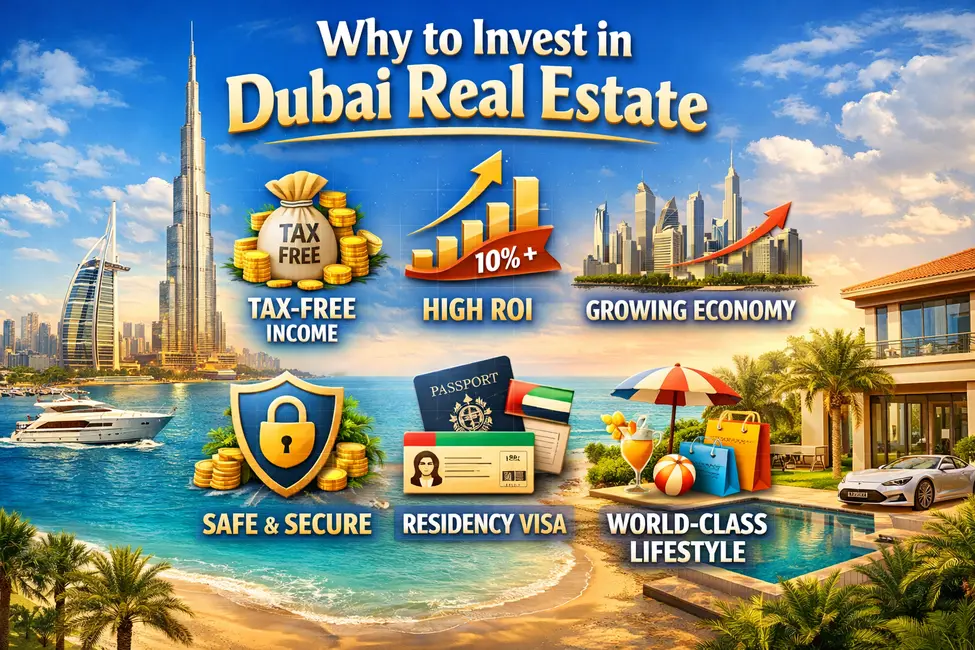
Discover why Dubai real estate is a smart investment—tax-free income, high ROI, strong economy, residency benefits, and luxury living.
Article
Dubai’s real estate market has emerged as one of the world’s most attractive investment destinations in recent years. Fueled by rapid economic growth and proactive government policies, the city’s property sector offers a unique combination of high returns, financial security, and lifestyle benefits for investors. From record-breaking transaction volumes to zero taxes on property income, Dubai provides an environment where real estate investments can thrive. This article delves into the key reasons why investing in Dubai real estate is so compelling, backed by genuine information and the latest data
Dubai’s property market has witnessed remarkable growth in recent years, underscoring robust investor confidence and sustained demand. After the global downturn in 2020, the city experienced a strong post-pandemic rebound, supported by proactive government reforms, investor-friendly visa policies, and a steady inflow of international capital seeking a secure, tax-efficient environment. Transaction volumes have consistently reached record levels. In the first half of 2025 alone, property transactions exceeded 125,000, with residential sales rising by 23% year-on-year and the total value of residential deals increasing by 36% compared to the same period in the previous year. This consistent performance reaffirms Dubai’s position as one of the most dynamic real estate markets globally, where demand from both domestic and international buyers continues to drive market expansion and deliver solid investment returns.
Notably, the luxury segment of Dubai’s market has boomed as well, with high-end villas and waterfront apartments in prime areas (e.g. Palm Jumeirah) seeing surging interest since 2020. An influx of high-net-worth individuals has fueled this trend, drawn by Dubai’s reputation as a safe and prosperous hub for global wealth. Even as a large pipeline of new properties is set to come online by 2026, analysts anticipate only a moderate market cooling in response. Oversupply in some mid-tier apartment segments may lead to a single-digit to ~15% price correction in those pockets, essentially a healthy stabilization after the recent rapid gains. Crucially, prime and undersupplied sectors (like luxury villas or scarce locations) are expected to remain resilient. For savvy investors, any short-term moderation in prices simply presents an opportunity to enter the market or expand portfolios at more favorable terms, against the backdrop of Dubai’s proven long-term growth trajectory.
One of Dubai’s biggest attractions for property investors is its exceptionally high rental yields and return on investment. On average, residential properties in Dubai offer gross rental yields in the range of roughly 5% to 9%, far outperforming major global cities. By comparison, markets like London or New York typically see rental yields only around 2–4% in many segments. This means an investment in a Dubai apartment or villa can generate two to three times the annual rental income (as a percentage of property value) that one might expect in a city like London – a significant advantage for income-focused investors. These robust yields are supported by strong tenant demand: Dubai’s large expatriate population and steady influx of professionals ensure high occupancy rates and healthy rental demand across the city. Even mid-range neighborhoods in Dubai can often achieve rental yields of ~6% or more, which is significantly higher than in many mature real estate markets around the world.
Such strong rental performance translates into attractive overall returns. With consistent rental cashflow, investors in Dubai commonly recoup their property purchase costs within about 10–12 years from rental income alone, whereas in some other global cities it might take 20+ years to break even due to lower yields and higher taxes. Moreover, Dubai’s thriving tourism sector provides an added boost – owners who opt for short-term rentals (holiday or Airbnb-style lets) in prime locations can achieve even higher income, with some properties yielding double-digit annual returns during peak tourist seasons. Importantly, these rental earnings are not diminished by income taxes (as discussed in the next section), allowing investors to keep the full extent of their high yields. The combination of strong rental demand, high gross yields, and tax-free rental income firmly positions Dubai as a top market for those seeking solid real estate cashflow and ROI.
For anyone evaluating why to invest in Dubai real estate, one major factor is the uniquely tax-friendly, investor-oriented environment that Dubai offers. Unlike most developed markets, the UAE imposes virtually no taxes on real estate investments. In Dubai, investors enjoy:
This zero-tax regime means that rental yields and capital appreciation are not eroded by local taxes – investors can retain 100% of their rental profits and sale gains in Dubai. The only notable fees are one-time transaction costs (such as a 4% property transfer fee at purchase), plus regular maintenance or service charges, but there are no ongoing property taxes as seen in many other countries. By eliminating taxes on property income, Dubai significantly boosts the net return for investors, often making it more lucrative than owning comparable real estate in high-tax jurisdictions.
Beyond tax advantages, Dubai is exceptionally investor-friendly in terms of ownership and regulations. Foreign nationals are allowed to purchase and own freehold property outright in numerous designated areas of Dubai, with full ownership rights that are securely registered with the Dubai Land Department. This stands in contrast to some cities where foreign ownership is restricted or only leasehold. Dubai’s property laws have been designed to protect buyers and ensure transparency: title deeds are registered in a centralized system, and the government has implemented measures like escrow accounts for off-plan developments to safeguard investor funds. The real estate market operates under a robust legal framework (overseen by agencies like RERA – the Real Estate Regulatory Authority) that gives investors confidence in fair transactions and recourse in the rare event of disputes. Overall, the process of buying property in Dubai is relatively streamlined and efficient, with online systems and clear regulations that make it easy for overseas investors to participate.
Crucially, the UAE government has also introduced innovative visa programs to encourage and reward property investment. Under the Golden Visa program, a real estate buyer investing at least AED 2 million (approximately USD 545,000) in Dubai can qualify for a 10-year renewable residency visa. This long-term visa (often extendable to immediate family) grants the investor the right to live, work, or study in the UAE with minimal hassle, making Dubai a second home for many. The Golden Visa initiative – alongside other options like 5-year investor visas or retirement visas for property owners – has been a game-changer in attracting global investors and high-net-worth individuals. It enables investors to not only earn returns from their property but also enjoy the benefits of Dubai’s lifestyle and business opportunities firsthand. These policies reflect Dubai’s broader commitment to being open and welcoming to international investors. In the wake of the pandemic, the government rolled out reforms such as 100% foreign business ownership, remote work visas, and improved residency terms, further solidifying Dubai’s image as a pro-business, expat-friendly hub. It’s no surprise that capital from around the world has flowed into Dubai’s real estate, given the ease of entry and the array of incentives. As one analysis observed, Dubai’s status as a stable, tax-friendly haven in a world of uncertainty continues to attract foreign investment and “serve as a safe haven for global wealth,” ensuring sustained demand for its properties.
Dubai’s real estate success is underpinned by robust economic and demographic fundamentals. The UAE has enjoyed healthy economic growth, and forecasts remain positive. In fact, the UAE Central Bank projected national GDP growth of about 4.9% in 2025, led largely by non-oil sectors – a testament to the country’s diversification and resilience. Dubai, traditionally less oil-dependent, has been aggressively diversifying into sectors like finance, technology, trade, tourism, and real estate development. The city’s leadership has outlined ambitious plans (such as the “Dubai Economic Agenda D33 to double Dubai’s economy over the next decade and establish it among the world’s top four global financial centers. This kind of long-term vision and steady GDP growth bodes well for real estate – as the economy expands, businesses grow and new jobs are created, directly translating into higher demand for both commercial and residential properties.
Another fundamental driver is Dubai’s growing population and talent pool. The city’s population surpassed 4 million residents in early 2025. and continues to climb rapidly each year. Thanks to its job opportunities and high living standards, Dubai attracts tens of thousands of expatriates annually from around the globe – skilled professionals, entrepreneurs, and their families who all need places to live and work. Urban plans anticipate the population to keep rising (Dubai is targeting perhaps 5.8 million residents by 2040 under its urban master plan), which creates a sustained organic demand for housing. This steady population influx has already contributed to housing shortages in certain segments, keeping occupancy rates high and fueling construction of new homes. For investors, a larger population means a broader tenant and buyer base in the future, supporting property values.
Additionally, Dubai’s appeal as a global tourism and business hub reinforces real estate demand. The city welcomed over 18 million international visitors in 2025 – from tourists to short-term business travelers – one of the highest visitation numbers worldwide. This translates into strong performance for hotels and holiday rentals, and often tourists who fall in love with Dubai end up purchasing vacation homes or investing after seeing the opportunities. The UAE’s overall political stability and pro-growth policies further strengthen economic prospects. The local currency, the UAE dirham (AED), is pegged to the US dollar at a stable rate (~3.67 AED per USD) and has been so for decades This currency stability eliminates exchange-rate risk for investors from dollar-pegged regions and adds another layer of confidence (unlike some emerging markets where currency swings can affect real estate returns). In sum, Dubai’s booming economy, rising population, and stable monetary system create a solid foundation that underwrites the long-term value of real estate investments.
Part of Dubai’s investment allure is the world-class infrastructure and lifestyle that the city offers, making it highly desirable for residents and thereby for property investors. Over the past few decades, Dubai has built an ultramodern metropolis famed for its iconic skyline and ambitious projects. The city boasts state-of-the-art infrastructure – from one of the world’s busiest international airports to an extensive public transit network (including the driverless Dubai Metro), vast shopping malls, and modern highways. Essential services like hospitals and clinics are top-notch, and the education system includes numerous international schools and universities. Continuous investment in smart city initiatives and urban development keeps Dubai on the cutting edge of innovation. For example, the city has implemented advanced technologies in utilities, security, and traffic management, enhancing efficiency and livability. This level of development means properties in Dubai come with access to high-quality amenities and a comfortable lifestyle, which in turn attracts premium tenants and buyers. Investors know that real estate in a city with excellent infrastructure will remain in demand and command strong values over time.
Dubai’s lifestyle and global connectivity further elevate its real estate appeal. Strategically located at the crossroads of Europe, Asia, and Africa, Dubai has become a major global travel and business hub. It’s roughly a 6–8 hour flight from most major global cities, and its airports (Dubai International and the new Al Maktoum Airport) serve hundreds of destinations with numerous airlines. This connectivity makes Dubai a convenient base for international companies and a second home for cosmopolitan professionals. The city itself is a melting pot of cultures, with over 200 nationalities living and working in Dubai. Such diversity creates a vibrant cosmopolitan atmosphere that many find attractive. From a lifestyle perspective, Dubai offers a mix of luxury and leisure that few cities can match – sunny weather year-round, beaches and marina living, world-class restaurants, shopping festivals, arts and cultural events, and theme parks and resorts for families. The successful hosting of global events like Expo 2020 showcased Dubai’s ability to offer a cutting-edge environment for work and play, further boosting its international profile.
Despite its upscale image, Dubai can also be surprisingly affordable relative to other global cities. Housing cost per square foot and general living expenses tend to be lower than in places like London, New York, or Hong Kong, for the equivalent quality of life. In fact, indices show Dubai’s cost of living is well below that of many major metropolitan hubs (for example, consumer price indexes put Dubai around 30–40% cheaper than London or New York). This means expats and retirees can enjoy a high standard of living for less cost, which in turn draws more people to move and invest in Dubai. For real estate investors, the city’s lifestyle appeal and relative affordability indicate a broad and growing market of potential tenants and buyers, ranging from young professionals to wealthy individuals seeking second homes. Dubai’s ability to deliver a luxurious lifestyle at a comparative value price point is a significant reason it continues to attract property investment globally.
Beyond the financial metrics, Dubai’s safety and stability provide an essential foundation for its real estate market. The city is widely recognized as one of the safest cities in the world. Crime rates are extremely low, and it consistently ranks at the top of global safety indexes. In 2025, for instance, Dubai (and the UAE overall) was again near the very top of the Numbeo Safety Index – residents and expatriates report a strong sense of security, with violent crimes or even petty crimes being rare. This high level of public safety is due to effective law enforcement, strict laws, and a culture that values order and respect. For investors, a safe city means their properties are in locations where people feel comfortable living, working, and traveling, which preserves property values and rental demand. A family from abroad may be more inclined to buy a home in Dubai knowing it’s a secure environment, and companies are more likely to set up offices where their employees feel safe. The stability and peace of mind that Dubai offers is a significant intangible asset underpinning its real estate attractiveness.
In tandem with personal safety, Dubai offers a stable political and regulatory environment. The UAE has a well-established governance system known for long-term planning and pro-investment policies. There are no frequent political upheavals or uncertainties that could threaten property rights or economic stability. On the contrary, the government continually works to enhance regulatory frameworks in ways that protect investors and encourage sustainable growth. In real estate, for example, laws have been introduced to regulate developers, ensure projects are completed (through project escrow accounts and milestone-based payments), and maintain transparency in transactions. The result is that Dubai’s property market today is considered one of the most transparent and well-regulated in the region. Analysts have even described it as “one of the safest property markets” due to legal reforms like improved escrow systems and open data on property transactions. This means investors can conduct due diligence with access to reliable information and have legal protections similar to those in more mature markets.
Furthermore, Dubai’s currency and banking system are stable and well-integrated globally, making it easy to move funds in and out. There are no onerous capital controls restricting the repatriation of investment returns; foreign investors can generally transfer their money freely, adding to the confidence in investing. In summary, when you invest in Dubai real estate, you are placing your capital in a city that is politically stable, secure, and backed by strong rule-of-law – factors that greatly mitigate risk. This safe and stable climate ensures that the focus can remain on growth and returns, rather than worrying about security of assets. It’s a key reason Dubai is seen as a safe haven for investment in an often uncertain world.
Dubai has cemented its position as a premier global real estate investment hub, and the reasons “why to invest” there are clear and compelling. Investors benefit from a rare combination of high returns (through strong rental yields and capital growth) and a favorable financial environment (with zero property taxes and investor-centric policies). The city’s robust economic growth, rising population, and diversification into new industries indicate that demand for real estate will remain sustained well into 2026 and beyond. At the same time, Dubai offers an unparalleled lifestyle and infrastructure that attracts people from all over the world – which in turn feeds the real estate sector’s strength.
As always, prudent investors should conduct due diligence, such as choosing reputable developers and understanding which areas have the highest growth potential or any upcoming supply. The good news is that Dubai’s transparent market data and regulations make this process easier than in many emerging markets. By and large, the fundamentals are strongly in place: a growing economy, investor-friendly governance, stable currency, and a safe, high-quality urban environment. All these factors continue to drive Dubai’s real estate success story.
In a world where many markets face uncertainty, Dubai stands out as stable, ambitious, and forward-looking. The latest data up to late 2025 shows record performance, and even if the market moderates slightly in the short term, the long-term trajectory is positive Whether you are seeking lucrative rental income, long-term asset appreciation, or a foothold in one of the most vibrant cities on the globe, Dubai real estate offers opportunities that are hard to match elsewhere. Investing in Dubai is not just about buying property – it’s about investing in the future of a city that continues to defy limits and deliver value to those who believe in its vision.
Dubai’s real estate market in 2025–2026 presents a compelling, well-rounded case for investment – combining strong financial rewards with security, innovation, and a cosmopolitan lifestyle.
Latest Blogs
Sep 21, 2026
Sep 21, 2026
Sep 18, 2026
Sep 15, 2026
Sep 12, 2026