
جزئیات منطقه
Motor City
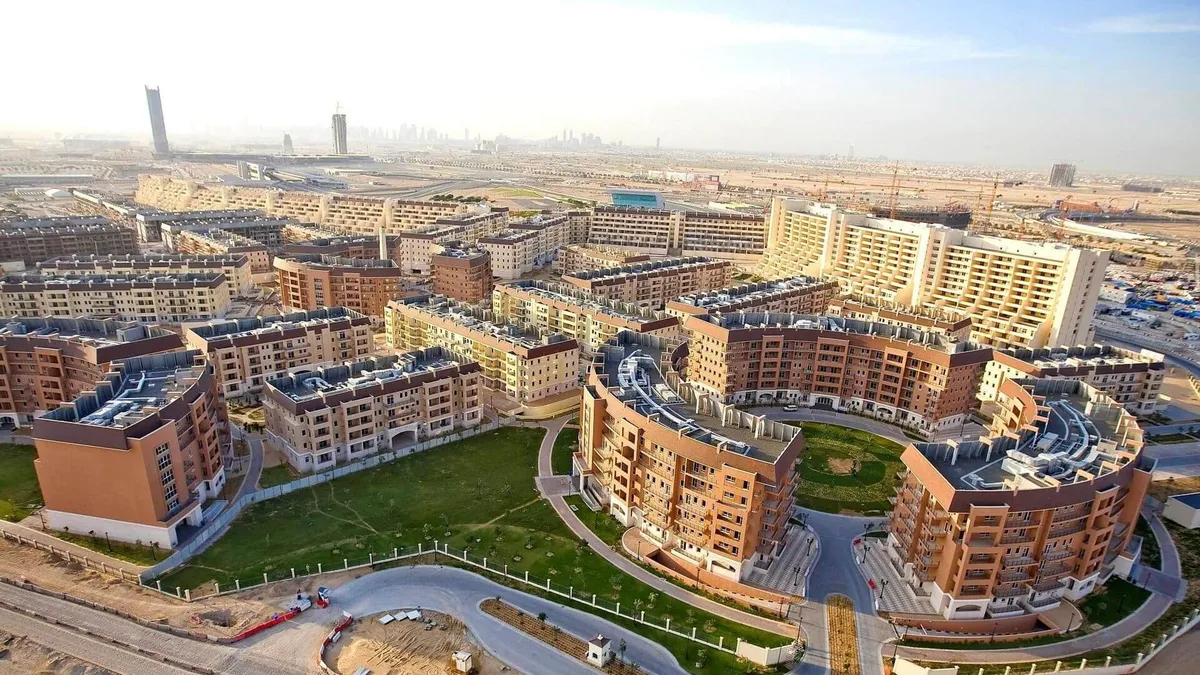
Dubai Motor City is worth considering for buyers who value a combination of residential living, car-based accessibility, everyday services, and a calmer urban environment compared with denser parts of Dubai. In terms of area identity, it is known for its motorsport character, residential buildings, business zones, and local services. For a purchase decision, it is better to assess the area at the project and unit level rather than relying only on the area name. During the reviewed period, the transaction evidence for Dubai Motor City was more closely linked to the apartment market. Apartments have stronger data support than villas and offices in terms of transaction count and price comparability. Villas and offices are also present in the data, but not all rows have the same level of sample sufficiency for publication in a public pricing table.
Motor City
Dubai Motor City is worth considering for buyers who value a combination of residential living, car-based accessibility, everyday services, and a calmer urban environment compared with denser parts of Dubai. In terms of area identity, it is known for its motorsport character, residential buildings, business zones, and local services. For a purchase decision, it is better to assess the area at the project and unit level rather than relying only on the area name. During the reviewed period, the transaction evidence for Dubai Motor City was more closely linked to the apartment market. Apartments have stronger data support than villas and offices in terms of transaction count and price comparability. Villas and offices are also present in the data, but not all rows have the same level of sample sufficiency for publication in a public pricing table.
نمای کلی
خلاصه کوتاه
Dubai Motor City is worth considering for buyers who value a combination of residential living, car-based accessibility, everyday services, and a calmer urban environment compared with denser parts of Dubai. In terms of area identity, it is known for its motorsport character, residential buildings, business zones, and local services. For a purchase decision, it is better to assess the area at the project and unit level rather than relying only on the area name.
During the reviewed period, the transaction evidence for Dubai Motor City was more closely linked to the apartment market. Apartments have stronger data support than villas and offices in terms of transaction count and price comparability. Villas and offices are also present in the data, but not all rows have the same level of sample sufficiency for publication in a public pricing table.
راهنمای کامل
درباره Motor City
Overall Area Identity
Dubai Motor City is a mixed residential, office, and leisure district. Its residential sections are mainly known for apartments and some family homes, while its business component is located near the motorsport environment and related uses. This combination means that the living experience in the area can vary depending on the building type, distance to everyday services, level of car dependence, and the buyer’s objective.
For end-user buyers, Dubai Motor City may be worth considering because of its neighbourhood feel, access to everyday services, variety of apartment buildings, and relatively calmer setting. For investors, the key issue is a careful comparison between secondary-market units, primary-market projects, handover timelines, building quality, service charges, and the level of competition from new supply.
Location and Access
Dubai Motor City is worth considering for people whose daily commute is mainly car-based. Transport and area-guide references note that the area does not have a direct metro station, while bus route F37 is identified as one of the routes connecting the area with Mall of the Emirates Metro Station and Dubai Sports City. Therefore, for buyers who rely heavily on public transport, it is important to review the actual route, distance to the station, and daily commute time.
From a residential perspective, this is an important consideration: the advantage of Dubai Motor City is more visible in neighbourhood living and car-based access than in direct rail connectivity. As a result, before choosing a unit, buyers should separately review the route from home to work, school, shopping centres, and the main exit roads from the area.
Lifestyle and Everyday Services
The lifestyle in Dubai Motor City is shaped mainly around local services, open spaces, everyday retail, restaurants, and amenities close to home. Area guides refer to supermarkets, local services, community retail centres, healthcare facilities, and educational options within or near the area.
For families, the presence of a school within Motor City is a practical advantage, but the final decision should not be based only on the school name or general proximity to the area. The official education record identifies GEMS Metropole School as being located in Motor City, and its education quality should be reviewed alongside commute route, curriculum, admission capacity, and family needs.
Property Mix in Dubai Motor City
The recent transaction data shows that Dubai Motor City is mainly apartment-led. Out of 1,570 valid transactions used for price calculations, 1,537 were apartment transactions, 20 were office transactions, and 13 were villa transactions. This distribution shows that apartment analysis in this area has stronger data support, while conclusions about villas and offices should be approached with greater caution.
In residential supply, 4,728 completed units and 12,970 under-construction units were recorded. Of this total, 4,176 completed units and 12,511 under-construction units were apartments. For buyers, this means that apartment options are more varied, but the effect of under-construction inventory, handover timelines, and competition from new projects should also be considered in the decision-making process.
For the office segment, 927,826 square feet of completed gross leasable area and 207,476 square feet of under-construction gross leasable area were recorded. In this segment, the figures are reported only as office gross leasable area, and no office unit count has been derived from them.
Secondary-Market Benchmark Rate
In this article, the benchmark rate means the median price per square foot of secondary-market transactions. This figure is useful for initial comparison, but it is not a substitute for reviewing the details of a specific unit. Floor level, view, building quality, tenancy status, service charges, legal status, and the buyer’s objective can all affect the final decision.
| Asset Type | Secondary-Market Benchmark Rate, AED per Sq Ft |
| Apartment | 984 |
| Villa | 1,786 |
| Office | 1,680 |
The apartment benchmark rate in Dubai Motor City has stronger sample support. For villas and offices, the secondary-market benchmark rate can be calculated, but the full public pricing table for these two groups has not been published because of sample limitations in the primary-market segment. For this reason, villas and offices should be interpreted more at the individual property level and through a specific asset review.
Public Apartment Pricing Table
The table below only includes rows that had sufficient sample support in both the secondary market and the primary market for public display. Rows with limited samples have been removed from the public text to avoid conclusions that go beyond the available data.
| Property Type | Median Size, Sq Ft | Median Secondary-Market Total Price, AED | Secondary-Market Rate, AED per Sq Ft | Median Primary-Market Total Price, AED | Primary-Market Rate, AED per Sq Ft |
| Apartment | 788 | 1,175,000 | 984 | 1,262,234 | 1,798 |
| Studio Apartment | 416 | 651,500 | 1,011 | 827,238 | 2,068 |
| 1-Bedroom Apartment | 790 | 1,014,878 | 974 | 1,302,729 | 1,680 |
| 2-Bedroom Apartment | 1,193 | 1,725,000 | 989 | 1,944,880 | 1,681 |
The gap between primary-market and secondary-market rates in the apartment rows is notable, but this difference alone does not indicate a definite advantage or investment outcome. Part of the difference may relate to building age, project amenities, payment terms, handover timing, developer quality, unit specifications, and transaction mix. For a more accurate decision, comparison should be made at the project and unit level.
Occupancy and Use of Existing Inventory
In the latest recorded period, residential occupancy across the reviewed subareas ranged from 92.0% to 96.0%, while the internal weighted average based on completed units was calculated at approximately 94.8%. For the office segment, the latest recorded occupancy rate was 91.0%.
These figures indicate active use of the existing inventory in the area, but they should not replace a review of the specific unit. Tenant status, rent level, lease duration, building maintenance quality, service charges, and the liquidity of each unit can vary from one project to another.
Under-Construction Supply and Its Effect on the Purchase Decision
In Dubai Motor City, the volume of under-construction inventory, particularly in the apartment segment, is higher than the recorded completed stock. This has two implications for buyers. On one hand, there may be a wider range of choices in new projects. On the other hand, handover timing, execution quality, payment terms, and the level of future competition should be reviewed more carefully.
For end-user buyers, a ready unit in the secondary market may offer the benefit of directly observing the building, amenities, maintenance condition, and real living environment. For primary-market buyers, the potential advantage may relate more to the payment plan, project design, new amenities, and handover horizon. Neither route is automatically superior to the other, and the choice should be aligned with the buyer’s objective.
Who Is Dubai Motor City Suitable For?
Dubai Motor City is worth considering for buyers who value neighbourhood living, a relatively calmer setting, car-based access, and a variety of apartment options. For families, the presence of everyday services and nearby educational options can be an advantage, but commute routes and daily family needs should be reviewed separately.
For investors, the area becomes more relevant when the comparison between primary and secondary market options, new supply levels, project quality, and the hold-or-exit scenario are clear. The available data does not support a definite claim about future growth, returns, or the area’s superiority over comparable districts.
For office buyers, Dubai Motor City may be worth considering because of the presence of office inventory and workspace within the area. However, the decision should be based on building quality, employee access, parking, business activity type, and the occupancy status of the specific property.
Advantages and Considerations
The advantages worth reviewing in Dubai Motor City include its defined urban identity, residential and office mix, local services, varied apartment options, and the relatively high occupancy rate in the latest recorded period. For some buyers, the neighbourhood feel and distance from the density of more central areas may align with their lifestyle.
On the other hand, the lack of a direct metro station, greater dependence on cars, differences in living experience between the area’s sub-sections, the high volume of under-construction inventory, and sample limitations for some property groups are important considerations. In addition, for villas and offices, the data behind the full public table is not as strong as it is for apartments, making case-by-case review more important.
Homeland Advisory View
Homeland’s advisory view is that Dubai Motor City should not be assessed only through one general rate or a few project names. The area may be suitable for some scenarios, but the right decision depends on matching the buyer’s budget, purchase objective, property type, building quality, unit status, and comparable alternatives.
For apartments, the secondary-market benchmark rate can be a useful starting point for comparison. For primary-market projects, the payment plan, handover timeline, and developer quality should be compared with secondary-market transactions. For villas and offices, due to public sample limitations, the review should move more toward the specific property, contract, maintenance status, and potential liquidity.
Frequently Asked Questions
Is buying property in Dubai Motor City suitable for all buyers?
No. This area is worth considering for buyers who value car-based access, neighbourhood living, everyday services, and apartment options. For those who rely heavily on the metro, the absence of a direct metro station is a serious consideration.
How should the secondary-market benchmark rate in Dubai Motor City be interpreted?
The benchmark rate is the median price per square foot of secondary-market transactions. It is useful for initial comparison, but the final decision should be made after reviewing the project, building, floor level, view, tenancy status, service charges, and buyer objective.
Is Dubai Motor City more of an apartment market or a villa market?
In the reviewed transaction data, apartments account for the main share. Therefore, apartment analysis has stronger data support, while villa decisions should be made more cautiously and at the level of the specific property.
Can the villa and office pricing table be published?
The secondary-market benchmark rate can be calculated for villas and offices, but the full public pricing table for these two groups has not been published because of sample limitations in the primary-market segment. This limitation has been applied to avoid drawing conclusions beyond the available data.
How does under-construction inventory affect the purchase decision?
The high volume of under-construction inventory, especially in apartments, makes it more important to review handover timing, project quality, payment terms, and future competition. This factor is not positive or negative on its own; its effect depends on the project and the buyer’s objective.
Is Dubai Motor City suitable for families?
Yes, it may be suitable for some families, especially when local services, a calmer environment, and car-based access align with their lifestyle. However, school routes, workplace access, healthcare services, and daily commuting should be reviewed before making a final decision.
What should be reviewed before buying in Dubai Motor City?
The most important points include comparing primary and secondary market options, building quality, tenancy status, service charges, handover timing for new projects, commute routes, parking, building amenities, and the fit between the property and the buyer’s objective.
If you are comparing Dubai Motor City with similar family-oriented or apartment-led districts, reviewing projects, benchmark rates, under-construction supply, and building quality can help make the decision clearer. Homeland can prepare this comparison based on your budget and objective.