
Area Details
Dubai Aid City
Dubai Aid City is a purpose-built urban district focused on education, innovation, and community living. Strategically positioned within Dubai’s academic and knowledge corridor, the area offers a calm, organized environment with modern infrastructure, strong connectivity, and a steadily growing residential presence. Its planning emphasizes accessibility, affordability, and long-term livability, making it appealing to residents, professionals, and investors alike.
Dubai Aid City
Dubai Aid City is a purpose-built urban district focused on education, innovation, and community living. Strategically positioned within Dubai’s academic and knowledge corridor, the area offers a calm, organized environment with modern infrastructure, strong connectivity, and a steadily growing residential presence. Its planning emphasizes accessibility, affordability, and long-term livability, making it appealing to residents, professionals, and investors alike.
Snapshot
Short Overview
Dubai Aid City is a purpose-built urban district focused on education, innovation, and community living. Strategically positioned within Dubai’s academic and knowledge corridor, the area offers a calm, organized environment with modern infrastructure, strong connectivity, and a steadily growing residential presence. Its planning emphasizes accessibility, affordability, and long-term livability, making it appealing to residents, professionals, and investors alike.
Full Guide
About Dubai Aid City
Dubai Aid City Area Guide
Dubai Aid City is a strategically planned urban district designed to support Dubai’s long-term vision for knowledge-based development, sustainable living, and integrated community planning. Positioned within the emirate’s broader education and innovation corridor, Dubai Silicon Oasis has evolved into a structured, low-density environment that balances residential living with institutional, commercial, and social infrastructure.
Unlike high-intensity lifestyle destinations, Dubai Aid City prioritizes functionality, accessibility, and long-term stability. The area is characterized by organized road networks, purpose-built plots, and zoning that separates residential clusters from academic and commercial facilities, creating a calm and efficient urban rhythm. This approach has attracted a mix of end-users, working professionals, and investors seeking predictable market performance rather than speculative volatility.
Over recent years, Dubai Aid City has gained attention for its affordability relative to central Dubai districts while still maintaining strong connectivity to major employment hubs. Residential development continues to expand steadily, supported by consistent demand driven by educational institutions, nearby business zones, and improving lifestyle amenities. As Dubai’s population diversifies and demand grows for well-planned suburban communities, Dubai Aed City occupies a practical middle ground between affordability and accessibility.
Nearby Areas & Accessibility
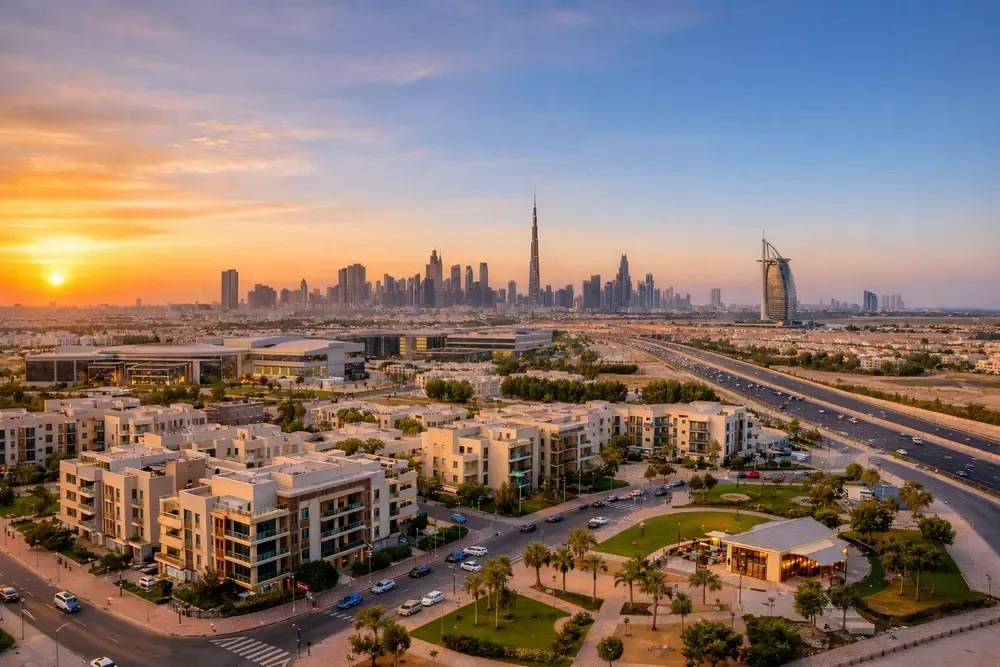
Dubai Aid City benefits from a strategic location that allows residents and visitors to move efficiently across Dubai. The area is directly connected to major arterial roads, providing seamless access to both established and emerging districts. Wide internal roads and clearly planned intersections reduce congestion and support smooth daily commuting.
The district enjoys proximity to several key communities, including Dubai Silicon Oasis, Academic City, International City, and Nad Al Sheba. These neighboring areas contribute to employment opportunities, retail options, and supplementary lifestyle facilities, strengthening Dubai aid city’s overall appeal. The close relationship with Dubai’s education hub ensures steady footfall and long-term relevance.
From an accessibility standpoint, Dubai Aid City is approximately 20 minutes from Downtown Dubai and Business Bay during off-peak hours, while Dubai International Airport can typically be reached within 25 minutes. Al Maktoum International Airport is accessible in under 40 minutes, making the area practical for frequent travelers and logistics professionals.
Public transportation options continue to expand, with bus routes linking Dubai Aid City to nearby metro stations and surrounding residential zones. Ride-hailing services operate extensively in the area, and future infrastructure upgrades are expected to further improve connectivity. For residents looking to rent property within a well-connected yet less congested district, accessibility remains one of Dubai Aid City’s strongest advantages.
Lifestyle Appeal
The lifestyle in Dubai aid city is defined by balance, structure, and everyday practicality. The area caters primarily to residents who value quiet surroundings, organized infrastructure, and proximity to work or educational institutions rather than nightlife-driven entertainment. This makes it particularly appealing to families, academics, professionals, and long-term residents.
Open spaces, wide walkways, and lower building density contribute to a sense of calm that contrasts with Dubai’s more vertical urban centers. Daily life in Dubai aid city, revolves around convenience, with essential services located within short driving distances and minimal traffic pressure during peak hours.
The presence of academic institutions and training centers has fostered a culturally diverse environment, creating a steady, year-round population rather than seasonal fluctuations. Cafes, casual dining outlets, and neighborhood retail centers support a relaxed lifestyle, while nearby malls and leisure destinations provide additional variety when needed.
Dubai Aid City appeals to residents who prioritize stability and functionality over high-end luxury. Its lifestyle positioning aligns well with Dubai’s growing demand for suburban communities that offer affordability, comfort, and long-term usability without sacrificing connectivity.
Facilities & Amenities
Facilities and amenities in dubai aid city are designed to support everyday living rather than tourism-driven consumption. The area includes landscaped open spaces, pedestrian-friendly pathways, and community parks that encourage outdoor activity and social interaction. These spaces are particularly valued by families and residents seeking quieter recreational options.
Retail amenities consist of neighborhood shopping centers, supermarkets, pharmacies, and service outlets that cater to daily needs. Dining options range from casual cafés to family-friendly restaurants, with additional choices available in adjacent districts. This ensures residents have access to essentials without relying on long-distance travel.
Healthcare facilities in and around dubai aid city include clinics, diagnostic centers, and hospitals within short driving distances, providing reliable medical access. Educational infrastructure is one of the area’s defining strengths, with multiple schools, colleges, and training institutes operating nearby, reinforcing the district’s academic identity.
Places of worship, fitness centers, and community service facilities are distributed across the area and neighboring zones, contributing to inclusivity and livability. While dubai aid city does not position itself as a luxury destination, its amenities are sufficient, functional, and aligned with long-term residential demand.
Key Projects & Developers
Dubai Aid City features contributions from a range of private and semi-private developers focused on residential, mixed-use, and institutional projects.
Prominent developers and projects in and around dubai aid city include:
- Dubai Properties – residential community developments
- Private education-focused developers – academic campuses and staff housing
- Regional real estate groups – low-rise residential buildings
- Mixed-use developers – residential and commercial clusters
Development activity remains measured, with an emphasis on phased delivery and infrastructure readiness rather than large-scale launches.
Demographics
The demographic profile of dubai aid city reflects its functional and education-oriented nature. Residents primarily include working professionals, educators, administrative staff, and families seeking affordable housing within organized surroundings. The population is culturally diverse, with a strong representation of expatriates from South Asia, the Middle East, and Europe.
The community maintains a stable year-round occupancy profile, supported by institutional employment and long-term residency patterns rather than short-term tourism.
Real Estate Overview
Real estate in dubai aid city is positioned within Dubai’s affordable to mid-market segment. The area offers a mix of apartments, staff accommodation, and limited low-rise residential buildings, with inventory designed for practicality rather than luxury branding.
Average sale prices generally range between AED 500 and AED 750 per square foot, depending on building age, location, and amenities. Rental rates remain competitive, contributing to consistent demand and attractive occupancy levels. Gross rental yields typically range from 6% to 8%, supported by steady tenant turnover and institutional leasing demand.
The real estate market in dubai aid city appeals to investors seeking predictable returns and end-users prioritizing affordability and accessibility. Limited speculative supply has helped maintain pricing stability, even during broader market cycles.
Market Trends & Future Outlook
Dubai Aid City continues to benefit from Dubai’s long-term investment in education, infrastructure, and suburban expansion. The area has demonstrated resilience during market fluctuations, supported by consistent demand from academic institutions and nearby employment hubs.
Ongoing infrastructure upgrades, road enhancements, and incremental residential development are expected to strengthen market fundamentals without oversaturating supply. Price appreciation remains gradual rather than aggressive, aligning with the area’s low-risk investment profile.
As Dubai’s population grows and affordability becomes a key consideration for residents, dubai aid city is well-positioned to absorb demand from tenants and buyers seeking value-driven communities. Its future outlook remains stable, with steady absorption rates and sustained rental demand.
Conclusion
Dubai Aid City stands out as a purpose-driven district that prioritizes functionality, accessibility, and long-term sustainability. Its integration within Dubai’s academic and innovation corridor, combined with organized infrastructure and competitive real estate pricing, makes it a reliable choice for residents and investors alike.
Rather than competing with lifestyle-centric destinations, Dubai aid city delivers consistent livability and market stability. For those seeking a well-planned community with dependable returns and everyday convenience, Dubai aid city continues to represent a solid and forward-looking option within Dubai’s evolving real estate landscape.