
Area Details
Dubai Airport Freezone (DAFZA)
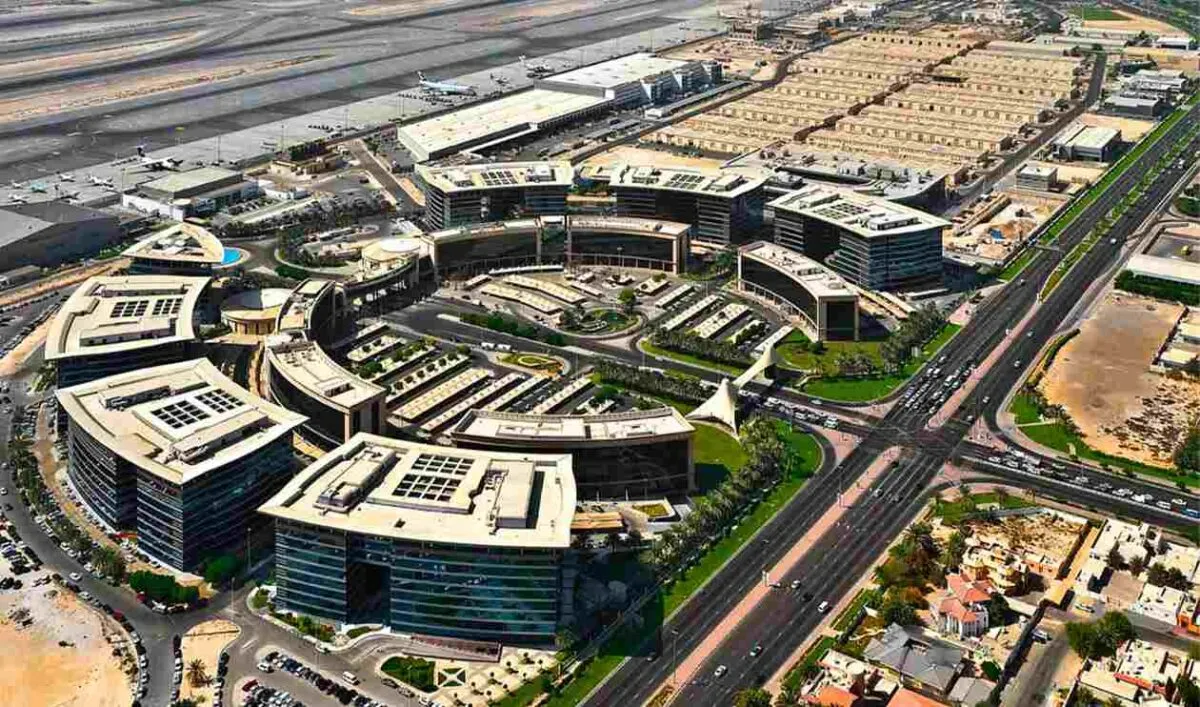
Dubai Airport Freezone is a strategically positioned commercial district beside Dubai International Airport, known for its strong business ecosystem, logistics connectivity, and multinational corporate presence. With direct access to major highways and metro links, the area appeals to investors and professionals seeking proximity to key trade corridors, established infrastructure, and one of Dubai’s most active economic hubs.
Dubai Airport Freezone (DAFZA)
Dubai Airport Freezone is a strategically positioned commercial district beside Dubai International Airport, known for its strong business ecosystem, logistics connectivity, and multinational corporate presence. With direct access to major highways and metro links, the area appeals to investors and professionals seeking proximity to key trade corridors, established infrastructure, and one of Dubai’s most active economic hubs.
Snapshot
Short Overview
Dubai Airport Freezone is a strategically positioned commercial district beside Dubai International Airport, known for its strong business ecosystem, logistics connectivity, and multinational corporate presence. With direct access to major highways and metro links, the area appeals to investors and professionals seeking proximity to key trade corridors, established infrastructure, and one of Dubai’s most active economic hubs.
Full Guide
About Dubai Airport Freezone (DAFZA)
Dubai Airport Freezone is one of Dubai’s most strategically important business and investment districts, positioned directly adjacent to Dubai International Airport. Established as a dedicated free zone, it plays a central role in Dubai’s trade, logistics, aviation-linked industries, and international commerce ecosystem. The area is designed primarily for commercial and light industrial use, hosting a wide range of multinational corporations, regional headquarters, logistics operators, technology firms, and service providers.
The defining strength of Dubai Airport Freezone lies in its seamless integration with air cargo, road networks, and public transport, making it a preferred location for companies requiring speed, efficiency, and global reach. While it is not a traditional residential community, its proximity to established residential neighborhoods in Deira and Al Qusais allows professionals working in the zone to live nearby while benefiting from short commute times.
From an investment perspective, Dubai Airport Freezone is closely aligned with Dubai’s long-term economic diversification strategy, focusing on trade facilitation, advanced manufacturing, pharmaceuticals, electronics, and aviation-related services. The area continues to attract steady corporate demand, supporting consistent occupancy levels and reinforcing its reputation as a stable, infrastructure-led commercial destination within Dubai’s real estate landscape.
Nearby Areas & Accessibility
Dubai Airport Freezone benefits from one of the most connected locations in the emirate. Its immediate proximity to Dubai International Airport places it within minutes of one of the world’s busiest aviation hubs, providing unmatched access for international business travel and cargo operations. The airport terminals are typically reachable within a 5 to 10-minute drive, depending on traffic conditions.
The area is bordered by well-established residential and mixed-use communities that support the daily needs of professionals working in the zone. Al Qusais lies directly to the east and southeast, offering a wide range of residential buildings, retail outlets, schools, and healthcare facilities. Al Twar is located to the north, known for its quieter residential environment and proximity to airport-related infrastructure. Deira, one of Dubai’s oldest commercial districts, is situated southwest of the freezone and remains a major hub for retail, wholesale trade, and traditional business activity.
Road connectivity is a key advantage. The area has direct access to Sheikh Mohammed Bin Zayed Road and Al Nahda Road, enabling efficient travel toward Sharjah, Dubai Silicon Oasis, and other northern districts. Al Ittihad Road provides a fast route toward Deira, Bur Dubai, and central Dubai. These arterial roads ensure that the freezone remains accessible for both employees and logistics operators throughout the day.
Public transportation is well developed in this area. The Dubai Metro’s Green Line serves the freezone through dedicated stations, allowing convenient access from Deira, Bur Dubai, and key interchanges. Bus routes further connect the zone with surrounding neighborhoods, making daily commuting practical for a large workforce.
Major destinations such as Downtown Dubai, Business Bay, and Dubai Marina are generally reachable within 25 to 35 minutes by car outside peak traffic hours. Sharjah city center is also within a short drive, enhancing the area’s appeal for cross-emirate commuters.
Lifestyle Appeal
The lifestyle associated with Dubai Airport Freezone is primarily business-oriented, structured around efficiency, accessibility, and convenience rather than leisure-focused living. Professionals working in the area benefit from reduced commute times, access to essential services, and proximity to both Dubai and Sharjah residential communities.
While the freezone itself is not designed as a lifestyle destination, its surroundings provide a practical urban environment. Nearby neighborhoods offer supermarkets, restaurants, fitness centers, and personal services that cater to a diverse, working population. Dining options range from quick-service outlets within the business district to family-run restaurants and cafés in Al Qusais and Deira.
For professionals, the primary lifestyle advantage is time efficiency. Short commutes translate into better work-life balance, especially for those employed in aviation, logistics, and multinational corporate roles. The area also appeals to frequent travelers who value immediate airport access.
Retail therapy, cultural experiences, and entertainment options are easily accessible in nearby areas. Deira City Centre, traditional souks, waterfront promenades, and community malls provide variety without long travel times. Beaches, golf courses, and large leisure destinations are within manageable driving distance, making weekend activities accessible despite the area’s commercial focus.
Facilities & Amenities
Dubai Airport Freezone is designed with business functionality at its core, offering modern infrastructure and support facilities tailored to corporate operations. Office buildings within the zone are equipped with high-speed telecommunications, reliable utilities, and advanced security systems, supporting round-the-clock operations for international companies.
Retail and dining facilities within the freezone cater primarily to employees and visitors. These include cafés, casual dining outlets, convenience stores, and service-oriented retail such as banking facilities and courier services. These amenities are strategically placed to support daily working life without the need to leave the zone.
Healthcare access is readily available in surrounding districts, with clinics, diagnostic centers, and hospitals located within a short drive. Educational institutions, including schools offering various curricula, are concentrated in Al Qusais and Al Twar, making the area practical for families living nearby.
Places of worship, including mosques, are located within and around the zone, serving the daily needs of the workforce. Recreational facilities such as gyms and sports centers are primarily found in adjacent residential communities, along with parks and family-friendly public spaces.
The broader Deira area enhances the amenity offering with large shopping centers, traditional markets, hotels, and waterfront areas. This proximity ensures that while the freezone remains business-focused, it is well supported by a mature urban environment that enhances overall livability for employees and nearby residents.
Key Projects & Developers
Dubai Airport Freezone features developments and facilities managed by its governing authority, with a focus on office complexes, logistics units, warehouses, and specialized commercial buildings.
Prominent projects within the zone include:
- Dubai Airport Freezone Business Park
- Logistics and warehouse clusters
- Purpose-built office towers
- Light industrial and technology-focused facilities
Development activity is primarily led by the freezone authority itself, with infrastructure and building upgrades introduced in phases to align with evolving business requirements. The emphasis remains on functionality, scalability, and international standards rather than residential or mixed-use projects.
Demographics
The population associated with Dubai Airport Freezone is largely composed of working professionals, executives, technical specialists, and operational staff employed by multinational companies and regional firms. The workforce is highly diverse, reflecting Dubai’s international business environment, with professionals from across the Middle East, Asia, Europe, and Africa.
Residents living near the freezone typically include middle-income to upper-middle-income households, many of whom prioritize proximity to workplaces, schools, and transport links. The demographic profile is practical and career-focused, with a strong presence of families and long-term residents in nearby communities.
Real Estate Overview
Real estate activity within Dubai Airport Freezone is overwhelmingly commercial in nature. The area offers a mix of office spaces, warehouses, and light industrial units designed to accommodate businesses of varying sizes. Properties are typically available through long-term leases rather than freehold residential ownership.
Office spaces range from smaller fitted units to full-floor corporate offices, catering to startups, regional offices, and multinational headquarters. Warehousing and logistics facilities are designed to support air cargo, distribution, and specialized storage, benefiting from immediate airport access.
Average commercial rental rates in the area generally reflect its strategic importance, with office rents positioned competitively compared to other prime business districts. Price levels vary depending on building grade, fit-out quality, and proximity to transport links, with newer developments commanding premium rates
Residential properties are not located within the freezone itself, but surrounding neighborhoods provide a broad selection of apartments and villas. These nearby areas offer more affordable rental options compared to central Dubai, making them attractive to employees working in the zone.
Market Trends & Future Outlook
Dubai Airport Freezone continues to demonstrate resilience and relevance within Dubai’s commercial real estate market. Demand is driven by sectors such as logistics, pharmaceuticals, electronics, aviation services, and regional trade operations. Occupancy levels remain stable due to the zone’s specialized positioning and limited direct competition.
Market trends indicate a steady shift toward high-quality office environments, smart infrastructure, and sustainability-focused upgrades. Businesses increasingly prioritize efficient layouts, digital connectivity, and compliance-ready facilities, prompting ongoing enhancements within the zone.
Future outlook remains positive, supported by Dubai’s continued investment in aviation, trade facilitation, and economic diversification. As air travel volumes grow and regional trade corridors expand, the freezone’s proximity to the airport is expected to remain a critical competitive advantage.
While residential development is unlikely within the zone, surrounding communities are expected to benefit indirectly from employment growth and infrastructure improvements. This supports sustained rental demand in nearby neighborhoods, reinforcing the broader real estate ecosystem connected to the freezone.
Conclusion
Dubai Airport Freezone stands as a cornerstone of Dubai’s commercial and logistics infrastructure, offering unparalleled connectivity, operational efficiency, and long-term stability. While not a residential destination in itself, its strategic location and strong corporate presence make it highly influential within the surrounding real estate landscape.
For investors, the area represents a specialized, infrastructure-driven market aligned with Dubai’s global trade ambitions. For professionals and businesses, it offers a highly efficient environment supported by mature surrounding communities. As Dubai continues to strengthen its position as a global business hub, Dubai Airport Freezone remains a vital and future-ready component of the city’s economic and real estate framework.