
Area Details
Dubai Textile City
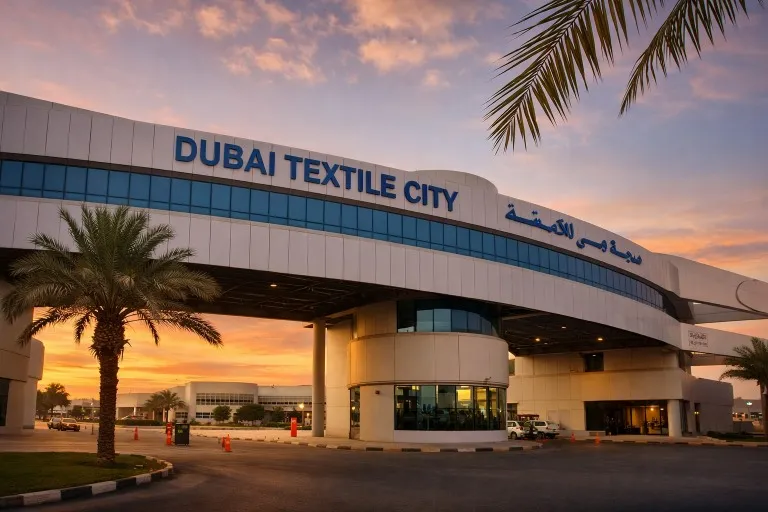
Dubai Textile City is a dedicated commercial free zone in Dubai’s Warsan area, specializing in textile warehousing and trade. It spans roughly 6 million square feet with modern showrooms, offices, and storage facilities. Strategically located near Sheikh Mohammed bin Zayed Road and Ras Al Khor Road, it offers seamless access to the city’s airports and seaports. This bustling textile hub attracts international traders and logistics businesses, giving it a dynamic global flair and strong investment appeal.
Dubai Textile City
Dubai Textile City is a dedicated commercial free zone in Dubai’s Warsan area, specializing in textile warehousing and trade. It spans roughly 6 million square feet with modern showrooms, offices, and storage facilities. Strategically located near Sheikh Mohammed bin Zayed Road and Ras Al Khor Road, it offers seamless access to the city’s airports and seaports. This bustling textile hub attracts international traders and logistics businesses, giving it a dynamic global flair and strong investment appeal.
Snapshot
Short Overview
Dubai Textile City is a dedicated commercial free zone in Dubai’s Warsan area, specializing in textile warehousing and trade. It spans roughly 6 million square feet with modern showrooms, offices, and storage facilities. Strategically located near Sheikh Mohammed bin Zayed Road and Ras Al Khor Road, it offers seamless access to the city’s airports and seaports. This bustling textile hub attracts international traders and logistics businesses, giving it a dynamic global flair and strong investment appeal.
Full Guide
About Dubai Textile City
Overview of Dubai Textile City
Dubai Textile City is a purpose-built textile trading and manufacturing free zone in the International City area of eastern Dubai. Launched in the mid-2000s as a joint initiative by Dubai Customs and the local textile industry, it spans about 6 million square feet, with roughly 2.2 million square feet of built-up space devoted to warehouses, showrooms and offices. Dubai Textile City offers a duty-free platform and dedicated customs facilities for textile merchants, making it a leading hub for fabric import, export and re-export activities. The zone’s modern industrial infrastructure and on-site Dubai Customs office enable fast clearance and integrated logistics. Over the years, this free zone has played a central role in Dubai’s economy by rejuvenating the traditional textile trade and establishing the city as a regional textile hub. Its high occupancy rate and streamlined operations reflect the sustained demand from both long-established textile companies and up-and-coming fashion entrepreneurs.
Dubai Textile City sits at a crossroads of Dubai’s logistics network. It lies adjacent to International City and near the Dragon Mart shopping complex, providing convenient proximity to retail markets. The area around Dubai Textile City includes residential and mixed-use developments that support the workforce, and ongoing government backing ensures it remains a strategic component of Dubai’s broader industrial landscape. In all, Dubai Textile City combines large-scale commercial facilities with world-class connectivity, defining its character as Dubai’s premier textile industry enclave.
Nearby Areas & Accessibility of Dubai Textile City
Dubai Textile City is located in Warsan, in eastern Dubai, adjacent to the International City residential development. Nearby communities include Al Warsan, Academic City to the northeast, and Dragon Mart to the north. The area is also a short drive from Dubai’s central business districts. Sheikh Zayed Road (E11) is reachable via the connecting highway network, placing Downtown Dubai and Business Bay about 15–20 minutes to the west by car. Major roads intersect at Dubai Textile City’s southern edge: Ras Al Khor Road (E44) runs east–west, linking to malls and residential areas, while Sheikh Mohammed bin Zayed Road (E311) runs north–south, providing direct access toward Dubai International Airport and Abu Dhabi. Emirates Road (E611) to the east further integrates the region with suburbs and neighboring Emirates.
Public transportation services connect Dubai Textile City to the rest of the city. Multiple air-conditioned Dubai Metro feeder buses stop at the Free Zone’s gates, linking workers to the Centrepoint Metro Station near Rashidiya (Red Line) and to other hubs like Silicon Oasis and Dubai Festival City. Typical routes include bus numbers 367, 53, 365 and X23, which circulate through International City and Al Warsan. These routes make Dubai Textile City accessible by public transit, though commuting is fastest by car or taxi due to the area’s industrial nature. For example, Dubai International Airport is about 19 kilometers from Dubai Textile City, roughly a 15–20 minute drive in light traffic. Downtown Dubai and Business Bay are similarly around 18 kilometers away, also a 15–20 minute drive. Dragon Mart (China Mall Dubai) is an immediate neighbor, just a few minutes’ drive, while local shopping centers and parks in neighboring Academic City are within a short 10-minute drive. In summary, Dubai Textile City is easily reachable from key destinations across the emirate via a dense road network, with reasonable public transit connections to major transit stations.
Lifestyle Appeal of Dubai Textile City
Dubai Textile City’s lifestyle appeal is unique, as it caters primarily to businesses and the working population. Rather than a typical residential neighborhood, it offers an energetic industrial environment where international traders, designers and logistics professionals converge. The area has a dynamic, work-focused atmosphere during business hours, with a mix of office users and warehouse activities. Employees and visitors in Dubai Textile City benefit from the vibrant, multicultural ambiance—local textile markets and showrooms house traders and suppliers from Asia, Europe, the Middle East and beyond. This global character spills into the local dining and retail options: numerous casual and ethnic restaurants cluster in and around International City and Dragon Mart, serving Middle Eastern, South Asian, East Asian and Western cuisines around the clock.
For residents in adjacent communities like International City, Dubai Textile City adds convenience and variety. Workers in the zone can enjoy residential amenities just a short distance away, including affordable housing, parks and sports facilities within International City. Leisure options are easily accessible: for example, Dubai Safari Park and the vast waterfront of Dubai Festival City are under 15 minutes away by car. Similarly, some of Dubai’s popular beaches (like Jumeirah Public Beach) are within about a 30-minute drive, offering recreational outlets. The interplay of industry and community means that Dubai Textile City has a day-time bustle complemented by nearby family-friendly and entertainment options in surrounding areas. The overall lifestyle appeal lies in its blend of efficient, purpose-built work facilities with quick access to Dubai’s varied attractions, shopping malls and dining scenes via the surrounding transport links.
While Dubai Textile City is not a residential hub itself, its integration with nearby neighborhoods lends it a practical, balanced vibe. The mix of warehouse workers, showroom managers, and visiting business people creates a safe, community-oriented feel after hours, supported by ample on-site lighting and security. Traffic can be heavy during morning and evening peak times due to the concentration of industry jobs, but the area’s well-laid-out roadways help manage the flow. In all, the lifestyle around Dubai Textile City is defined by convenience for commerce: easy connectivity, year-round climate control in workplaces, and immediate proximity to retail and services for daily needs. Its established role in Dubai’s economy and central location contribute to a sense of stability and opportunity in the local way of life.
Facilities & Amenities in Dubai Textile City
Dubai Textile City offers comprehensive on-site business facilities alongside a range of community amenities in its vicinity. Within the free zone itself, facilities focus on supporting logistics and trade: warehouses are equipped with loading docks and storage areas; modern office units come with high-speed fiber connectivity and telecommunications; and a dedicated on-site Dubai Customs office streamlines import/export documentation. Free parking areas are available for commercial vehicles and passenger cars. Security and 24/7 maintenance services are provided by the free zone authority, ensuring uninterrupted operations.
Immediate neighboring areas supply many daily amenities. The Dragon Mart complex, adjacent to Dubai Textile City, is one of the largest shopping malls in the region, featuring 1,200 retail outlets specializing in Chinese products. Dragon Mart provides everything from groceries to home goods, plus a cluster of affordable restaurants. Just south of the free zone, Souq Warsan offers a local market setting with fresh produce, clothing shops and casual eateries. Within International City’s clusters (a short drive away), retail centers and supermarkets (such as Homecare and Lulu Hypermarket) are easily accessible for residents and workers.
Healthcare services near Dubai Textile City include several clinics and hospitals. Aster Clinic and Right Health Ruby Clinic are within a 5–10 minute drive, providing family medicine and specialist consultations. The multi-specialty Fakeeh University Hospital is about 10–15 minutes away in Al Warsan and offers comprehensive emergency and surgical care. Nurseries and schools around International City serve families in the area. Early learning centers like Kids World, Little Sprouts ELC and Gingle Kids are within 5-10 minutes. Prominent schools in the vicinity include Kings’ School Nad Al Sheba (UK curriculum) and GEMS Founders School Dubai (international curriculum), both reachable within 15 minutes by car. Higher education institutions such as the University of Birmingham Dubai Campus and Zayed University are about 15–20 minutes from Dubai Textile City.
Religious and leisure facilities are also plentiful. Multiple mosques serve the diverse community (for example, the Dragon Mart Mosque and nearby Al Warsan Masjid). There are also temples and churches within short driving distance, reflecting the multicultural workforce. Hotels nearby accommodate business travelers and tourists – options include Ibis Styles Dragon Mart Dubai and Premier Inn Dubai Dragon Mart, offering budget-friendly stays. Recreational venues like Dubai Safari Park (home to thousands of animals) and Novocinemas at Dubai Festival City Mall are under 15 minutes away, as is Academic City’s sports complex with swimming pools and courts. In summary, while Dubai Textile City itself is industrial, its immediate and surrounding areas provide robust facilities ranging from transport and logistics infrastructure to retail, healthcare, education and entertainment, ensuring a well-supported community environment.
Key Projects & Developers in Dubai Textile City
- Dubai Textile City (Free Zone Development): Developed under Dubai’s Ports, Customs and Free Zone Authority in partnership with the Textile Merchants Association (TEXMAS), the city is a self-contained project comprising warehouses, showrooms and offices tailored for textile industry use.
- International City (Nakheel): A major mixed-use development encircling Dubai Textile City. Nakheel’s International City consists of themed residential clusters and supporting retail centers. It provides much of the local housing and lifestyle context for the area.
- Dragon Mart 1 & 2 (Nakheel): Nearby retail mega-malls specializing in Chinese and international products. Dragon Mart 1 (China Mall) and Dragon Mart 2 are key attractions for importers and shoppers and reinforce the zone’s trade cluster, though they are categorized as retail rather than residential projects.
- Dubai Festival City (Al-Futtaim & Al Ghurair): While technically a bit farther (across the creek to the west), this mixed-use project includes one of Dubai’s largest shopping malls. It is relevant as a landmark destination roughly 15 minutes from Dubai Textile City.
- Jebel Ali Free Zone (DP World): Not in the immediate vicinity but important in context, JAFZA influences Dubai’s industrial market. Some warehouse owners in Dubai Textile City also have logistics links to JAFZA and Jebel Ali Port, benefiting from the emirate’s larger trade infrastructure.
These projects collectively shape the urban fabric around Dubai Textile City. Developers like Nakheel and government entities have established the surrounding residential, retail and logistics landscape, while the free zone itself (managed by Dubai Customs and its partners) remains the core industrial project. No residential high-rises are being built inside Dubai Textile City, emphasizing its focus on commerce and industry rather than housing development.
Demographics of Dubai Textile City
The population associated with Dubai Textile City is primarily comprised of working professionals, entrepreneurs and laborers connected to the textile and logistics industries. This workforce is highly multicultural. Many employees and traders hail from South Asia (India, Pakistan, Bangladesh), the Middle East (Egypt, Jordan, Gulf countries) and Southeast Asia (Philippines, Bangladesh). There is also a notable presence of traders and business people from China, Iran and Turkey, reflecting the city’s international trade ties. A small fraction of Western expatriates are involved as managers or specialists in textile companies. Most people commuting to Dubai Textile City do not live within the zone itself, but in nearby communities such as International City, Ras Al Khor, Al Warsan or Academic City. Those residential areas house a mix of families and single workers, including Chinese and Filipino communities in International City and a growing number of South Asian families in Al Warsan.
Given the commercial nature of Dubai Textile City, its “residents” in a demographic sense are largely daytime populations. Men form a higher percentage due to the labor force in warehouses and transport, although many women also work in offices, showrooms and design studios here. Overall, Dubai Textile City reflects Dubai’s broader expat makeup: a younger average age, with diverse cultural backgrounds and languages, all drawn together by the city’s freezone policies and global trade networks. The local schools and nurseries catering to this area serve children of these diverse families, maintaining the multicultural profile of the region. In summary, Dubai Textile City’s community is predominantly international and working-class, centered around the textile business, with residential spill-over into adjacent housing areas.
Real Estate Overview of Dubai Textile City
Real estate in Dubai Textile City is dominated by commercial and industrial properties. The primary offerings are warehouses and light industrial units, with sizes ranging from a few thousand square feet to tens of thousands. These units are available as Property for sale as well as Properties For Rent, and are often sold or leased as turnkey premises for storage, manufacturing, or the display of textile goods. Warehouse and workshop spaces in Dubai Textile City are known for their functional layouts and high ceiling heights, catering effectively to logistics and operational requirements. The entire property inventory is essentially non-residential; there are no apartments, villas, or traditional home properties within the zone. Instead, the focus remains on modular office suites and showrooms that allow textile companies to conduct business activities alongside freight yards and container stacking areas.
The market positioning of Dubai Textile City is stable and highly specialized. Since its opening, occupancy levels in the free zone have remained strong, reflecting consistent demand for dedicated textile trade facilities. Many businesses operating in Dubai Textile City prefer owning Property for sale rather than relying on short-term leasing, as ownership offers long-term operational stability. At the same time, Properties For Rent remain actively sought after by new entrants and expanding businesses. Under prevailing market conditions, large warehouse units typically command lease rates competitive with older industrial areas of Dubai, although pricing generally reflects the zone’s specialized industrial positioning rather than premium commercial districts.
Nearby residential property options are available in adjacent communities. International City, for example, offers a wide selection of mid-range apartments where employees working in Dubai Textile City commonly reside. These residential units are considered among the more affordable Properties For Rent in Dubai, attracting a workforce connected to the textile and logistics sectors. However, these homes fall under International City’s residential portfolio and are not part of the Dubai Textile City development itself. In the broader Al Warsan area and Academic City, additional residential complexes and purpose-built student housing are present, primarily serving neighboring districts. Overall, Dubai Textile City’s real estate environment remains industrial-first, with surrounding communities accommodating residential demand.
Market Trends & Future Outlook for Dubai Textile City
Dubai Textile City’s market outlook is closely tied to Dubai’s wider industrial and trade strategies. In recent years, global supply chain growth and Dubai’s investment in logistics infrastructure have underpinned steady demand for warehouse space in this zone. The free zone’s emphasis on modernizing operations (for example, introducing digital tracking and enhanced customs processes) keeps it competitive. As e-commerce and fashion retail continue to expand in the region, Dubai Textile City stands to benefit from increased textile distribution and re-export activities. The completion of Dragon Mart 2 (in late 2020) has already solidified the area’s role as an international trading cluster, which indirectly boosts the industrial demand within the free zone.
Looking ahead, Dubai Textile City is expected to maintain its relevance as Dubai’s strategic textile hub. No major new residential or commercial redevelopment projects have been announced inside the zone, so the built environment is largely as planned. However, surrounding infrastructure improvements may enhance its appeal. For instance, any upgrades to public transport routes or new road links from the Expo 2020 site (now Expo City) could shorten commutes and attract additional businesses. The government’s focus on diversifying Dubai’s economy and promoting manufacturing means that industrial zones like Dubai Textile City enjoy supportive policies, such as 100% foreign ownership and tax exemptions, which are likely to remain in place.
One potential trend is the modernization of existing warehouses. Some property owners have begun renovating spaces to meet higher global standards (air-conditioning for sensitive goods, smart sensors, etc.). If sustainability becomes a stronger priority, future developments within Dubai Textile City might include green-certified facilities or recycling initiatives, reflecting Dubai’s overall environmental goals. On the demand side, as emerging markets in Africa and South Asia continue to grow, Dubai Textile City’s businesses may see rising export opportunities. Conversely, they will also monitor competition from other free zones in the UAE (like Jebel Ali Free Zone for larger scale logistics). In sum, the outlook for Dubai Textile City’s real estate and business climate is cautiously positive: a mature but adaptable industrial zone that should continue to attract firms needing specialized textile logistics. As long as Dubai remains a key global trading platform, Dubai Textile City’s market position as a niche industrial zone is likely to hold firm.
Conclusion: Dubai Textile City
Dubai Textile City occupies a distinctive niche in Dubai’s urban and economic landscape. As an integrated free zone focused on textiles, it combines large-scale warehousing and trading facilities with exceptional connectivity to Dubai’s logistics network. Its key appeal lies in being a one-stop hub for textile companies: the area offers duty-free operation, sophisticated customs services on-site, and a community of like-minded businesses. The strategic location of Dubai Textile City, near major highways and close to other commercial and retail centers like Dragon Mart, further enhances its value proposition. For businesses, it means lower transit times and direct links to international markets; for investors, it means stable industrial demand.
Moreover, Dubai Textile City’s impact goes beyond bricks and mortar. It has revitalized a traditional industry by infusing it with modern infrastructure and global reach, making Dubai a vital gateway for textile trade in the region. Looking forward, Dubai Textile City is expected to remain an important industrial enclave. Its solid track record, ongoing government support, and integration with Dubai’s vision for diversified growth all suggest a resilient future. In conclusion, Dubai Textile City exemplifies a successful niche development in Dubai real estate: a specialized commercial neighborhood that is deeply woven into the fabric of the city’s economy and continues to offer long-term opportunities for traders, investors and the broader community.