
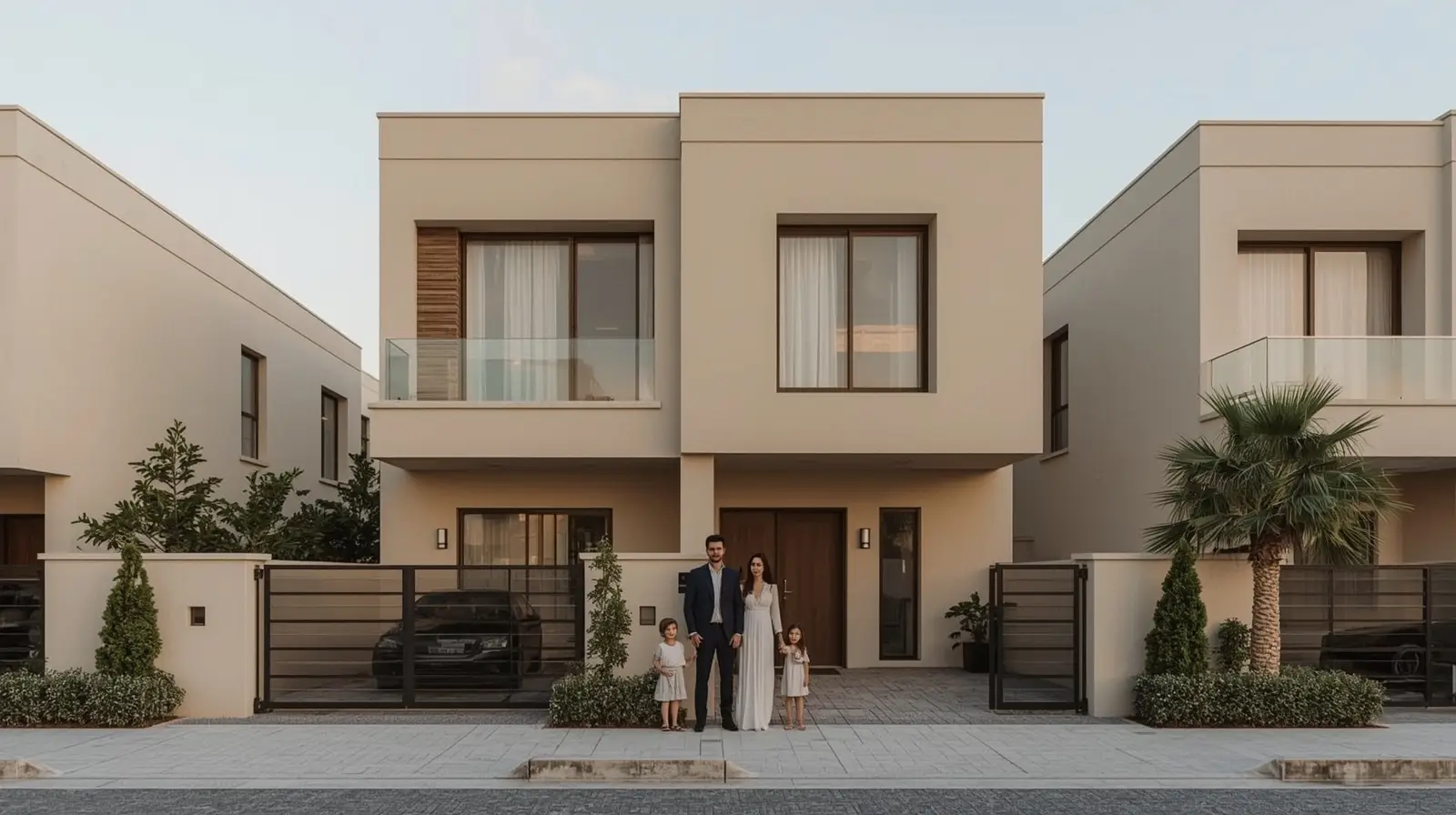
What Is a Townhouse in Dubai? Complete Buyer Guide
Aug 23, 2026

Blog Detail
Learn how foreigners and expats can buy property in Dubai, from eligibility and freehold areas to documents, fees, registration, and residency rules.
Article
If you are researching how to buy a propety in dubai, the short answer is that foreigners, including many non-residents, can buy certain properties in designated areas, and how to buy property in Dubai usually comes down to checking eligibility, choosing the right ownership type, reviewing documents carefully, and completing registration properly; rules, fees, and mortgage criteria can change, so they should be verified before acting. Educational content: verify current rules with official sources.
Key Takeaways
Yes. Foreigners can buy property in Dubai, but not everywhere in the city. Foreign buyers, including non-residents and expatriate residents, may acquire freehold ownership rights in designated areas. Citizens and GCC nationals can buy anywhere in the city. Official ownership evidence is tied to title registration and title deed issuance. There is also no age limit to own property in Dubai in the official source provided.
Eligibility basics:
A buyer from the USA generally follows the same foreign-buyer framework as other overseas buyers. The key questions are whether the property is in a designated ownership area, how the funds will be transferred, and whether financing is available for that specific buyer profile. Nationality-specific ownership privileges for U.S. buyers were not separately detailed in the official source pack.
UK buyers generally follow the same foreign ownership rules in designated areas. In practice, the main variables are property eligibility, the transaction structure, and whether the purchase is cash or mortgage-backed. Financing and transfer documentation should be checked directly with the lender and the parties handling registration.
Buyers from Pakistan are assessed under the same designated-area foreign ownership framework rather than a separate nationality-based rule in the official sources provided. Documentation, payment routing, and mortgage availability may vary by institution, so those points should be verified directly before proceeding.
Indian nationals can assess Dubai property under the same foreign-buyer framework used for designated areas. The practical difference usually comes from the lender, payment method, and transaction structure, not from a separate ownership rule in the official source pack.
Before you look at listings, understand what you are actually buying. In simple terms, freehold means ownership rights in the property. Leasehold and usufruct mean time-limited rights to use or benefit from the property, and the official source notes that these rights may be granted for up to 99 years. For most foreign buyers, the practical question is whether the property is in a designated area and whether the rights being sold are freehold or leasehold-like rights. That distinction can affect long-term control, resale planning, and how you think about holding the asset over time.
| Ownership type | What it means in plain language | Typical relevance for foreign buyers |
| Freehold | Ownership rights in the property | Often, the main route foreign buyers look for in designated areas |
| Leasehold | Time-limited right to use the property | Useful to understand when the property is not sold as full ownership |
| Usufruct | Time-limited right to use and benefit from the property | Officially permitted, with rights up to 99 years |
Eligible areas and ownership rules should always be checked against current regulations and the specific property being sold.
The exact flow can vary depending on whether you are buying a ready resale unit, an off-plan property, a cash deal, or a mortgage-backed purchase. The sequence below is a practical buyer framework to help you understand the step-by-step process of buying a property in Dubai. It is meant for planning and decision support, not as legal advice.
Start with your total buying budget, not just the advertised property price. This matters whether you are asking how to buy a flat in Dubai for personal use or how to buy property in Dubai as a foreigner for investment.
Budget items may include:
Also, decide early whether you are buying with cash or planning to use a mortgage. Exact fee levels, lender criteria, and deposit requirements should be verified before you commit.
Your property type should match your real goal. A flat or apartment may fit a lower-maintenance investment or city-use plan. A villa or townhouse may better suit family living or buyers who want more space. Keep the area discussion practical: the main point is to confirm the property is in an ownership-eligible area for your buyer category.
A simple way to match property type to goal:
Once your budget and target property type are clear, you can start shortlisting options. Professional support can help organize viewings, paperwork, and negotiations, but buyers should still verify the property and the people involved using documents, not just marketing materials.
Checklist before moving forward:
After you identify the property, the next stage is usually the offer and negotiation phase. In market practice, buyers may then sign a Memorandum of Understanding, often referred to as an MOU, and some transactions may also use terms such as Form F. These labels and the exact wording can vary by transaction, so the documents should be reviewed carefully before signing. Deposit expectations also vary by deal and should be confirmed in writing. This specific point could not be verified from official UAE sources.
Before transfer, do basic due diligence. At a practical level, that means checking title-related information, confirming the seller’s identity or authority, and asking whether there are outstanding service charges or other liabilities that could affect the transaction. The official title registration framework is what ultimately supports formal ownership evidence.
Documents may include:
Exact document requirements vary by deal type, developer, trustee office, and lender.
In many transactions, an NOC, or No Objection Certificate, is part of the completion process. At a high level, this is commonly used to help clear the property for transfer, but the exact mechanics depend on the deal structure. The final stage is the transfer and registration step, where the title is formally registered, and the buyer receives official ownership evidence through the title deed. Land title registration is managed by the relevant government property authority, and the process provides an official title deed.
After registration, keep the title deed and all signed transaction records in a safe, organized file. If the property is ready, there may also be practical handover steps related to utilities, building access, or community management. The title deed is the core proof of registered ownership.
If you are searching for the legal procedure to buy property in Dubai, focus on the legal core of the transaction rather than every market habit. The core is proper documentation, formal transfer steps, and title registration. The government property authority is responsible for organizing property and real estate relations, and land title registration produces an official title deed that helps safeguard ownership and prevent disputes. In more complex deals, independent legal review or conveyancing support can be useful, especially when the payment structure or seller authority is not straightforward.
| Stage | Document or record | Why it matters |
| Deal terms | Sale paperwork, such as SPA or MOU | Records the agreed commercial terms at a high level |
| Pre-transfer checks | Identity and property documents | Helps confirm who is selling and what is being transferred |
| Clearance stage | NOC, where applicable | May be needed before the final transfer in some transactions |
| Registration | Transfer and title registration records | Creates official ownership evidence |
| After completion | Title deed | Safeguards ownership and helps prevent disputes |
The exact documents depend on whether you are a cash buyer, a mortgage buyer, a ready-property buyer, or someone also exploring a residency route later. For the purchase itself, think in two groups: identity documents and transaction documents. For residency-related investor applications, the official source pack also mentions a property status statement certificate and certain bank evidence in specific cases.
Cash buyer documents may include:
Mortgage buyer documents may include:
Developers, banks, and transaction-handling offices may ask for additional documents.
Most buyers follow one of three broad routes: cash purchase, mortgage purchase, or a developer-led off-plan payment plan. Each route can work, but the right one depends on your liquidity, borrowing profile, and risk tolerance. Foreigners may be able to get a mortgage, but the lender criteria must be checked directly. Off-plan means buying a property before completion, usually under a staged payment plan offered by the developer.
| Route | How it usually works | Main advantage | Main limitation |
| Cash | Buyer pays from available funds and completes the transfer once the documents are ready | Simpler financing structure | Requires more upfront liquidity |
| Mortgage | Buyer uses bank financing, subject to approval and lender conditions | Preserves some liquidity | Adds lender checks and extra documentation |
| Off-plan payment plan | Buyer pays in stages under the developer's terms during construction or over an agreed schedule | Can spread payments over time | Terms vary widely, and execution risk needs careful review |
Mortgage down payment rules, lender criteria, and rates must be fact-checked before publication or decision-making.
Buying costs should be viewed in categories, not assumptions. Some costs relate to registration and transfer, some to professional support, and some to financing. The exact percentages and fee amounts were not verified in the official source pack provided here, so they should be checked directly with the relevant official or institutional source before acting.
| One-time buying cost category | What it may cover |
| Registration-related costs | Property registration and title-related processing |
| Transfer or trustee-related costs | Completion handling and transfer execution |
| Agency costs | Brokerage-related charges if an agent is involved |
| Conveyancing or legal support | Optional document review or transaction support |
| Mortgage-related costs | Valuation, bank processing, and financing setup, if applicable |
| Developer-related charges | Certain project-specific charges are applicable |
Possible recurring costs:
All percentages and fee amounts must be verified with current official or market sources before publication or purchase.
It can be straightforward in a well-prepared transaction, but it is not equally easy for everyone. A cash purchase of a ready property is usually more direct than a mortgage-backed or off-plan deal. The timeline also depends on how complete the documents are, whether the seller is ready, and how smoothly registration can be scheduled. Rather than asking if the process is easy in general, ask whether your specific deal is clear, documented, and suitable for your budget.
What to check before you buy:
Common mistakes include focusing only on price, relying too heavily on marketing language, and not checking what rights are actually being transferred.
Buying property in Dubai can be safer when the transaction is properly documented and officially registered, but it is not risk-free. Official registration and title deed issuance are important ownership safeguards because the title deed helps protect ownership and prevent disputes.
Main risks:
How to reduce risk:
Whether it is worth buying depends on your reason for buying, not just the market itself. Some people buy for long-term use, some for portfolio diversification, and some because they want a second home or future relocation option. There may also be a long-term residency pathway for eligible real estate investors, but that is separate from ownership and must meet official conditions, including the relevant property value threshold for that residency category.
Buying property in Dubai may suit you if:
Buying may not be the best fit if you need short-term flexibility, have not defined your budget clearly, or are relying on aggressive sales promises instead of documented facts.
The best next step is not to rush into a transaction. Build a clear decision framework first so your purchase is aligned with your real goal.
If you want a more informed path, focus on decision-making clarity, structured comparison, and transparency before you commit.
The official source states that there is no age limit to own property in Dubai. It does not provide broader contractual capacity rules in the source pack used here.
Whether you can proceed without a down payment depends on the deal structure, lender policy, and developer payment terms. There is no verified official support in the source pack for a general zero-down rule, so this should never be assumed. Verify current lender and developer requirements directly before making plans.
There is no single official minimum salary in the source pack for buying property in Dubai. If you are paying cash, salary may be less relevant than the source of funds and transaction documentation. If you are applying for a mortgage, salary requirements are typically lender-specific and should be checked directly with the bank.
Whether it is a good time depends on your purpose, planned holding period, financing method, and the specific property you are considering. Instead of trying to time the whole market, focus on whether the purchase fits your budget and risk tolerance.
A practical way to think about timing:
Yes. In the official sources provided, property ownership eligibility is not framed by gender. The practical rules are based on buyer category and whether the property is in an area open to that category, not whether the buyer is a man or a woman.
Below are concise answers to the questions that usually matter most before a foreign buyer or expat moves forward. These focus on eligibility, legal ownership, documents, financing, costs, and non-resident buying.
Yes. Foreigners, including non-residents, may acquire freehold ownership rights in designated areas.
Choose an ownership-eligible property, prepare funds or financing, review the documents carefully, and complete transfer and title registration so ownership is formally recorded.
At a high level, the legal procedure is proper transaction documentation followed by official registration of ownership, which results in a title deed that safeguards ownership.
Foreigners can buy in designated areas, and the key ownership rights to understand are freehold and leasehold or usufruct rights, with leasehold or usufruct rights permitted for up to 99 years.
Usually, you will need identity documents, transaction documents, and mortgage-related bank documents if the purchase is financed. Requirements vary by transaction and may expand if you later apply for an investor residency route.
They may be able to, but approval criteria depend on the lender, the property, and the buyer's profile. This specific point could not be verified from official UAE sources.
Think in cost categories rather than fixed assumptions: registration-related costs, agency costs, trustee or transfer handling, legal support, and bank costs if financed. Exact amounts should be checked using current official or institutional schedules.
Freehold means ownership rights in the property. Leasehold or usufruct gives time-limited rights, and the official source notes these rights may be granted for up to 99 years.
Latest Blogs
Aug 23, 2026

Aug 19, 2026

Aug 16, 2026

Aug 14, 2026

Aug 9, 2026