
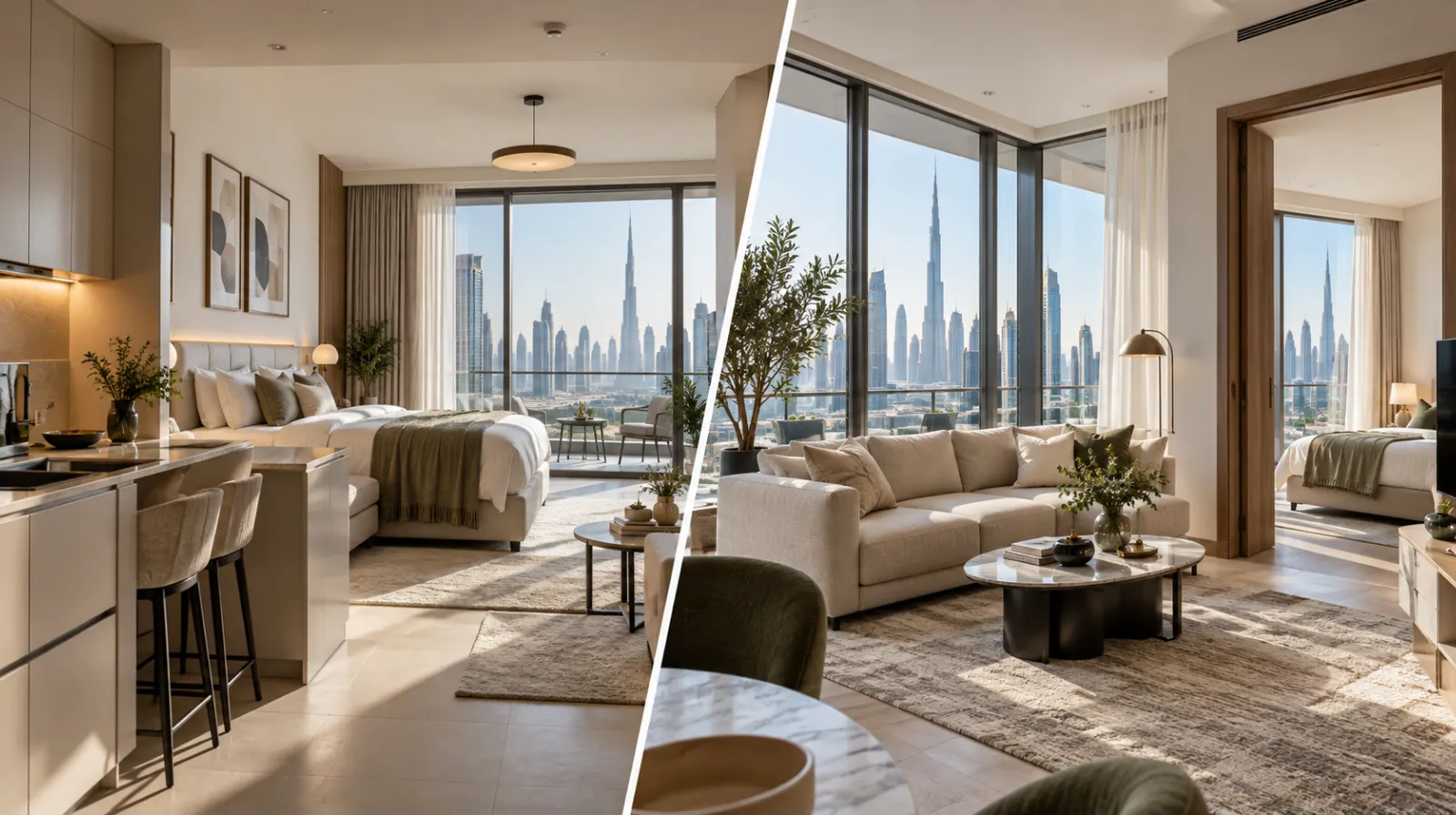
Studio vs 1-Bedroom Apartment Dubai Investment Guide
Oct 14, 2026

Blog Detail
Is there property tax in Dubai? Learn about 2025 rules, DLD fees, housing charges, and why Dubai remains a tax-friendly real estate market.
Article
The UAE real estate market emerged from 2025 with its momentum intact, reinforcing its growing reputation as one of the world’s most resilient property destinations despite global economic uncertainty and persistent geopolitical headwinds.
According to Francis Alfred, managing director of Sobha Realty, the year ultimately told “a story of resilience anchored in fundamentals,” with sustained demand driven by population growth, inflows of global talent, regulatory stability and long-term national planning.
Alfred argues the sector’s durability is rooted in the country’s economic architecture: population growth, the inflow of global talent and capital, progressive regulation, and long‑term national planning. Together, those pillars allowed the market “to absorb new supply while maintaining pricing stability.” He adds that the most striking feature of the year was the market’s maturity: “Buyers became more discerning, placing greater emphasis on quality, delivery certainty, location, and long‑term value,” with schemes “backed by strong execution and clear urban planning” consistently outperforming.
Contrary to expectations of a cautious, wait‑and‑see stance, Alfred says purchasers were decisive whenever the proposition was “credible and well‑defined.” “One of the most notable surprises over the past 12 months was the decisiveness of buyers,” he notes, observing that decision‑making shifted “away from short‑term price considerations toward construction quality, delivery assurance, and developer credibility.”
Emerging locations also broke through earlier than many anticipated. “Locations such as Umm Al Quwain gained meaningful traction earlier than expected, attracting not just investors but also end users and first‑time buyers seeking long‑term value and lifestyle‑led environments,” Alfred says. He cites Sobha’s own numbers: European buyers accounted for about 42 percent of sales value across its UAQ portfolio—“led by the UK and France” — followed by Indian buyers at roughly 13 percent, with around 72 percent of investments coming from the 35–60 age group.
The pandemic era reshaped what home means for many residents, and those preferences are now embedded, Alfred contends. “Wellness‑led design, access to open and green spaces, natural light, and environments that encourage healthier lifestyles have moved from being desirable features to essential considerations.” Location, too, has been “redefined”: buyers judge “how effectively a community functions on a day‑to‑day basis,” accelerating demand for integrated, mixed‑use places that bring “homes, workplaces, retail, leisure, and outdoor amenities together within a single, walkable environment.”
That helps explain why some launches fly while others stall—even at similar price points. Projects that “offer a clear and compelling proposition” in planning and execution, with layouts relevant to modern living, gain immediate traction, Alfred says. “Successful projects are those that respond directly to the evolving expectations of discerning buyers… Developments that demonstrate cohesive master‑planning, and a clear long‑term vision naturally attract stronger demand.”
The rise of large, integrated communities is also reframing both “home” and “investment” in the UAE. For residents, value extends beyond the unit to a “well‑orchestrated ecosystem” of walkable neighbourhoods, wellness, retail, workspaces and “meaningful public spaces.” For investors, Alfred sees a pivot “past entry price or short‑term yields,” toward “planning depth, execution quality, and delivery certainty” — a “more disciplined, lifestyle‑led, and responsible approach to real estate investment.”
Overseas investors, he cautions, can misread the market by applying assumptions from their home countries. Viewing the UAE as “purely… a short‑term, speculative market” overlooks its “long‑term planning, regulation, and end‑user demand.” Others equate similar price points with comparable value, without accounting for differences in “location, master planning, and quality,” factors that materially shape long‑term performance.
Inside Sobha, Alfred says the outlook is guided by real‑time signals that reflect “how buyers behave, not just what they are saying” — from sustained interest and healthy conversion to diversified demand across markets. Despite external noise, he notes, those indicators “have remained resilient and, in many cases, strengthened,” supporting expansion and launch decisions.
Looking ahead, Alfred expects mega‑scale developments to shape urban life over the next decade. Such projects, he argues, enable “long‑term planning of infrastructure, mobility, public spaces, and services” and offer the flexibility to adapt to changing lifestyles with mixed‑use components, wellness and green spaces, and “future‑ready infrastructure.” “As the UAE continues to evolve, such developments will play a central role in supporting balanced urban growth, enhancing quality of life, and shaping resilient, future‑focused cities.”
Latest Blogs
Oct 14, 2026
Oct 12, 2026
Oct 10, 2026
Sep 30, 2026
Sep 28, 2026