
What Is a Townhouse in Dubai? Complete Buyer Guide
Aug 23, 2026
Blog Detail
Learn the main types of houses in Dubai, how apartments, townhouses, villas, and penthouses compare, and how to choose the right property type.
Article
Types of houses in Dubai commonly include apartments, townhouses, villas, penthouses, duplex or triplex units, and serviced apartments, but the right choice depends on how you plan to live, invest, or structure ownership. If you are comparing space, privacy, maintenance, rental use, or foreign ownership options, which property type actually fits your goal best?
Key Takeaways
Dubai offers a broad mix of residential formats, from compact city apartments to larger villas inside planned communities. For a fast decision-making view, the table below shows how the main types of properties in Dubai are usually compared in practice rather than as an official legal classification.
| Type of house in Dubai | Property category | Best for | Typical ownership/use case | Key pros | Key limitations |
| Apartment | Multi-unit residential | First-time buyers, singles, couples, and rental investors | Owner-occupier or long-term rental | Lower maintenance, convenient locations, wide format choice | Less privacy, usually less outdoor space |
| Townhouse | Ground-oriented residential | Growing families and value seekers | Family living or long-term hold | More space than many apartments, often more affordable than many villas | Shared walls, moderate maintenance |
| Villa | Standalone residential | Large families, privacy-focused buyers, and premium end-users | Primary residence or long-term lifestyle purchase | Privacy, plot space, family fit | Higher upkeep, higher entry level |
| Penthouse | Premium apartment format | Luxury buyers and ultra-premium investors | High-end owner use or prestige rental | Views, exclusivity, premium amenities | Higher costs, narrower buyer pool |
| Duplex/Triplex | Multi-level residential unit | Buyers wanting house-like separation in an apartment setting | Owner uses or niche rental | Better layout separation, larger feel | Less common, can carry more internal stairs |
| Serviced apartment | Hospitality-linked residential | Business travelers, short-term rental investors, and hands-off owners | Personal use, managed stay, or rental-oriented holding | Hotel-style services, convenience, and management support | Ongoing charges may be higher, the use model can be more specialized |
Apartments are one of the most common types of houses in Dubai, especially in mixed-use and urban communities. They range from compact units to premium full-floor-style homes.
Villas are usually chosen for space, privacy, and family living. In Dubai, residential communities can include villas alongside other home formats.
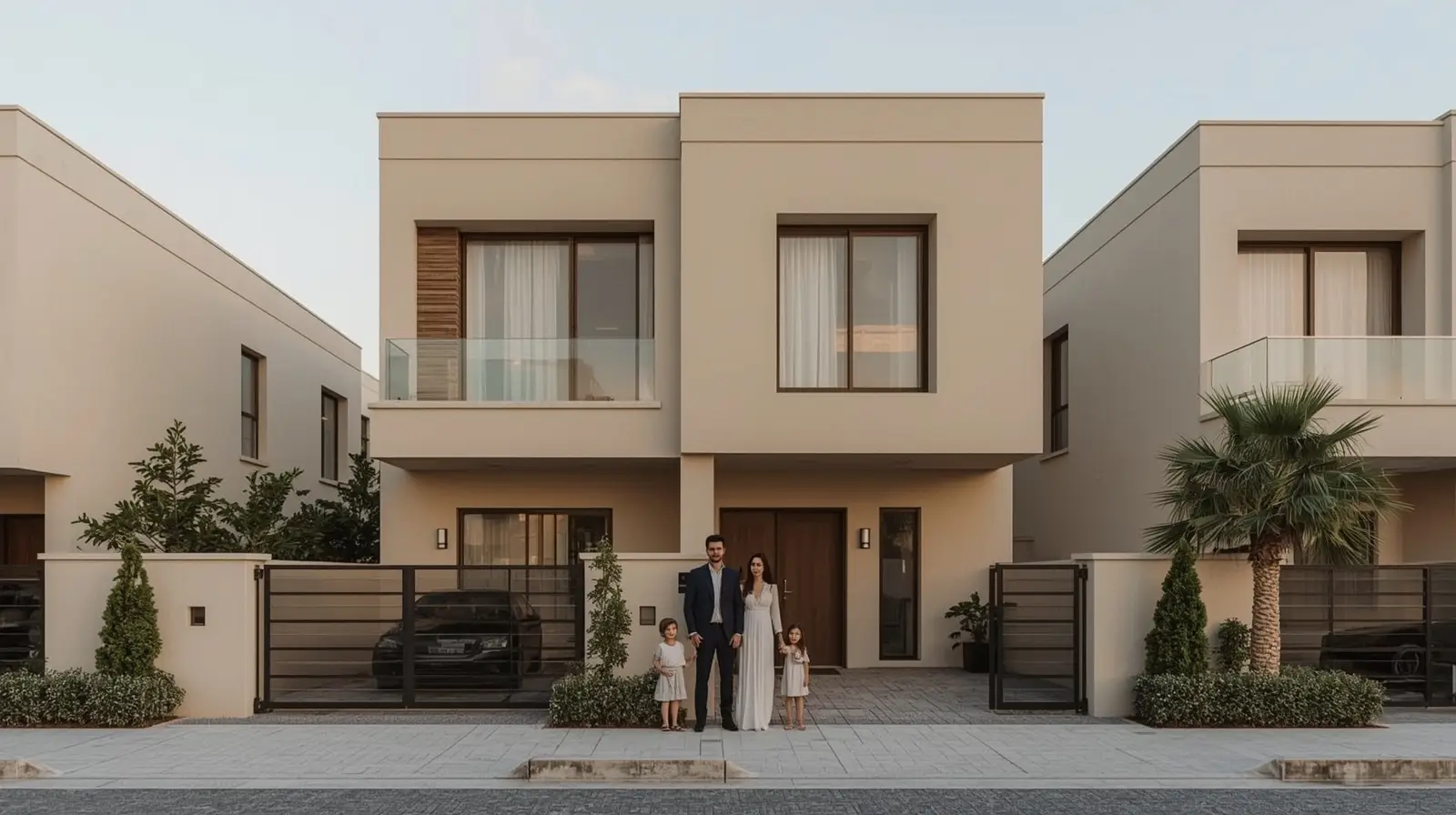
A townhouse is usually a multi-floor home in a row or cluster, often with its own entrance and some outdoor space. Compared with villas, townhouses typically offer less plot space and less separation from neighbors, but they often give buyers more room than an apartment at a lower entry point than many standalone villas. Residential areas in Dubai can include apartments, townhouses, and villas within the same broader community context.
Penthouses are a premium segment within the apartment market. Buyers usually choose them for top-floor positioning, broader views, stronger privacy, and access to higher-end building amenities. The typical buyer profile is narrower than for standard apartments, usually focusing on luxury owner-occupiers or investors targeting the ultra-premium segment.
Duplex and triplex homes are multi-level units within a residential building or larger residential scheme. A duplex has two internal levels, while a triplex has three. They often suit buyers who like the convenience of an apartment building but want more separation between living, guest, and sleeping zones. Compared with standard apartments, they usually feel more house-like; compared with villas, they usually offer less land and less exterior privacy.
Serviced apartments combine residential space with hotel-style services such as reception, housekeeping, or managed operations. In practical terms, they often appeal to business travelers, short-stay users, and investors who prefer a more hands-off ownership model. Some mixed-use Dubai areas are known for serviced apartments and hotels, which helps explain their role in the market.
When people search for different types of houses in Dubai, they are usually trying to answer a practical question: what does each property type really mean, and when does it make sense to choose one over another? The definitions below keep the focus on how each format works in real buying decisions rather than on technical real estate language.
An apartment is a private residential unit within a larger building. It is usually the most straightforward option for buyers who prioritize convenience, building amenities, and easier upkeep.
A townhouse is a ground-oriented home that usually shares one or more side walls with neighboring units. It sits between an apartment and a villa in both feel and day-to-day responsibility.
A villa is usually a standalone home with more internal space and outdoor area than most other residential formats. It is often chosen for long-term family living and privacy.
A penthouse is a high-end apartment, usually occupying a top floor or premium upper-floor position within a building.
A serviced apartment is a residential unit with hospitality-style operations or support services.
If you are narrowing options, it helps to compare the main formats by daily experience rather than by marketing labels. The table below shows how apartments, townhouses, villas, and penthouses are commonly weighed by buyers and investors using relative, non-numeric terms.
| Types of houses in Dubai | Space | Privacy | Maintenance | Price level | Rental demand | Best for |
| Apartment | Lower to medium | Lower | Lower | Lower to medium | Often broad | First-time buyers, singles, couples, and many rental investors |
| Townhouse | Medium to higher | Medium | Medium | Medium | Family-led demand in many communities | Growing families, suburban buyers, and value seekers |
| Villa | Higher | Higher | Higher | Higher | More location- and tenant-specific | Large families, privacy-focused buyers, and long-term residents |
| Penthouse | Higher | Higher | Medium to higher | Higher to luxury | More niche | Luxury buyers, premium lifestyle users, and ultra-premium investors |
The best fit depends on what you are trying to optimize: easier entry, family space, lower maintenance, prestige, rental flexibility, or long-term lifestyle use. Instead of treating one format as universally best, it is more useful to match the property type to the buyer profile.
For owner-occupiers, the best property type is usually the one that fits everyday life rather than the one with the strongest marketing appeal.
For investors, the better question is not "Which property type is best?" but "Which property type fits the target tenant, hold period, and management style?"
This is one of the most important distinctions for foreign buyers: freehold and leasehold are ownership structures, not physical house forms. In other words, an apartment, townhouse, or villa can be discussed by property type, while freehold or leasehold explains the legal nature of the right being acquired. Non-UAE nationals can own and acquire real estate rights in designated investment areas, and the current eligible areas and rules should be verified before buying.
| Ownership type in Dubai | What it means | Who can buy | Typical use case | Important note |
| Freehold | Ownership of the property with stronger ownership rights in the permitted area | UAE nationals and eligible non-UAE nationals in designated investment areas | Long-term ownership, personal use, investment holding | Verify the latest eligible areas and transaction terms before proceeding |
| Leasehold | A right to use or benefit from a property for a defined lease term rather than full freehold ownership | Depends on the asset and structure | Use-focused occupation or investment where the lease structure is acceptable | Review the lease terms carefully because rights and limitations can differ |
Freehold means the buyer acquires ownership rights in the property within the applicable legal structure. For practical decision-making, freehold is often the preferred route for buyers who want clearer long-term ownership, resale flexibility, or personal control over the asset. Non-UAE nationals can own and acquire real estate rights in designated investment areas, which is why buyers should verify whether the property they are considering sits within an eligible area.
Leasehold means the buyer is acquiring a right linked to a lease term rather than the same form of ownership associated with freehold. In practical terms, buyers should review the lease structure, remaining term, usage limits, resale implications, and lender acceptance before moving forward. The exact structure can vary, so current transaction details should be checked carefully against the property documents.
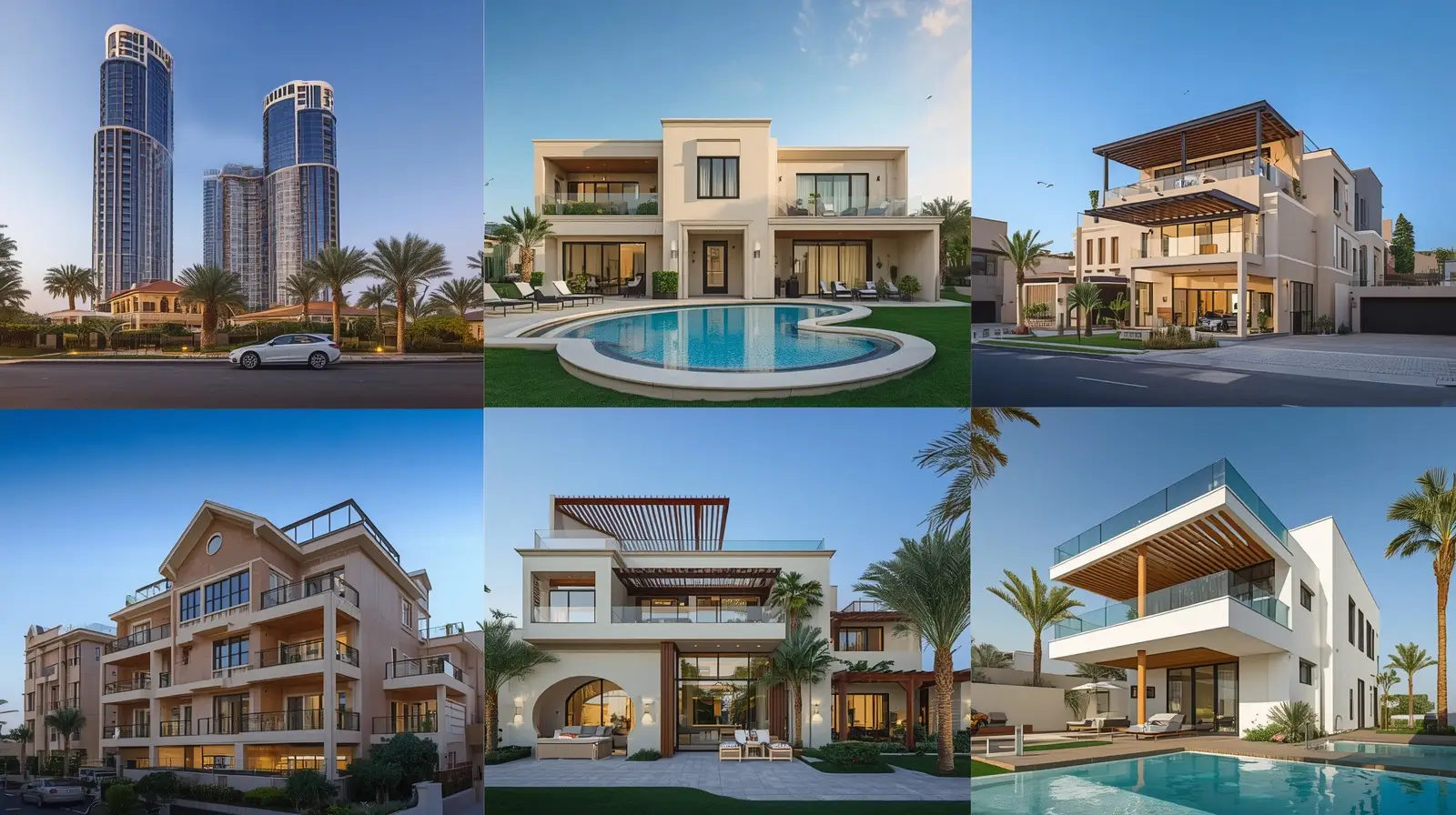
If you are building a listing page or blog around different types of houses in the UAE with pictures, the goal should be clarity, not decoration. The most useful images are the ones that help a buyer quickly understand layout style, privacy level, outdoor space, and the surrounding community context.
Choosing among the main types of houses in Dubai becomes easier when you compare each format against your actual goal instead of starting with marketing categories. A practical shortlist should reflect budget, household size, daily lifestyle, maintenance tolerance, ownership preference, and whether you care more about living quality, rental use, or future resale flexibility.
Budget usually determines the first realistic filter, even before lifestyle preferences.
Lifestyle fit matters because the same square footage can feel very different depending on building style and location.
Investment goals should shape the property type, not the other way around.
Before you buy, focus on the details that affect ownership experience and exit flexibility. Practical due diligence matters more than the label on the property, and process-related questions can also be checked through official FAQ guidance linked to registration and related services.
The main residential types people usually compare are apartments, townhouses, villas, penthouses, duplex or triplex units, and serviced apartments. In practical terms, apartments are the most straightforward urban option, townhouses sit between apartments and villas, and villas usually offer the most privacy and outdoor space.
An apartment is a unit inside a larger building, while a townhouse is usually a multi-floor home with its own entrance in a row or cluster. Townhouses typically offer more privacy and space than apartments, while apartments are usually easier to maintain and more common in denser urban settings.
A townhouse usually shares one or more walls with neighboring homes, while a villa is usually standalone. In practice, villas often provide more plot space, more privacy, and more maintenance responsibility.
Serviced apartments are residential units combined with hotel-style or hospitality-style services. They are often considered by buyers who value convenience, short-stay flexibility, or a more managed ownership setup. Some Dubai districts are known for serviced apartments as part of a mixed residential and hospitality environment.
Townhouses and villas are often strong fits for families because they usually offer more bedrooms, better separation of space, and more outdoor use. Larger apartments can also work well for families that want city access and easier maintenance.
Yes. Freehold and leasehold describe ownership structure, not the physical home type. A buyer can compare apartments, townhouses, and villas as property formats, and then separately confirm whether the ownership right is freehold or leasehold.
Foreign buyers should not assume every property in every area is available under the same ownership structure. Non-UAE nationals can own and acquire real estate rights in designated investment areas, so the key question is whether the specific asset and area are eligible under the applicable rules.
For living, the better choice usually depends on space needs, commute, privacy, and lifestyle. For investment, the better choice usually depends on the tenant profile, management complexity, and how broad the resale or rental audience is. Many buyers find apartments easier to manage, while townhouses and villas may fit a stronger lifestyle use, depending on the goal.
If you want help turning these options into a defendable property decision, Homeland can support you with structured comparison, market knowledge, and a calm review of which property types match your budget, residency plans, and real risk tolerance.
Latest Blogs
Aug 23, 2026
Aug 19, 2026
Aug 16, 2026
Aug 14, 2026

Aug 9, 2026