
When to Buy Property in Dubai: Best Timing Strategy
Jul 21, 2026
Blog Detail
Integrated lifestyle communities in the UAE offer convenience, sustainability, wellness, safety, and strong long-term value for modern urban living.
Article
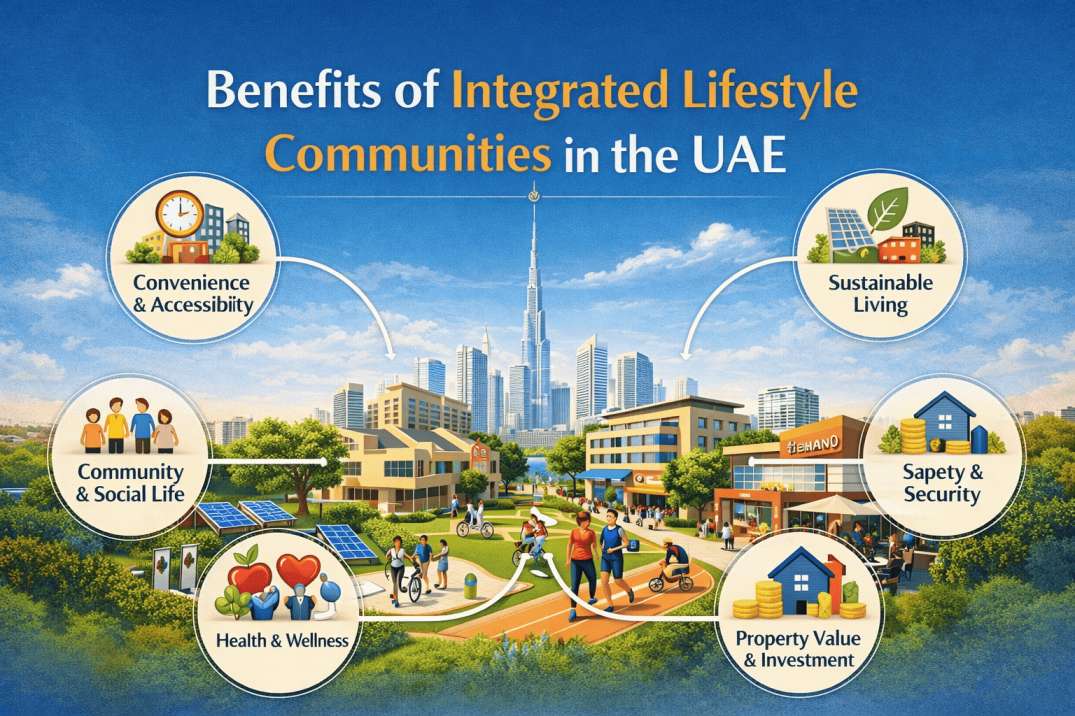
Integrated lifestyle communities are transforming the way people live in the UAE. These master-planned neighborhoods provide more than just housing – they offer a holistic “live-work-play” environment. In simple terms, they are carefully planned areas that put everything needed for daily life in one place. Within these “city-within-a-city” developments, residential homes sit alongside offices, shops, schools, parks, and leisure facilities under one umbrella. This article explores the key benefits of such integrated communities – from everyday convenience and sustainability to social well-being, health, security, and economic value – with a focus on how they’re shaping life in the UAE.
One of the most immediate advantages of integrated communities is the unmatched convenience they offer. Rather than spending time stuck in traffic, residents find essential destinations right at their doorstep. Homes are typically a short walk or quick drive from workplaces, schools, supermarkets, gyms, clinics, and other daily needs. This proximity drastically reduces the need for long commutes. For example, someone living in a Dubai mixed-use district might walk their child to school, then stroll to a nearby office or co-working space, with grocery stores and cafes on the way. Having “everything within reach” means less time traveling and more time for life’s important moments.
Integrated communities are often designed to be walkable and well-connected, which further enhances accessibility. Pedestrian-friendly layouts, cycling paths, and efficient public transport links make it easy to get around without a car. In fact, needing the car less not only saves time but also cuts stress and expense from daily routines. The result is a better work-life balance – residents can reclaim the hours normally lost to commuting and instead spend them with family or on personal activities. As one analysis notes, these neighborhoods help people achieve “more time, less stress, and a better balance between work and personal pursuits,” since everything from schools and clinics to parks and restaurants is within walking distance.
Sustainability is at the heart of many integrated lifestyle communities in the UAE. By clustering living, working, and leisure in one locality, these developments naturally reduce carbon footprints – people drive less and can rely on shared infrastructure. Many new communities are purpose-built with eco-friendly design features, aligning with the UAE’s vision for green growth. For instance, developers often incorporate solar panels for clean energy, water-saving technologies, and robust recycling and waste management systems in these projects. This means lower utility bills for residents and a healthier environment, without sacrificing comfort.
On a larger scale, integrated communities support national sustainability goals. The Dubai 2040 Urban Master Plan explicitly calls for developing “integrated, sustainable housing complexes” that meet high planning standards – complete with green spaces, commercial centers, and recreational facilities to enhance quality of life. In practice, this vision translates into neighborhoods filled with trees and parks, energy-efficient buildings, and smart mobility options like electric vehicle charging stations. Many communities now feature EV chargers, use treated water for irrigation, and design with green building standards in mind. All of these steps contribute to the UAE’s commitment to a more sustainable future.
A shining example is The Sustainable City in Dubai – the Middle East’s first net-zero energy development. This pioneering community was built from scratch to produce its own solar power, reuse water, and minimize waste, proving that environmental integrity and modern comfort can coexist. Thanks to features like car-free zones and organic farms, residents enjoy clean air and a lower cost of living, all while knowing they’re reducing their ecological footprint. It’s no surprise that such initiatives are influencing new projects across the Emirates, as city planners and developers strive to create communities that are both eco-friendly and livable.
Beyond physical infrastructure, integrated communities focus on social well-being and a sense of community. By design, they encourage residents to interact and build relationships. Instead of being isolated in high-rises or distant suburbs, people in these communities have shared public spaces where life naturally intersects. Neighborhoods often feature inviting parks, plazas, walking trails, and community centers meant to bring people together. Lively green spaces and town squares become informal meeting spots for neighbors, helping foster a strong sense of belonging. Children playing in the park, families picnicking on the weekend, and community events at the clubhouse all contribute to an environment where neighbors know each other.
Developers and community managers actively invest in community-building activities. It’s common to have year-round calendars of events – from holiday festivals and farmers’ markets to fitness classes and cleanup drives – hosted within the community. For example, one major Dubai developer reported organizing over 250 community events in a single year, drawing tens of thousands of attendees, all aimed at strengthening social ties and neighborly connection. These shared experiences help create a supportive, village-like atmosphere even in the middle of a big city. Residents often describe feeling part of an extended family or social network thanks to these initiatives.
Crucially, the diversity of UAE’s population finds a home in integrated communities. With residents from all over the world living side by side, community events and facilities are designed to be inclusive and multicultural. International schools, cultural festivals, and mixed-use community centers allow people of different backgrounds to share experiences and learn from each other. This inclusive, cosmopolitan vibe not only helps newcomers feel welcome, but it also enriches the social fabric for everyone. In fact, the emphasis on community well-being has tangible outcomes: Dubai’s Sustainable City – built around communal gardens, shared spaces, and a people-centric layout – was even named the GCC’s “happiest community,” highlighting how strong community bonds translate into resident happiness.
Integrated lifestyle communities also promote healthier living through their design and amenities. Wellness and recreation are typically built into the neighborhood plan. Instead of needing a separate gym membership across town, residents might have a fitness center, sports courts, swimming pools, and bicycle paths just a few minutes’ walk from home. Many communities include shaded jogging tracks weaving through the development, encouraging daily runs or evening strolls in a safe environment. By making exercise options convenient and attractive, these communities help people stay active as part of their normal routine. It’s not unusual to see neighbors forming jogging clubs or parents pushing strollers along leafy walking trails every morning.
Access to green spaces and fresh air further boosts health. Parks and landscaping are more than just aesthetic; they provide places for outdoor yoga, group exercise classes, or simply stress-relieving walks amid nature. Studies have shown that such access to greenery can improve mental well-being, and UAE planners have taken note – the 2040 plan aims to increase public green space significantly (by over 100%) to benefit community health. Additionally, reduced traffic within these self-contained areas means quieter, cleaner surroundings with less pollution, contributing to better respiratory health for residents.
Several UAE communities are specifically geared toward wellness. For example, the upcoming Athlon development in Dubai is described as an active living community seamlessly integrating fitness and wellness into daily life. Likewise, established projects like Tilal Al Ghaf offer extensive outdoor amenities – including 18 kilometers of cycling and jogging trails around a large recreational lagoon – to encourage an active, outdoor lifestyle for all ages. The philosophy is clear: make healthy choices the easy choices. By embedding opportunities for exercise, relaxation, and medical services (such as nearby clinics or pharmacies) into the community, these integrated neighborhoods enable residents to take care of their physical and mental health more effectively.
When it comes to choosing a place to live, safety and security are paramount – and integrated communities excel here as well. The UAE is consistently ranked among the world’s safest countries, and this sense of safety is especially evident in its modern residential communities. Most integrated developments are gated or access-controlled, with security personnel and CCTV surveillance operating 24/7. This provides a reassuring layer of protection for families and individuals alike. Parents feel comfortable letting their kids ride bikes on the streets or play outside with friends, knowing that the community is monitored and relatively closed to outside traffic. Similarly, residents of all ages can enjoy evening walks or park outings without undue worry.
In addition to guarded entrances, many communities have neighborhood watch programs or on-site community security teams that respond quickly to any issues. The roads, parks, and public areas are well-lit and maintained, further enhancing the feeling of safety. Such measures not only deter crime but also build peace of mind – a less tangible but very real benefit of community living. As a result, integrated communities in cities like Dubai and Abu Dhabi are often cited as ideal environments for families, where children can gain a bit of independence in a secure setting and seniors can find tranquility. Safety is woven into the design: limited entry points reduce through-traffic, and residential clusters are arranged to naturally promote vigilance among neighbors. All of this means residents can focus on enjoying daily life, confident that their neighborhood is a secure and protected place to call home.
Finally, integrated lifestyle communities offer strong economic benefits – both for individual property owners and for the wider city. For homebuyers, these self-contained neighborhoods tend to hold their value well (or appreciate faster) because demand for well-planned, amenity-rich living is high. Simply put, many people want to live in communities where convenience, safety, and quality of life are assured, which keeps property values robust. In fact, market analyses in the UAE have noted that mixed-use community developments often see higher capital appreciation and rental yields than traditional stand-alone residential areas. For example, one comparison showed integrated districts achieving around 7% annual property value growth versus roughly 4% in conventional neighborhoods, along with rental yields about 0.8–1.5% higher on average. This premium arises because such communities are attractive places to live – and that desirability translates into economic value.
For investors, integrated communities provide diversified and resilient real estate opportunities. A mix of residential, retail, and office components means multiple revenue streams. The steady foot traffic from residents supports local businesses, which in turn makes commercial units and shops more viable and valuable. Meanwhile, the broad appeal of the community draws in a wide pool of tenants and buyers – from young professionals and families to retirees – reducing reliance on any single market segment. As one developer pointed out, these projects “ensure consistent returns” by attracting occupants from various segments and thus balancing the income sources. Moreover, government policies like long-term visas for investors and the overall stability of the UAE further boost confidence in such real estate investments.
On a city-wide level, the economic impact is also positive. Integrated communities help drive growth in surrounding areas, spur infrastructure development, and create jobs (through retail centers, schools, maintenance services, etc.). They set new benchmarks for quality that can uplift older neighborhoods to improve or redevelop. The focus on mixed-use growth is part of Dubai’s strategic plan to remain a global city where people love to live and visit. By concentrating development into well-planned nodes, the city can optimize land use and deliver services more efficiently, which is economically beneficial for the municipality as well. In summary, whether you’re a potential homeowner looking for long-term value or an investor seeking reliable returns, these comprehensive communities offer a compelling proposition. The combination of lifestyle appeal and financial upside is a powerful one – truly a “lifestyle and investment” win-win, as experts have noted.
Read Also : Economic Resilience of Dubai
Integrated lifestyle communities are reshaping urban life in the UAE. They bring together the best elements of city living – convenience, vibrancy, and opportunity – and fuse them with the tranquility and togetherness of a close-knit neighborhood. For residents, this means a smoother daily life: less time commuting and more time enjoying local amenities, social activities, and green surroundings. For the environment, it means a more sustainable pattern of development, with smarter land use and lower emissions. And for city planners and investors, it points to a resilient model for growth that enhances quality of life while adding economic value.
As we look ahead, it’s clear that the trend toward integrated community living is not just a passing phase but a fundamental shift in how cities like Dubai and Abu Dhabi are being built. Government initiatives and vision plans actively support this movement, seeing it as key to future happiness and prosperity for the population. In the coming years, the UAE’s urban landscape will likely feature even more smart, sustainable communities offering convenience, sustainability, social connection, health, safety, and value all in one package. This holistic approach to development is setting a new standard – one where the ultimate measure of success is a thriving, well-rounded community and a higher quality of life for all who call it home.
Latest Blogs
Jul 21, 2026
Jul 19, 2026
Jul 14, 2026
Jul 12, 2026

Jul 7, 2026